
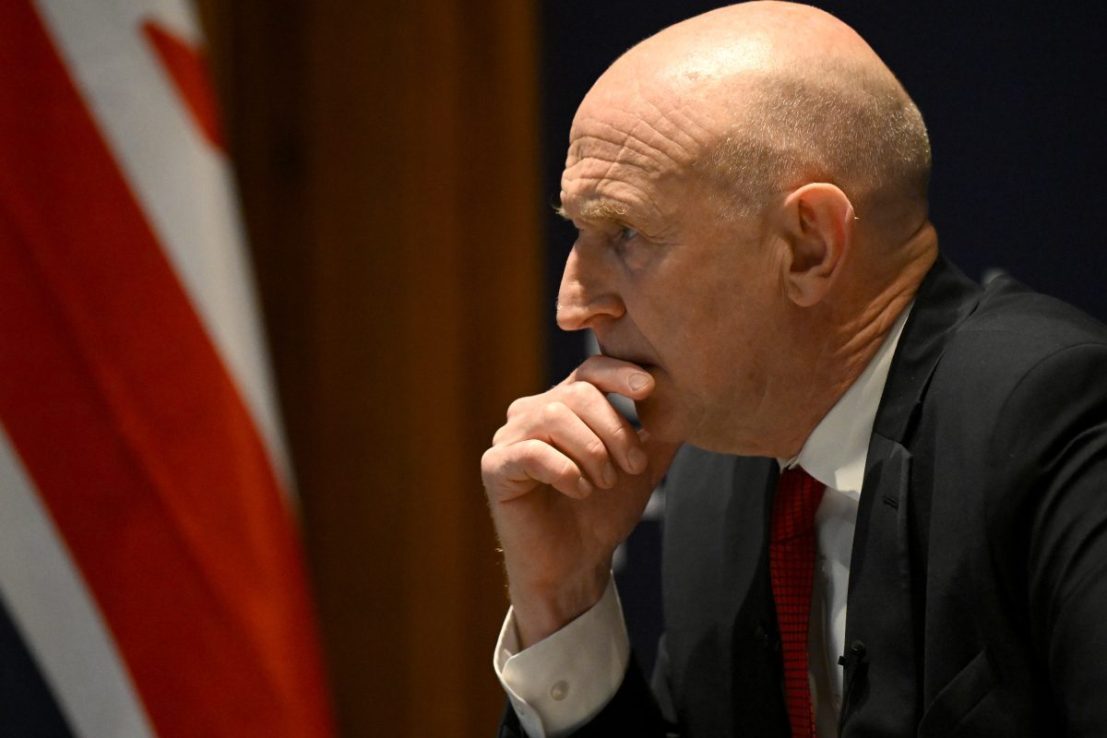
Surging government bond yields could force John Healey to deliver an “emergency Budget” in which the UK’s new Chancellor drives through a wave of spending cuts in a bid to bear down on Britain’s ballooning debt pile.
UK gilt yields have this week surged to the highest rates seen in decades amid rising uncertainty over tensions in the Middle East and unease over inflation expectations.
The 2-year gilt yield jumped another 14 basis points on Thursday to 4.72 per cent, while the 10-year rose 10 basis points to 5.3 per cent and the 30-year yield was up 6 points, edging towards the six per cent mark, the highest seen since 1998.
“Although the move higher in bond yields is a global phenomenon caused by an energy price shock, the fact that UK bond yields are rising at a faster pace than elsewhere, suggests that there is a specific risk premium attached to UK debt right now,” said Kathleen Brooks, research director at XTB.
“If we see oil prices continue to move deeper into triple digit territory…this would transform next month’s Budget into an emergency Budget to plug fiscal holes.
Tax rises and spending cuts?
“Tax rises under the Labour government are nothing new, but Healey and co. may also be forced into huge welfare cuts to bring borrowing down and pay the debt interest bill. Andy Burnham may have tried to protect welfare spending this week, but his hopes and dreams are meeting the reality of the bond vigilantes who keep pushing UK yields to multi-year highs.”
The price of Brent crude – the international benchmark for oil – jumped above $100 per barrel on Wednesday for the first time since July. Oil prices rose nearly four per cent in the day, prompting fear among investors that the Bank of England and the Federal Reserve could look to hike interest rates.
Investor attentions are turning to UK growth figures and US inflation statistics, both due at the end of this week, for the latest indication of how global economies are dealing with the war.
Healey has so far kept quiet over the contents of his inaugural Budget, set to be held on October 28. But the Chancellor has so far refused to rule out further tax rises in an early signal of further pain ahead for businesses and taxpayers.