
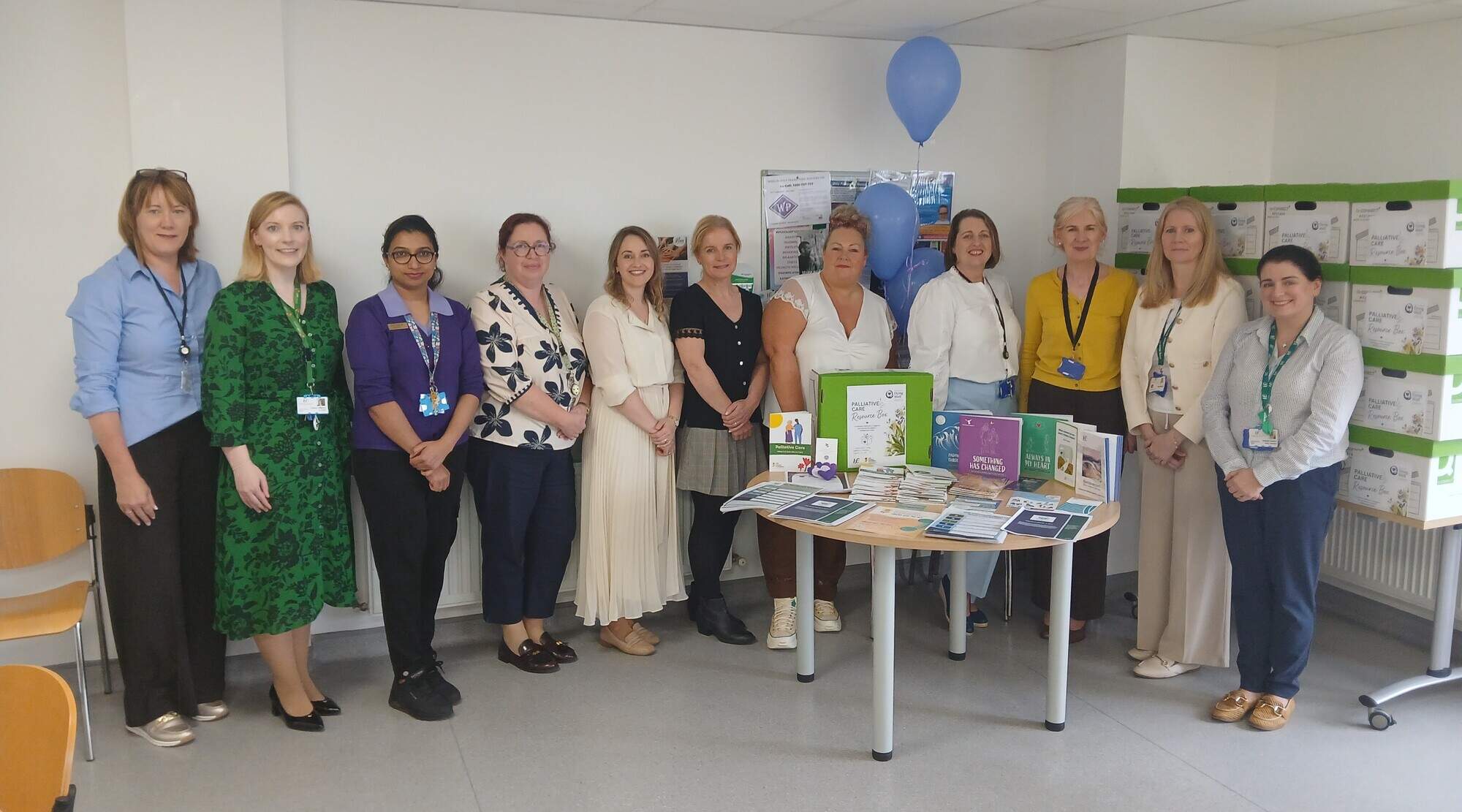
A Midlands group is hoping to educate the public and workers within the health care system on the importance of ‘dying well’.
Established in 2023, the Midlands Dying Well Group is a collaborative initiative involving healthcare professionals from acute, community, residential care, mental health and disability services who work together to improve experiences of end-of-life care and bereavement support throughout Laois and Offaly.
Group chairperson and Integrated Care Programme for Older Persons (ICPOP) Operational Lead for Laois and Offaly, Dr Mary Doolan, spoke with the Irish Independent on the group’s intention to educate and advocate the supports available for palliative care, grief, suicide bereavement, sudden death and the death of a child and more.
“We have a ‘Living Well’ group in Laois and Offaly with loads of stakeholders, from the Council and LOETB to local voluntary groups. We decided to set up a ‘Dying Well’ group- it’s important you live well, but you also need to die well,” she explained.
“Health is very much an important part of this, so we work with family carers, consultants and physicians in palliative care, even speech and language,” Dr Doolan said.
“The best part of this group is it brings HSE staff together from the hospital to the community. We got our members together and said, right, what do we do.”
A 2024 HIQA survey into end of life care found that communication in the end stages was a matter for improvement. The Dying Well group have made this a key theme to tackle.
“With family members and friends, they felt they needed clearer, consistent and sensitive information in the last few days or months prior to a death. It’s a precious time.”
A following survey carried out by the Dying Well Group found that health care workers did not feel confident to have sensitive and effective conversations about death with patients and their families.
In response to this, the group created a pamphlet of resources that can help medical professionals explain the supports available.
“The resources are there, people just don’t have time or don’t know where to go,” Dr Doolan noted.
“This booklet brings together the resources, and it isn’t just end of life. It will be rolled out across all services, from community levels to hospitals and private nursing homes. If an opportunity arises to engage in a sensitive conversation, workers can feel confident to pause and have the capability to have that conversation.”
In Tullamore, a touching initiative has emerged to support families and friends of people at the end of their lives, which the Dying Well group highlighted at the launch of their resource directory pamphlet.
The Purple Hearts Crochet Project is an initiative by the Friends of the Midlands Regional Hospital Tullamore, who are encouraging volunteers to create a pair of hearts with the hope of bringing comfort to bereaved families. One heart is placed gently in the hand of a patient who has passed while the matching heart is given to the family.
A small group of people meet once a month in Tullamore library on the last Friday of the month from 11.30am -12.30pm to crochet some hearts, share the pattern and show others who would like to learn.
“It’s such a lovely initiative and people didn’t know about it,” Dr Doolan praised.
Many people may find conversations surrounding death and palliative care to be uncomfortable. Dr Doolan noted that this is a natural part of life that must be considered, which the group aims to advocate on.
“It’s about listening and hearing that the person wants to talk, and giving them the space to do that. Hearing what matters to the person. A lot of end of life care is listening, and taking the time to do it,” she said.
The group affirms that questions to consider in relation to your death are not just palliative care, and shouldn’t just be considered in the final hours.
“There are important questions to ask. Do you want to have that conversation, am I dying, how long have I left? The importance is what their issues are, and what is important to them right now. What family members do they want to talk to.
“It’s not just at the very end. It makes such a difference when family and friends know. People say, ‘I would’ve done things differently if I knew I had six days, or six hours left’. It’s a culture change,” Dr Doolan highlighted.
“Irish people haven’t necessarily been good at this, but I think they have got a lot better. People have preferences now, there’s so much planning ahead and thinking ahead.
“What treatments do you want at the end, how do you want to be cared for spiritually? Who do you want with you? These are all key questions we are hoping all health care professionals will feel more proficient to do.”
Sunday, September 6 to Saturday, September 12 marks Palliative Care Week, with an array of talks and workshops taking place across the country.
“I was reading an Irish Independent article about a nurse who works for the Irish Cancer Society speaking about how privileged she is to be there with the family during this time. It’s such a precious time.
“We will all die, it’s natural, but those last days and hours are particularly special. The more we can talk about it and make it special, talk about it earlier so it’s not a surprise. People are encouraged to ask questions about their last year or six months, to make informed decisions.
“That’s why we are holding a three-hour workshop with a lot of reflective practice giving people tools to listen and engage meaningfully.”