
With summer 2026 being the hottest since records began, and temperatures peaking at 38.1C in the UK as wildfires raged, the climate crisis has never been more apparent.
Brits are being advised to stock up on non-perishable food to prepare for extreme weather, as the largest El Nino ‘that has ever been seen’ looms over the pacific ocean.
And, as Tibet and Nepal still reel from the devastating landslides and flash floods that led to the death or disappearance of more than 6,000 people, scientists believe the cause, a melting glacier, partially collapsed due to climate change.
But it begs the question, which cities across the globe are the most prepared for a climate disaster?
Perhaps unsurprisingly, London doesn’t fare as well as we’d like, but it’s the Illinois city of Chicago which was ranked as the most resilient.
AlphaGeo, a geospatial AI company that analyses and predicts location risk, released a ranking of the climate change resilience of 72 of the world’s largest cities, revealing those ‘which face a dangerous gap between their risk profile and their adaptive capacity’.
Each city was scored across six physical climate risk hazard layers — including inland and coastal flooding, heat stress, drought, wildfires, and hurricane wind — and given a ‘resilience-adjusted risk score‘ (RAJ), based on the prevention measures already in place like infrastructure, early warning systems, governance, and policy responses.
Where does London rank?
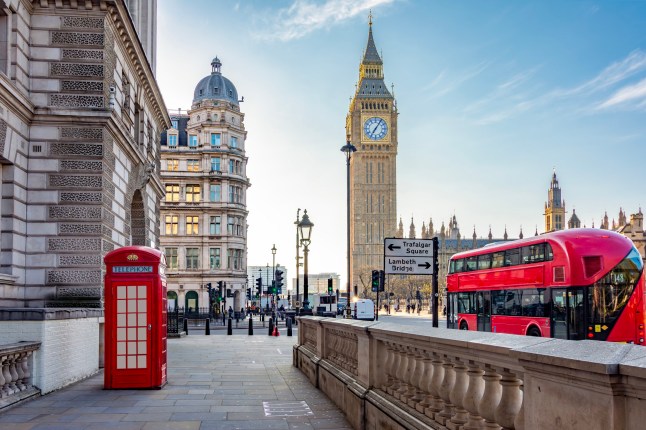
London was ranked at the 15th most resilient city, with a RAJ score of 15, putting it on par with Chengdu (China), Sapporo (Japan) and Sao Paulo.
The capital was said to have ‘temperate climate geography and decades of investment in flood defenses, heat action plans, and urban resilience frameworks’, which made it a low-risk area.
That doesn’t mean it’s immune to any climate disruption. Intense thunderstorms caused at least two house fires and significant flooding in north and south-west London back in June.
Flash flooding is the main risk to London according to the London Assembly, but there has been an effort to introduce sustainable drainage systems in the form of rain gardens, tree pits, swales and wetlands.
Latest London news
- Met Police refuse to say if they are investigating London upskirting website
- Man, 32, dies after ‘violent attack’ at major London station
- Londoners can hail a limited Uber Wayve robotaxi after new trial starts
To get the latest news from the capital, visit Metro’s London news hub.
This is aimed to prevent the consequences of flash floods which include flooding of buildings and transport routes, toilets and showers backing-up with sewage and flooding basements, pollution of rivers and canals with contaminated surface water from roads and the release of raw sewage into the Thames.
The most resilient cities
Chicago was ranked as the most resilient city in the world, with a RAJ score of eight (the lower the better). It was deemed to have good fresh water access and a low hurricane risk, but also had good measures in place to prevent flooding.
Its Tunnel and Reservoir Plan consists of deep large tunnels which reduce flooding, improve water quality and protect Lake Michigan from sewage.
In second place was the Ethiopian capital, Addis Ababa, because of its 2,665 metre elevation, making it the third-highest capital city in the world.
Third place went to Melbourne, while the highest placing European city was Barcelona in fourth, followed by Paris in seventh.
The least resilient cities
The Indian city of Ahmedabad is the least climate resilient in the world with a RAJ score of 41, but all of the top six most at-risk cities are in South Asia.
In second place was Hyderabad (Pakistan), followed by Multan (Pakistan), Dhaka (Bangladesh), Lahore (Pakistan) and Kolkata (India). These rankings were all driven by heat exposure, combined with low adaptation rates.
India routinely sees temperatures above 40C, but while it has a big economy, and has built airports, motorways and metro train networks, Vinayak Chatterjee, a veteran infrastructure expert, told the BBC it struggles with ‘a credible governance model’ to enact change in cities.
And, all three of the above countries have monsoon seasons which make life incredibly difficult. In August 2024, Bangladesh experienced one of the worst monsoon floods in recent history.
In just 24 hours, 500–600 millimetres of rain fell – more than the average annual rainfall for those areas in 11 districts in northeastern and southeastern Bangladesh, causing £206 million in crop damage according to the Bangladesh Agriculture Ministry.
The most and least resilient cities in a climate crisis
Most resilient
- Chicago, Illinois
- Addis Ababa, Ethiopia
- Melbourne, Australia
- Barcelona, Spain
- Ankara, Turkey
- Buenos Aires, Argentina
- Paris, France
- Istanbul, Turkey
- Bogota, Columbia
- Nairobi, Kenya
- Chongqing, China
- Rio de Janiero, Brazil
- Jakarta, India
- Toronto, Canada
- London
- Chengdu, China
- Sapporo, Japan
- Sao Paulo, Brazil
- Cairo, Eqypt
- Johannesburg, South Africa
Least Resilient
- Ahmedabad, India
- Hyderabad, India
- Multan, Pakistan
- Dhaka, Bangladesh
- Lahore, Pakistan
- Kolkata, India
- Faisalabad, Pakistan
- Karachi, Pakistan
- Chittagong, Bangladesh
- Taipei, Taiwan
- Casablanca, Morocco
- Bangalore, India
- Monterrey, Mexico
- Hanoi, Vietnam
- Chennai, India
- Colombo, Sri Lanka
- Phoenix, Arizona
- Guangzhou, China
- Manila, Philippines
- Fukuoka, Japan
Do you have a story you’d like to share? Get in touch by emailing [email protected]
Comment now
Comments
Add Metro as a Preferred Source on Google
Add as preferred source