
Article content
Twenty-five years after the Sept. 11 terrorist attacks a public opinion poll reveals a striking generational divide in what Canadians know about the world’s deadliest terror attacks, how deeply they feel its impact, how much they fear terrorism — and even on the question of whether terrorism can be justified.
Sign In or Create an Account
or View more offersArticle content
The poll’s findings suggest personal memories of the shock and horror of the Sept. 11, 2001, attacks change how people think about terrorism.
Article contentWe apologize, but this video has failed to load.Try refreshing your browser, or
tap here to see other videos from our team.We apologize, but this video has failed to load.Try refreshing your browser, or
tap here to see other videos from our team.Article content
Story continues below
This advertisement has not loaded yet, but your article continues below.
Article content
The nationwide poll of Canadian adults, conducted this week by Leger Marketing for the Association for Canadian Studies and provided to Postmedia, found those under the age of 25 are by far the least likely to say they have good knowledge of the events of 9/11.
Article contentArticle content
Among all respondents, 71 per cent said they have good knowledge of what happened on 9/11, while 17 per cent said they did not and 11 per cent said they didn’t know if they did or did not.
Article content
In the youngest cohort of adults, those between 18 and 24, only 47 per cent said they have good knowledge of 9/11, with 35 per cent saying they didn’t and 18 per cent saying they didn’t know. By contrast, those in the oldest cohort, aged 65 and up, 81 per cent said they have good knowledge and only 11 per cent said they didn’t. Across the age brackets, professed knowledge escalated with age.
Article content
Age changed how people answered all questions about terrorism.
Article content
“It’s a generational divide that’s really driving a lot of the responses on this subject,” said Jack Jedwab, president of the Montreal-based Association for Canadian Studies. “Which makes sense, since those in the youngest cohort weren’t born yet at that time (of 9/11).
Article content
Story continues below
This advertisement has not loaded yet, but your article continues below.
Article content
“So right out of the proverbial gate that’s going to be an important predictor of how they understand the post-9/11 climate, or the extent to which they think there is a post-9/11 climate, which, in terms of our understanding of the phenomenon of terrorism in this century, that’s the event that has shaped much of the response both in North America and globally.”
Article contentRead More
- How Canada’s best-known 9/11 widow became a fierce advocate for terrorist victims
- Born on 9/11: Canadians turning 25 mark a day of both happiness and mourning
- Story continues belowThis advertisement has not loaded yet, but your article continues below.
Article content
For many around the world old enough, 9/11, as the attacks are collectively known, stands as one of those rare events they remember precisely where they were or what they were doing when they first heard the news.
Article content
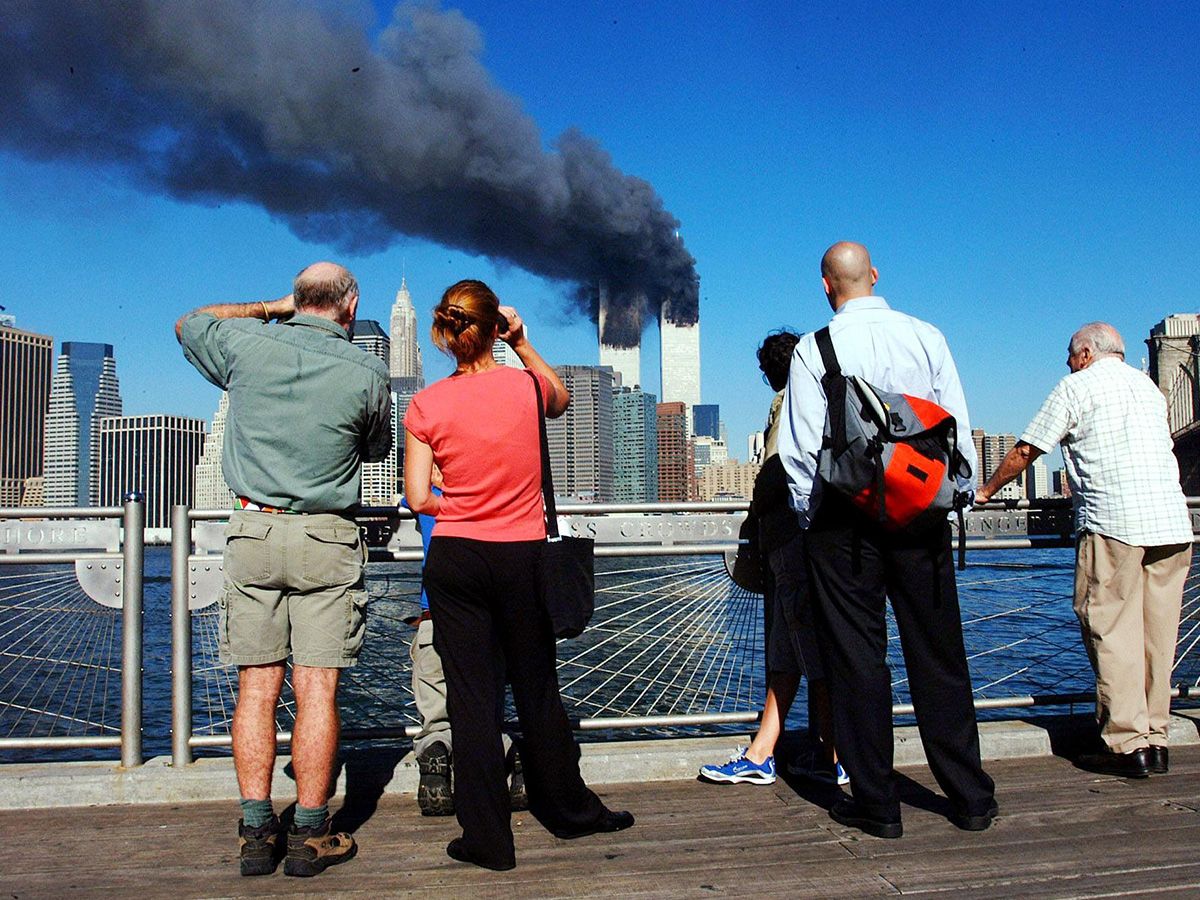
As that day unfolded, people learned that 19 terrorists with al-Qaida, a jihadist group, hijacked four U.S. passenger airliners and used them as deadly weapons. Two planes were crashed into iconic skyscrapers in New York, flattening them, one was flown into the Pentagon, the U.S. military’s headquarters, and a fourth crashed in a field before reaching its target, possibly the White House or the United States Capitol building, when passengers tried to take back control of the plane.
Article content
The coordinated attacks killed 2,977 victims. Several times more than that have died since, attributed to exposure to enormous clouds of toxic dust and ash in New York after World Trade Center’s two towers collapsed.