
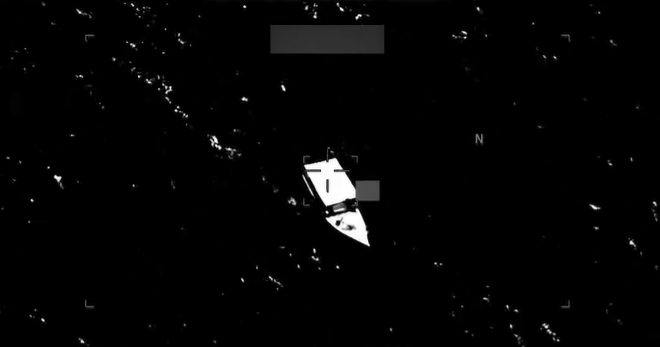
Secretary of State Marco Rubio defended controversial strikes on suspected drug-trafficking boats during a visit to Ecuador on Wednesday, arguing Latin American cartels would “eat these countries alive” if left unchecked. Hours later, the U.S. military confirmed it conducted another deadly strike in the Caribbean Sea.
Hailing a new generation of conservative leaders emerging across the region who are allied with President Trump, Rubio said Washington was finding partners willing to be “very aggressive” against criminal groups.
Since Mr. Trump returned to power, the U.S. has conducted airstrikes against vessels plying known trafficking routes in the Caribbean and eastern Pacific.
According to Pentagon figures, the operations have killed more than 200 people.
Rights groups, fishermen and their relatives have questioned the campaign, alleging vessels were targeted without sufficient evidence of links to trafficking.
Experts have also questioned whether they do anything to curb the flow of cocaine and other drugs to the United States — the world’s largest consumer.
Speaking after talks with President Daniel Noboa in Quito, Rubio said the operations would continue.
“If you don’t confront these groups, they will eat these countries alive,” he warned. “It’s like a cancer that continues to grow until you don’t literally have a state anymore.”
“I’m glad that we have leaders in this region that are serious about going after these groups, because if we didn’t, we would have failed country after failed country.”
In recent weeks there have been signs of a shift in tactics, with joint U.S.-Ecuador patrols removing crews from at least six boats before sinking the vessels.
Last week, the U.S. military intercepted and sank a vessel that was allegedly being used to support at-sea drug trafficking by the Ecuadorian criminal organization Los Choneros. It came after a similar operation that destroyed another vessel linked to the gang, one of Ecuador’s main drug trafficking and extortion groups.
Rubio said decisions were made case by case and depended on the threat posed by a vessel, its location and local laws.
“When you’re conducting a joint operation in territorial waters, you have to reach an understanding as to how those operations are going to occur,” he said.
Asked whether vessels would continue to be destroyed, Rubio replied: “Well again, it depends, and we still blow up ships.”
Later Wednesday, the U.S. military’s Southern Command (SOUTHCOM) said American forces executed a “lethal kinetic strike on a go-fast vessel operating along established narco-trafficking routes in the Caribbean.”
The operation “killed three narco-terrorists,” SOUTHCOM posted on X along with black-and-white footage of a ship exploding in the water and bursting into flames.
In Ecuador alone, more than 25,000 people have been murdered in the last three years as drug gangs have vied for control of trafficking routes.
“We are talking about terrorists who, in many cases, possess weapons and equipment resembling the national armies of certain countries,” Rubio said.
Earlier this year, American commandos joined Ecuadorian troops in a joint mission aimed at dismantling a suspected criminal hub operated by an alleged narco-terrorist organization along the country’s coast.
Criminal gang violence continues unabated in Ecuador following the recapture in June 2025 of the country’s biggest drug lord, Adolfo Macías after his escape from a maximum-security prison in 2024. In July 2025, the Ecuadoran government extradited Macías to the U.S., where he faces multiple drug trafficking and firearms charges.
U.S. blacklists “Tiguerones” as terror group
While in Quito, Rubio announced the designation of one Ecuadorian gang, Los Tiguerones, as a “terrorist organization” and sanctions against seven Ecuadoran former officials.
The Tiguerones made international headlines in early 2024 when masked gang members stormed a TV studio during a live broadcast, firing shots and forcing terrified crew to the ground.
The move to blacklist the gang comes about two months after the U.S. designated Ecuadorian gang the “Chone Killers” as a foreign terrorist organization. The Chone Killers are an offshoot of Los Chineros, a gang the U.S. previously designated as a foreign terrorist organization in 2020.
Los Lobos (The Wolves) and Los Choneros (after the city of Chone) are among Ecuador’s main drug trafficking and extortion gangs, with ties to international cartels. Last year, Los Lobos was designated a terrorist organization by the U.S.
After visiting Colombia and Ecuador, Rubio late Wednesday landed in Lima, where he will meet Peruvian leaders on the last stop of a tour to shore up rightwing allies and bolster U.S. influence across the region.
In Colombia, Rubio pledged to restore “natural relations” with Bogota after years of leftist rule.
He had less warm words for leftist-led Mexico, which he said was stepping up the cartel fight “but it is still not nearly enough.”
“There are territories, vast territories in Mexico that are not governed by the state,” he said. “That threat will have to be confronted one way or the other.”
In: