
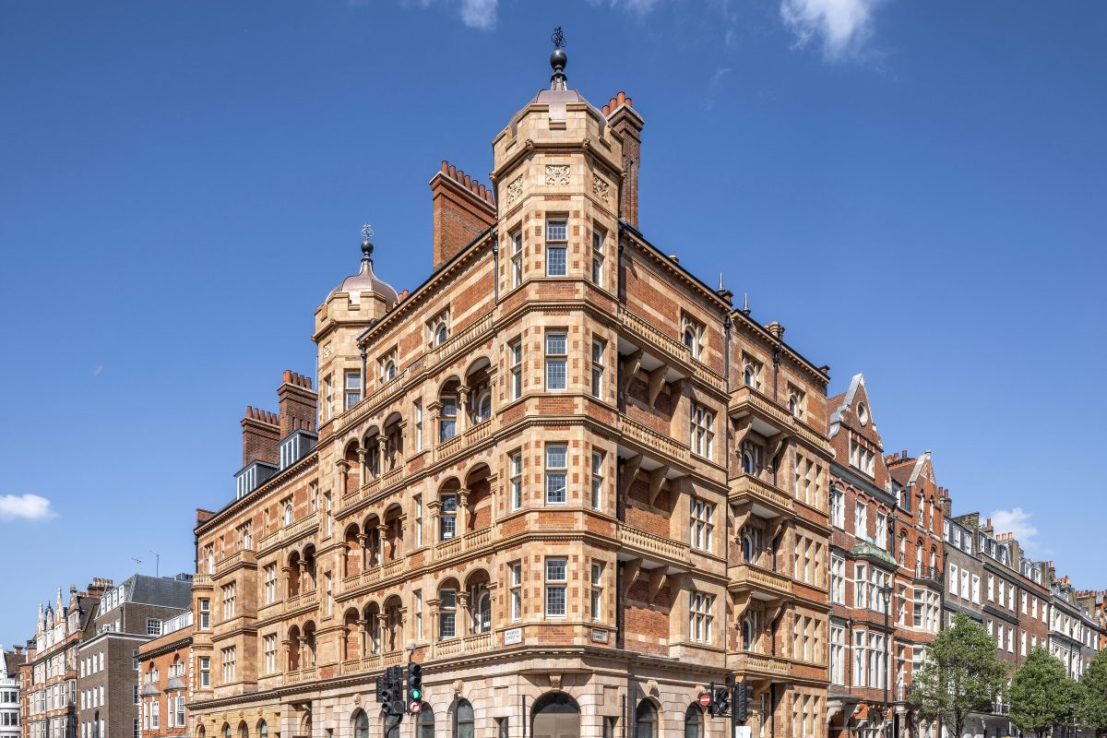
One of London’s biggest landowning families raked in record rent from its Marylebone property empire last year, helped by a surge in demand at its ‘cradle-to-grave’ private healthcare district.
Howard de Walden Estates, which owns the Harley Street health district and the residential Marylebone Village, grew its rental income from the estate by 9.3 per cent to £179.4m in the year to March.
The estate, sprawling across Victorian and Georgian townhouses in the centre of London, has been controlled by the Howard de Walden family since 1879. Today it is led by Peter Czerin, the dynasty’s 11th Baron.
Mark Kildea, chief executive of the landowner, told City AM that the health district is the jewel in the crown of this billion-pound estate.
In recent years, the landowner has focussed on growing Harley Street’s reputation by attracting world-leading health specialists. The cluster of health providers, which includes private-sector-NHS partnerships, is evolving into a cradle-to-grave destination for its private clients, Kildea said.
He told City AM: “You can go and get a GP appointment here, you can have day surgery, you can be an overnight patient, you can be imaged on the estate and you can have intensive care treatment.
“So everything between being born on the estate at The Portland Hospital to, in theory, you could die on the estate at an intensive care facility, which is obviously not what we want to plan for everybody. But we’re just explaining the everything-in-between [service].”
Harley St averting ‘healthcare bankruptcy’
Harley Street’s tenants are at the forefront of new artificial intelligence and health technologies, Kildea said. “They could be anywhere. They could be in King’s Cross, they could be in Victoria.”
The health district is the only such estate in the world of this size which exists without government backing, he said. “We provide [that]. We connect people together in a way that they couldn’t.”
The country would be facing what Kildea calls “healthcare bankruptcy” without the health-tech innovation of Harley Street’s tenants, he claims.
Though NHS waiting lists are easing, the landowning boss said the estate is seeing huge demand for specialist procedures which are “poorly provided” for by the public health service, like mental health and women’s health.
Harley Street accounts for 40 per cent of London’s private healthcare market, and 11 per cent of the UK-wide sector.
Howard de Walden’s property empire was valued at £4.5bn in March, up 3.2 per cent from the year before. The group posted a £97m pre-tax profit in the year, improved by 27.5 per cent year on year.
The family paid itself a £49m dividend in the period, just below last year’s £50m. Sir William Proby, chairman of the landowner, said it delivered “considerable progress” in the last year, prevailing against a “challenging economic environment”.
London luxury property ‘slowing down’
Alongside the Harley Street health district, Howard de Walden also commands a £1.2bn residential property empire, which it rents out to some of London’s wealthiest tenants.
The capital has suffered sluggish growth in its prime property market in recent years, and rising mortgage rates and inflation fears have pushed some of London’s most up-market postcodes into value losses in recent months.
In June, house prices in Westminster – which includes luxury neighbourhoods like Mayfair, Belgravia and St John’s Wood – fell by more than a quarter. Prices in Kensington and Chelsea slipped by nearly 15 per cent.
Andrew Griffith, the estate’s finance chief, conceded that rental growth in Marylebone has “slowed,” adding that it has “not dropped off, so to speak”. The group’s rental income from its residential estate grew by six per cent to nearly £41m in the year to March.
Griffith said: “I don’t think it’s the growth that’s been seen over the last few years, so we have seen a slowdown, and that in some ways means it’s probably getting to the point where it’s the right affordability for the people who want to live in the area.
“I think that’s a key thing for us. That’s positive because we’re seeing people stay longer, and that’s only a positive in terms of creating a village feel.”
The estate’s main attraction – to healthcare providers, office tenants and residential inhabitants – is its appeal as a “soft neighbourhood,” Kildea said. “If you look at Canary Wharf, it’s a very urban, boxy environment.
“It feels much more like a neighbourhood, where you’re more likely to bump into people that you will see regularly. To get that feel in a very urban [location], in the heart of the city, is very unusual.”