
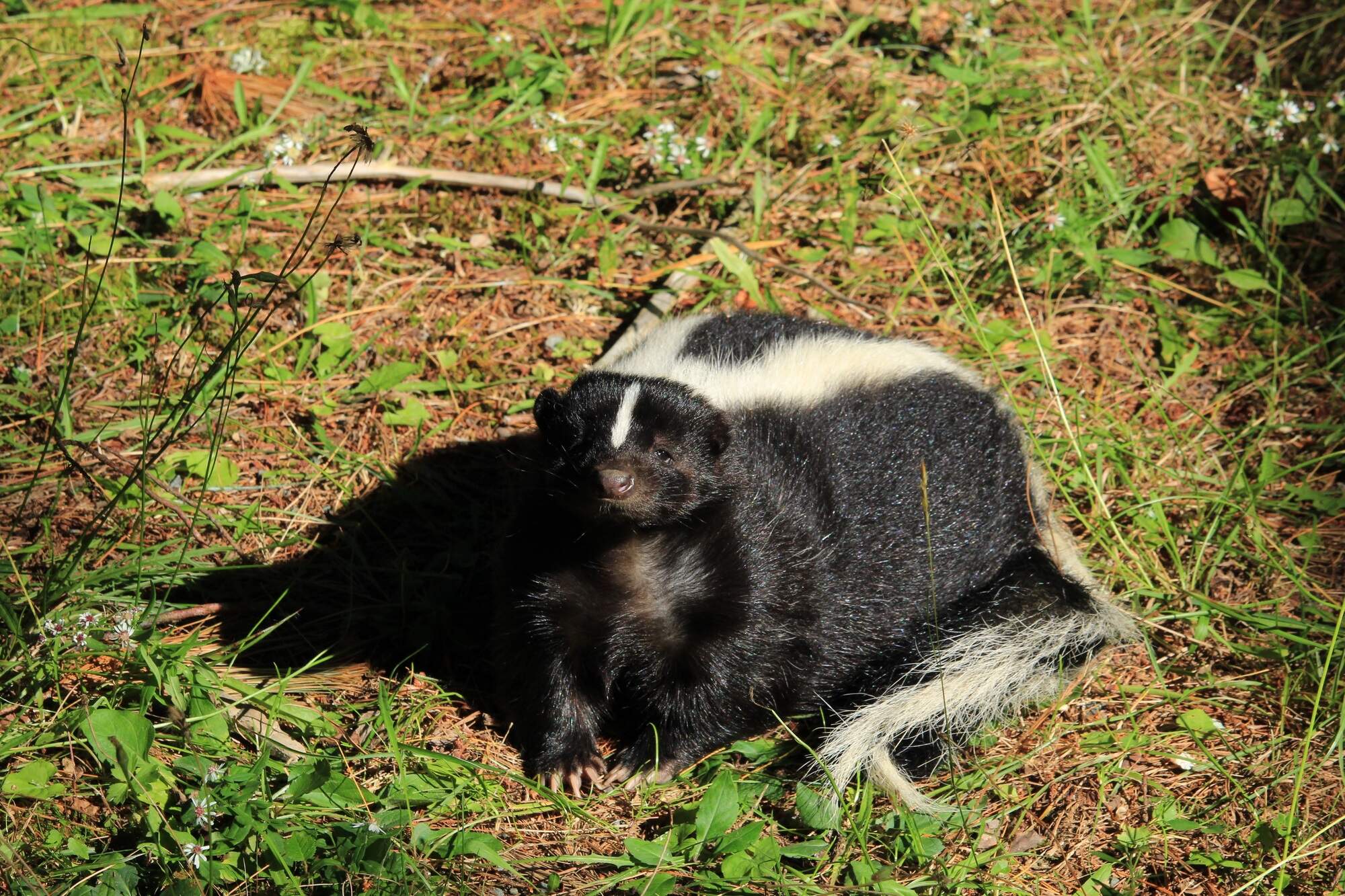
The National Parks and Wildlife Service have confirmed their investigation into how the striped skunks ended up in the Kildare countryside is still ongoing at this time
An “active investigation” into the discovery of seven skunks in Co Kildare is ongoing, a spokesperson for the National Parks and Wildlife Service (NPWS) has confirmed.
It comes as regional staff at the NPWS received a report containing video evidence of a non-native species, striped skunk (Mephitis mephitis), in the Kildare countryside, in March 2026, from a member of the public.
It is not yet known for definite whether the skunks were deliberately released or somehow managed to escape.
The striped skunk is a species native to places like Canada, the United States and Northern Mexico and is not a part of Ireland’s native wildlife.
They are opportunistic omnivores, which means they eat both plants and animals. They feed on things like insects, small mammals, eggs, plants, vegetation and fruit.
The reported sighting of the striped skunk was beside a protected raised bog near Newbridge, which is also an important site for native breeding waders.
NPWS staff say they assessed the report given the potential harm that a “non-native omnivore with no natural predators could have on local biodiversity and animals”.
However, NPWS staff quickly discovered there was more than just one striped skunk roaming the Kildare countryside.
“It became evident that there were a number of individual striped skunk reported,”said the NPWS spokesperson.
The skunks were captured and humanely euthanised on site of capture in March and April 2026. The last striped skunk reported and humanely caught and dispatched was recorded in late April 2026.
The NPWS said they contacted the Department of Agriculture, Food and the Marine (DAFM) veterinary offices in order to “ascertain any potential disease or other considerations outside of the potential adverse ecological impact of the presence of the animals”.
Subsequently, carcasses of the animals were submitted to a DAFM Regional Veterinary Laboratory for analysis.
“An active investigation under the Birds and Habitats Regulations is ongoing into the origins of the release of these non-native animals that pose a potential threat to biodiversity,” added the spokesperson.
“NPWS cannot comment further on an active investigation, but is asking the public to remain vigilant and report any sightings or information immediately to [email protected] or (01) 5393230.”