
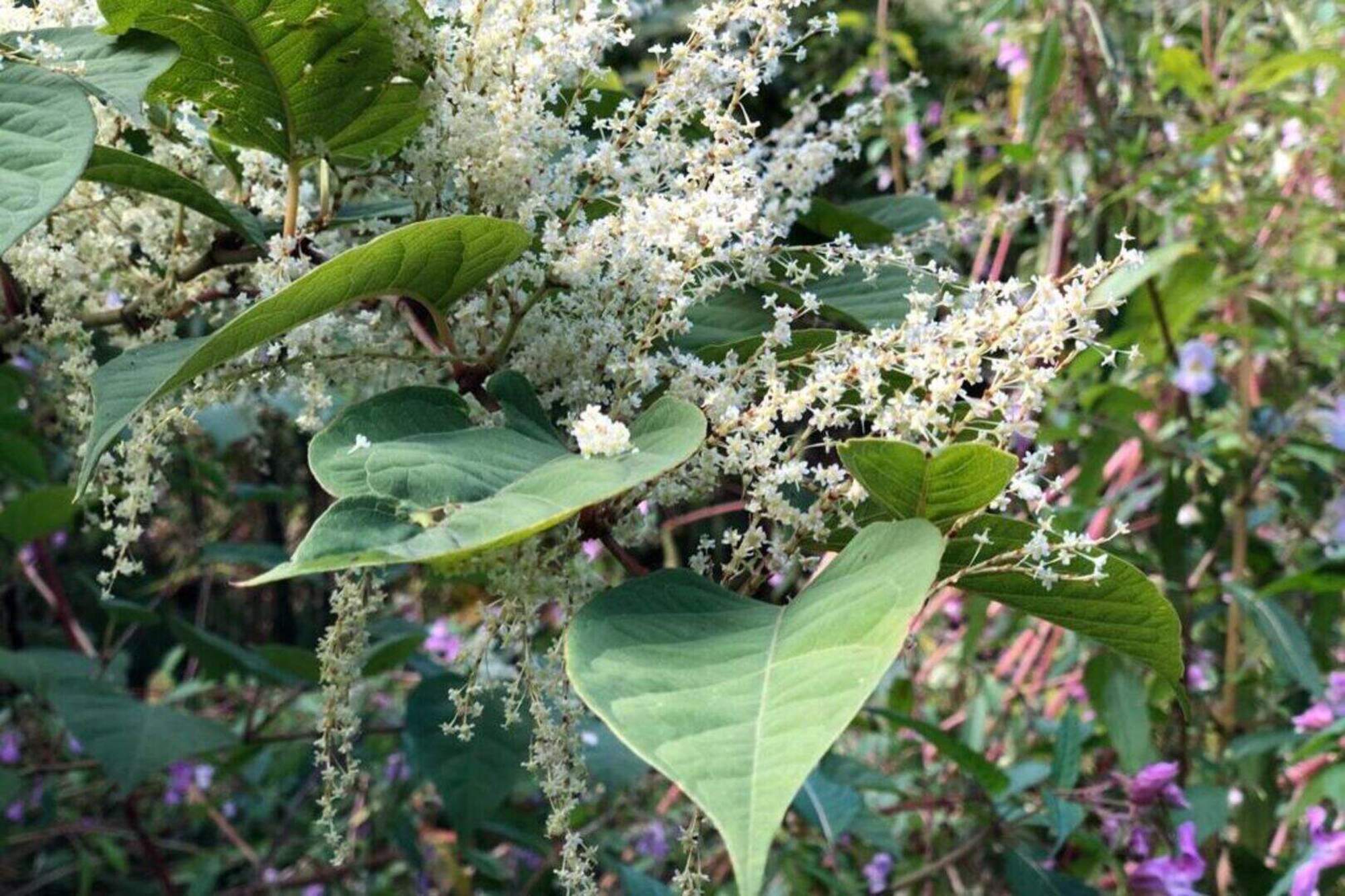
A Dundalk councillor has called for a stronger response from Louth County Council when Japanese Knotweed is reported, warning that property owners often struggle to find specialists to treat the invasive plant.
Speaking at the September meeting of Dundalk Municipal District, Cllr Ciarán Fisher raised concerns about how reports of Japanese Knotweed are handled once they are submitted.
He said that while there is a system in place for reporting Japanese Knotweed and other invasive plant species, residents receive little more than advisory information after making a report.
“There is a forum to report Japanese Knotweed and invasive plant species, but people find that once they report it to the council they are sent back an advisory notice,” he said.
Cllr Fisher also highlighted the difficulties faced by landowners seeking to tackle infestations.
“It is very difficult to find someone who can treat Japanese Knotweed, as I found out in recent months. In some cases it is very expensive,” he told the meeting.
Japanese Knotweed is a highly invasive plant species native to East Asia. Known for its rapid growth and extensive root system, it can cause significant damage to properties and infrastructure if left untreated.
Its deep-reaching roots can exploit cracks in concrete, brickwork, tarmac and drainage systems. As the root network expands, it can undermine foundations and damage walls and roads.
Cllr Fisher said the council should take a more proactive role once it is reported. He suggested that letters should be issued to property owners where Japanese Knotweed has been identified and suggested a register be made available of specialists who are able to treat it.
Responding to the concerns, a council spokesperson said the matter would be referred to the local authority’s parks section for consideration.
The spokesperson added that officials could examine the possibility of providing additional information and guidance to residents who report Japanese Knotweed.
Funded by the Local Democracy Reporting Scheme