
Former VicRoads staff say privatisation to blame for Victoria’s crumbling roads By Coco Veldkamp and Debbie Rybicki
Posted Thu 10 Sep 2026 at 9:28amThu 10 Sep 2026 at 9:28amThu 10 Sep 2026 at 9:28am
In short:
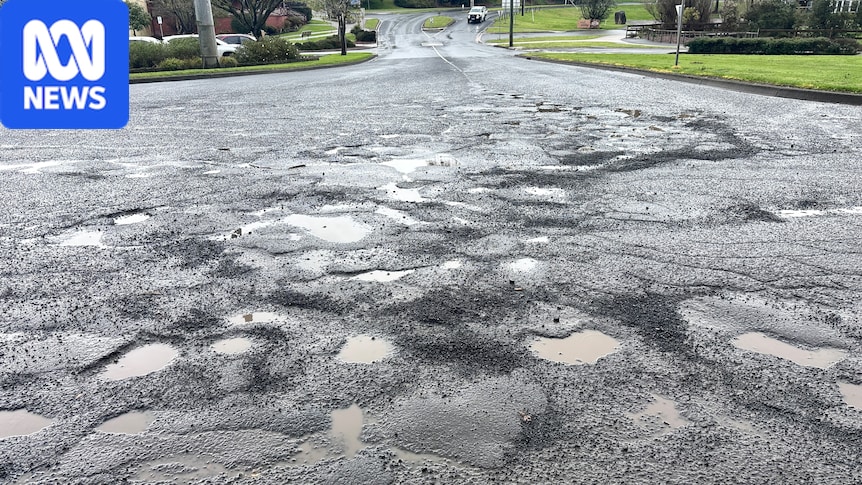
Victoria’s roads are notoriously bad, with the Victorian Auditor-General’s Office labelling almost half of the state’s roads as “poor or very poor”.
Former VicRoads staff say the way the roads have been made, and privatisation of the state’s road making, has led to the decline.
What’s next?
The major parties in the upcoming Victorian election have made significant roadwork promises in a bid to win voters.
The upcoming Victorian election is shaping up to be a poll on potholes.
Political parties have set out their plans and promises to fix the state’s roads, no doubt in response to a litany of complaints about blown tyres and close calls that have filled newspaper letter sections and talkback radio segments.
The public sentiment is backed up by the Victorian Auditor-General’s Office Maintaining State Roads report, released yesterday, which said around “48 per cent of state roads were in poor or very poor condition” as of 2024.
But why are Victoria’s roads so bad?
The ABC has spoken to three former VicRoads workers, who say the answers lie in the way the roads are made and maintained, and who is making them.
Flexible vs rigid
Former VicRoads road construction engineer Jeff Moran said there were two basic types of pavements for roads — flexible and rigid.
Flexible pavement is made from crushed-up rocks that are compacted to a high density and then sealed.
Rigid pavement is bound together, like concrete, forming one solid slab below the surface.
In general, flexible pavement is cheaper but does not last as long as rigid pavement.
“Overseas, rigid pavements are very much the go,” Mr Moran said.
“But in Victoria … they basically went for the crushed-rock type [flexible pavement].”
Mr Moran said that at first, the state government’s roads department took care to maintain the flexible pavement by resealing it every 10 years to keep out water and running regular patrols.
But he said that since the road construction and maintenance began being privatised in the mid-to-late 1990s by the Liberal Kennett government, the necessary ongoing maintenance was often neglected.
“Over 20 years I’ve seen the roads go from well maintained and the best roads in Australia to basically the worst,”
Mr Moran said.
Mr Moran said the state’s western highways should be replaced with full-depth rigid pavement as opposed to flexible crushed-rock pavement.
‘The dollar wasn’t going as far’
Gary Rusmand worked for VicRoads before moving to Western Australia to work on regional roads over there.
Mr Rusmand said that when Victoria made the shift to privatised roads, skilled workers moved from working for the government to working for private companies where they were in high demand and could earn more.
“Working for a private enterprise you have got to make money and you have got to make profit,” Mr Rusmand said.
He said this raised the costs of maintenance.
“The dollar wasn’t going as far, so there was a reduction in repairs, and often because of the increase in price,” he said.
“The [government] funding did not increase so the repairs did not increase.”
Four years ago, Western Australia brought its road maintenance back in-house after many years of privatisation.
“I can see the improvement in the road network [in WA] over the last 10 years and significantly over the last four to five,” Mr Rusmand said.
Changes to efficiency
Retired VicRoads engineer John Lambert said increasing safety standards had also raised costs “dramatically”.
“Instead of having a two-man crew, you might have six or you might have 12 to cover all of the safety aspects,” Mr Lambert said.
Mr Lambert said the state government would need to make a decision about whether traffic management was also brought in-house along with road maintenance and construction.
“In order for [private traffic management] to be efficient they will put the signs out hours before the work commence,” Mr Lambert said.
“Quite a lot of drivers ignore signage relating to roadworks because nothing is going, and of course that doesn’t make it safe at all.
“Going back in-house may make things slightly more efficient.”
Premier Ben Carroll’s office did not respond to questions about cost-comparison between in-house and private road maintenance, what would happen to ongoing road maintenance contracts, or whether private road maintenance contractors may be transferred into public sector roles.
Election promises
The premier has staked several election promises on fixing Victorian roads.
He has pledged to double pothole and road repairs this year, and re-announced the use of minimum security prisoners to help with basic roadside maintenance.
Mr Carroll also said a re-elected Labor government would bring road maintenance back in-house, ending decades of privatisation.
The Liberal-National coalition has pledged $5 billion over four years to repair and rebuild the state’s roads, as well as reviewing construction standards and maintenance contracts, and re-instating the Country Roads and Bridges Program.