
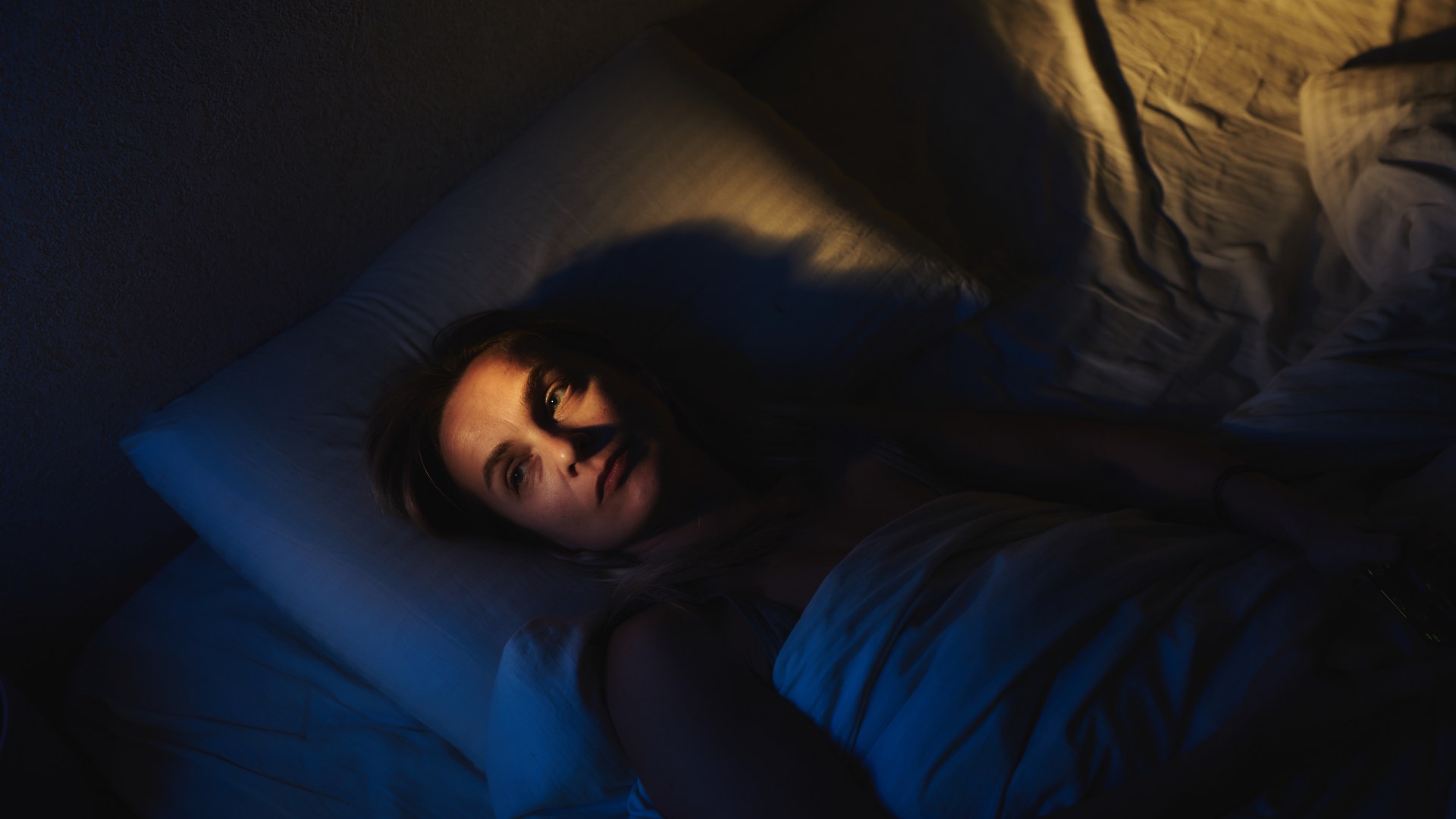
DO you doze off with the TV on or get the heebie-jeebies without a night light?
Falling asleep with light on could be weakening your heart and changing its shape, scientists say.
People who are exposed to too much light at night are more likely to experience changes to the structure and function of their hearts, which could be harmful, a study from Tulane University in New Orleans showed.
It’s not the first time light exposure during sleep hours has been linked to a higher risk of heart disease – thought to be brought on by disruptions to people’s body clock.
Research published earlier this year found that being exposed to bright light could up your risk of heart failure by 56 per cent and make you 47 per cent more likely to have a heart attack,
But previous studies haven’t tracked what a lighter sleeping environment does to the heart.
Read more on heart disease
‘SUPERHUMAN’
NHS trials AI to spot heart disease in just two seconds – as 400K on waitlist
HEART OF IT
From wrinkles to eye bumps – the 6 signs of hidden heart disease on your face
Professor Lu Qi, who lead the new research published in the European Heart Journal, said: “Previous observational studies have linked night-time light exposure with a higher risk of cardiovascular disease, but little is known about the related cardiac structure and functional changes.
“We carried out this research to find out what happens to the heart over time when people are exposed to too much light at night-time.”
More than 11,000 UK adults were asked to wear a light sensor on their wrists for a week to see how dark their sleeping environment was.
Three years later, the participants underwent a heart MRI and researchers compared their results according to how much light entered their bedroom at night.
Most read in Health
DOC SHOCK
One child, 9, dead and 208 patients harmed by rogue surgeon at major NHS hospital
‘TOASTED SKIN’
Horrifying pics reveal why gaming for hours is putting kids at risk of burns
TAKE NOTE
The 5 little-known signs of blood cancer as BBC star reveals incurable diagnosis
LIFE LIFT
I gained 4st & was so weak I couldn’t hold a pen… 91p supp gave me my life back
Light intensity is measured with a lux meter.
It’s generally recommended that people sleep in complete darkness, less than one lux. Anything more than that has been linked to getting less deep sleep.
But some participants were exposed to light levels of three lux or more.
The heart scans showed that those exposed to the most light at night had thickening in the wall of their left ventricle, one of the chambers of the heart, reducing the space inside the chamber.
They also showed early signs of heart dysfunction, as their heart muscle was less able to flex.
Researchers also found changes in the right ventricles and left atria, two other chambers of the heart.
Professor Qi said: “This is the first study of its kind, and it shows that exposure to higher levels of light at night-time is linked to cardiac remodelling.
“This is where the structure and function of the heart changes and we typically see it in response to chronic stress or injury to the heart.
“It’s our body’s way of adapting to that stress, but ultimately it weakens the heart and can lead to heart failure.”
He suggested lessening light exposure at night should be considered as a way to reduce the risk of heart disease.
“Light pollution has emerged as a new risk factor for cardiovascular disease,” he explained.
“Our findings, together with evidence from other studies, suggest that reduction of night-time light exposure should be considered as one of the potential strategies for preventing heart disease by clinicians and policy makers.”
Lack of sleep – which can be brought on too much light exposure at night – has been shown to increase the risk of health problems that make heart disease more likely.
These can include high blood pressure, as this tends to drop during normal and deep sleep, as well as type 2 diabetes and obesity.
In an editorial accompanying the study, Professor Thomas Münzel from University Medical Center Mainz in Germany, added: “It is time for clinicians, particularly those managing patients with heart failure or atrial fibrillation, to start asking about the sleep environment: how dark the bedroom is, whether the patient works night shifts, and how much screen use occurs after sunset.
RECOMMENDED STORIES
“The advice is simple and inexpensive: blackout curtains, warm-coloured bedside lighting, and covering the small standby LEDs on household electronics.”