
THE mastermind of 9/11 has been dead for 15 years, killed by US special forces after a decade-long manhunt.
But as the 25th anniversary of the atrocity is marked tomorrow, experts warn Osama bin Laden’s terror network is now more capable than it was before the Twin Towers fell, with Britain firmly in its sights.
20
20
20
20
Al-Qaeda hijackers murdered almost 3,000 people on September 11, 2001, triggering the War on Terror and a global pledge to destroy the group behind it.
In the aftermath, Prime Minister Tony Blair delivered an emphatic statement to MPs: “We must bring bin Laden and other al-Qaeda leaders to justice and eliminate the terrorist threat that they pose.”
Bin Laden was killed in Pakistan in 2011, while successive strikes wiped out his successor Ayman Al-Zawihiri and much of the organisation’s senior command.
Yet al-Qaeda survived and quietly rebuilt.
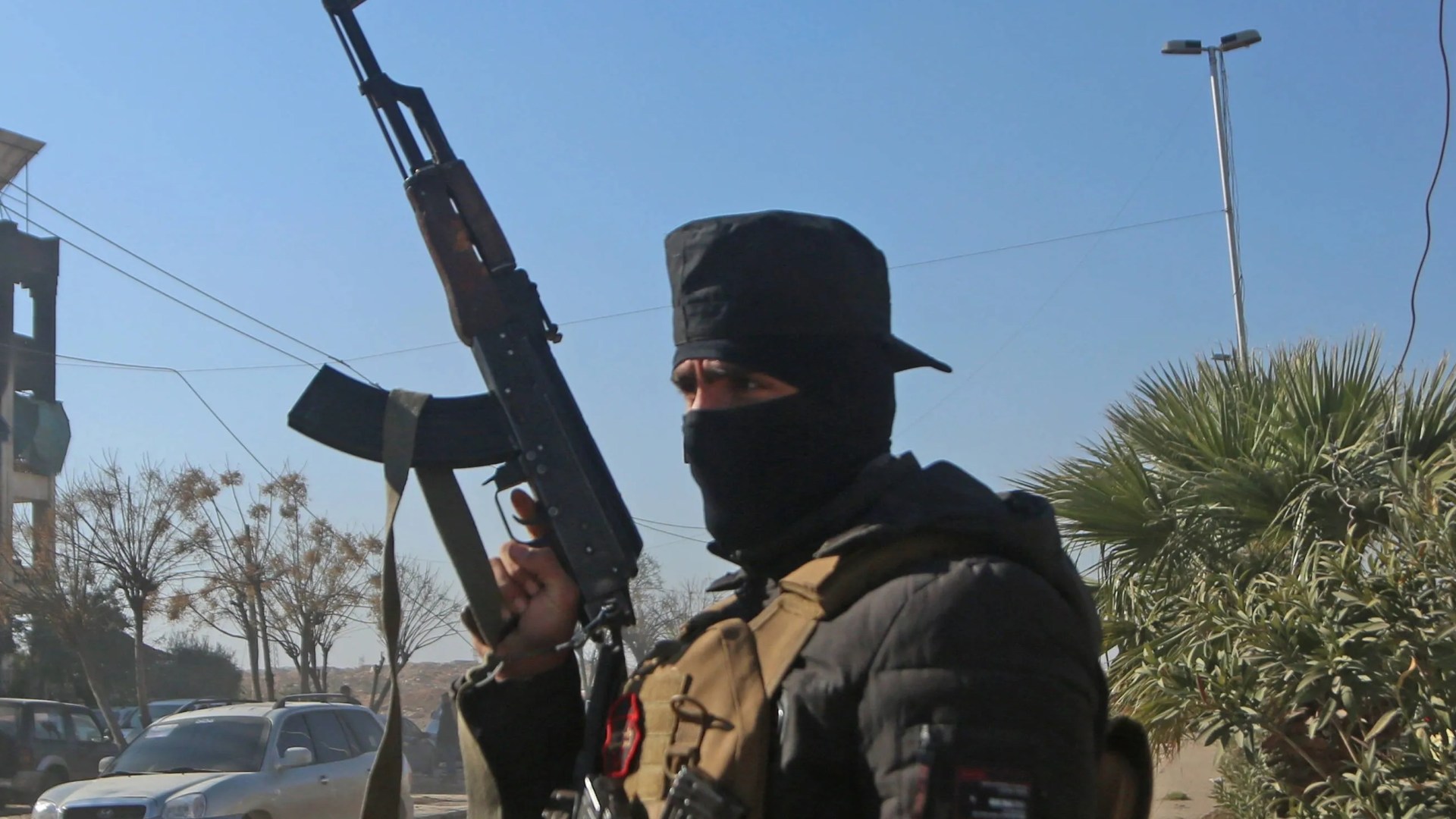
It now has thousands of fighters, new training camps and wealthy branches spread across Africa, Afghanistan and the Middle East.
Its extremists have weaponised drones and begun exploiting artificial intelligence, while one branch is feared to be researching weapons of mass destruction.
At the same time Chris Phillips, the former head of the National Counter Terrorism Security Office, believes the UK is now an easier target than it was in the years after 9/11.
He said: “Britain is an easier target now. You attack what you can get access to and we remain a major Western target.
“It has decentralised and that makes it much harder to monitor.
“You are dealing with people in different countries and communications between them may be limited.”
He also warned that al-Qaeda’s new structure makes it far more difficult for intelligence agencies to track.
Dr Sara Harmouch, a terrorism expert and fellow at George Washington University, said: “It is mind-blowing that people look at al-Qaeda as a dead or defunct organisation. Its capabilities today are far beyond what they were before 9/11.
20
20
“It now has thousands of fighters across a global network, vastly greater financial resources, new training camps and advanced technology.
“The warning is that things are aligning. They have the resources, they have the technology, the intent is still there and their adaptability is still there.”
The group’s growing strength can be seen across its worldwide network.
A UN Security Council report released last month estimated that up to 8,000 fighters belong to its Sahel branch, JNIM.
In April it mounted a major offensive against military positions in Mali after reportedly receiving around £37million from a single ransom payment.
In Somalia, al-Shabaab was collecting between £3.7million and £6.7million every month in the capital Mogadishu alone.
The figures reveal how its branches can command armies, seize territory and rake in millions while the group’s leaders remain in the shadows.
These affiliates have their own commanders and pursue local goals, but continue to swear allegiance to al-Qaeda and share propaganda, expertise, training and money.
Al-Qaeda has also been rebuilding in Afghanistan following the withdrawal of Western forces in 2021.
20
20
20
20
The group has established new training camps and is accused of providing training and guidance to the Pakistani Taliban, known as the TTP.
The Taliban insists it does not allow Afghanistan to be used as a haven for terrorists.
But Western intelligence in the country is now severely limited, according to experts, leaving security agencies with a far murkier picture of what is happening on the ground.
Phillips said: “The West moved out and there is now very little intelligence coming out of Afghanistan.
“They are growing and rebuilding. We took out their leaders one by one, but the basic problem remains the same.”
Bin Laden was succeeded by Ayman al-Zawahiri, who was himself killed in a US drone strike in Kabul in 2022.
The sprawling network is now overseen by Saif al-Adel, a former Egyptian special forces officer widely regarded as its de facto leader.
He is believed to be based in Iran, although Tehran denies harbouring senior al-Qaeda figures.
The shadowy commander poses a different threat from the man who masterminded 9/11.
While bin Laden sought spectacular atrocities designed to capture the world’s attention, al-Adel is considered more calculating and prefers to operate behind the scenes.
Dr Harmouch said: “Al-Qaeda is very patient, very strategic and very deliberate, especially under its new de facto leader, Saif al-Adel, a former intelligence officer with a savvy military mindset.
“He is not like bin Laden. Bin Laden loved spectacle. Saif al-Adel is more deceptive and likes to operate behind the scenes, so the attacks he might plan would look different.”
20
20
His writings offer a chilling insight into what those operations could involve.
Al-Adel has discussed using drones instead of suicide bombers, mounting cyberattacks and striking power grids and other vital infrastructure.
He has also written about poisoning water supplies and using chemical and biological weapons against al-Qaeda’s enemies.
Another tactic would see small, dispersed cells strike several targets at once.
Dr Harmouch believes developments in drones and artificial intelligence could now help the network mount more sophisticated attacks.
She said: “They are using drones for surveillance and reconnaissance, but they are also weaponising them.
“We are seeing the use of AI in propaganda and recruitment, and it could be used for planning and targeting.
“These technologies make it easier to do things that previously required much more expertise and manpower.”
Most worryingly, she fears al-Qaeda in the Arabian Peninsula, its Yemen-based branch known as AQAP, may have established a specialist unit to research weapons of mass destruction.
She said: “Al-Qaeda has reiterated its intent to pursue weapons of mass destruction, especially since 2021.
“From talking to people on the ground in Yemen, it seems that al-Qaeda in Yemen has a dedicated department focusing resources and research on that.”
There is no evidence that the group possesses a working weapon of mass destruction.
But the latest UN report found its Yemen branch had replenished its arsenal with advanced jamming equipment, infrared-guided missiles, air-defence platforms, mortars, heavy machine guns and sniper rifles.
It has also been trying to obtain drones capable of carrying explosive payloads weighing up to one kilogram.
The UN said its finances had improved to the point that it was “no longer under financial pressure”.
Alongside new technology, al-Qaeda continues to promote lone-wolf attacks.
Supporters are encouraged to kill using whatever they can obtain, including guns, knives and vehicles.
The terrorist group used the Bondi Beach attack, where 15 people were killed, to ‘inspire’ similar attacks in a guide published in their propaganda pamphlet.
The Sun has uncovered a disturbing English-language al-Qaeda video calling for attacks in the West, posted in private social media channels.
Released by the terror network’s Yemen branch, it used footage of 9/11 and the 1993 World Trade Center bombing before urging supporters to launch attacks “behind enemy lines”.
20
20
20
20
Called Why Jihadi Operations in the West?, it told extremists to strike the West “where it hurts” and “bring it to its knees”.
The video claimed that even one attacker could inflict serious political, economic and social damage.
It came amid fears al-Qaeda may be placing greater emphasis on targeted assassinations.
Saad bin Atef al-Awlaki, the head of its Yemen branch, recently appeared in a propaganda video that showed images of Donald Trump, Vice President JD Vance, Secretary of State Marco Rubio, Defence Secretary Pete Hegseth and Elon Musk.
He called on lone extremists to target American leaders and issued threats over the war in Gaza.
Al-Awlaki said: “There are no red lines after what happened and is happening to our people in Gaza.”
Prince Harry has also reportedly been the subject of repeated al-Qaeda threats.
A confidential security report revealed this year detailed six alleged terrorist plots against the Duke of Sussex, five of which were said to have originated in Britain.
They included an al-Qaeda document calling for his assassination.
Harry later accused security chiefs of failing to tell his team about a separate threat made by the group in 2023.
MI5 director-general Sir Ken McCallum has warned that overseas terrorist organisations continue trying to direct attacks into Britain and Europe.
He singled out al-Qaeda’s resurgence as one of the trends causing concern and said the war in the Middle East was being exploited to call for violence.
20
20
20
20
In one recent month, more than a third of MI5’s highest-priority investigations had some connection to an organised group overseas.
The security service also revealed that many suspects under investigation were lone individuals who had been radicalised online without official ties to a terrorist group.
Phillips believes that strategy allows al-Qaeda to pose a danger without sending a trained cell from abroad.
He said: “What you have is the desire to encourage lone actors to do their worst in their own countries.
“It could be a vehicle knocking people over, or bombs, guns and knives. They encourage people already here to use whatever they can get their hands on.”
Concerns have also been raised about convicted extremists returning to the streets.
Zahid Iqbal, who plotted to bomb a Territorial Army base on behalf of al-Qaeda, was approved for release this year despite reports that prison and community offender managers opposed the move.
Five other al-Qaeda-linked terrorists were also due to face parole hearings during 2026.
They included Waheed Zaman, Arafat Waheed Khan and Ibrahim Savant, who were jailed over a plot to blow up transatlantic airliners using liquid bombs.
Rangzieb Ahmed, once described as bin Laden’s right-hand man in Europe, and Omar Khyam, who plotted to use 600kg of fertiliser in a bombing campaign, were also listed for hearings.
Phillips warned that jails can bring extremists into contact with hardened gang members and organised criminals.
He said: “We know there is a radicalisation problem in prisons.
“You can get extremists mixing with people from gangs and organised crime. They can come out more radicalised and with a wider network of criminal contacts than they had when they went in.”
He also believes terrorists may have exploited illegal migration routes into Europe, although there is no evidence linking the overwhelming majority of small-boat arrivals to extremism.
Phillips said: “Most people arriving will be completely innocent, but the concern is that we do not know exactly who everyone is.
“I have no doubt that extremists will try to exploit any route they can. The big concern for me is that we just don’t know who is coming.”
Al-Qaeda could also seek to cause chaos without carrying out a conventional bombing.
Phillips warned that power stations, water supplies, transport networks and communications systems could all be attractive targets.
He fears the group could recruit an insider with legitimate access and detailed knowledge of the systems involved.
Phillips said: “If you get someone on your side who knows the system, it becomes much easier to attack.
“It does not necessarily take an awful lot to target infrastructure if you have access and knowledge. The insider threat is one of the biggest concerns.”
Al-Qaeda has never expected a quick victory.
Its goal remains to drive the West out of Muslim countries, topple governments and establish a caliphate.
But the UN described the current stance of its Yemen branch as “wait-and-see”.
Dr Harmouch said: “When they will choose to launch their next attack is the million-dollar question.
“They may not want to carry out a major attack that brings the United States and the West back into the fight when they are currently gaining territory and influence.
“That does not mean the intent has gone. They are patient and they operate on a different timeline.”
Phillips said that was always the plan.
When al-Qaeda was founded at meetings in Peshawar, Pakistan, in 1988, its leaders knew they might not live to see their aims fulfilled.
He said: “They believed it could take 100 years. The people who sat in that room would all be dead before it happens, but they knew it was going to be a very long journey.
“From their point of view, they have awakened people to their cause, spread across the world and continued to grow.
“Their plan is on track. We need to wake up.”
A Home Office spokesperson said: “The horrors of 9/11 had a lasting impact on the world and, as we mark the 25th anniversary, we remember all the innocent people who lost their lives that day.
“Protecting the public is our first priority, and the UK has one of the strongest counter-terrorism capabilities in the world, continually adapting to respond to evolving threats. Anyone arriving in the UK illegally is subject to security, identity and biometric checks, and where there are national security concerns, we will not hesitate to take action.”