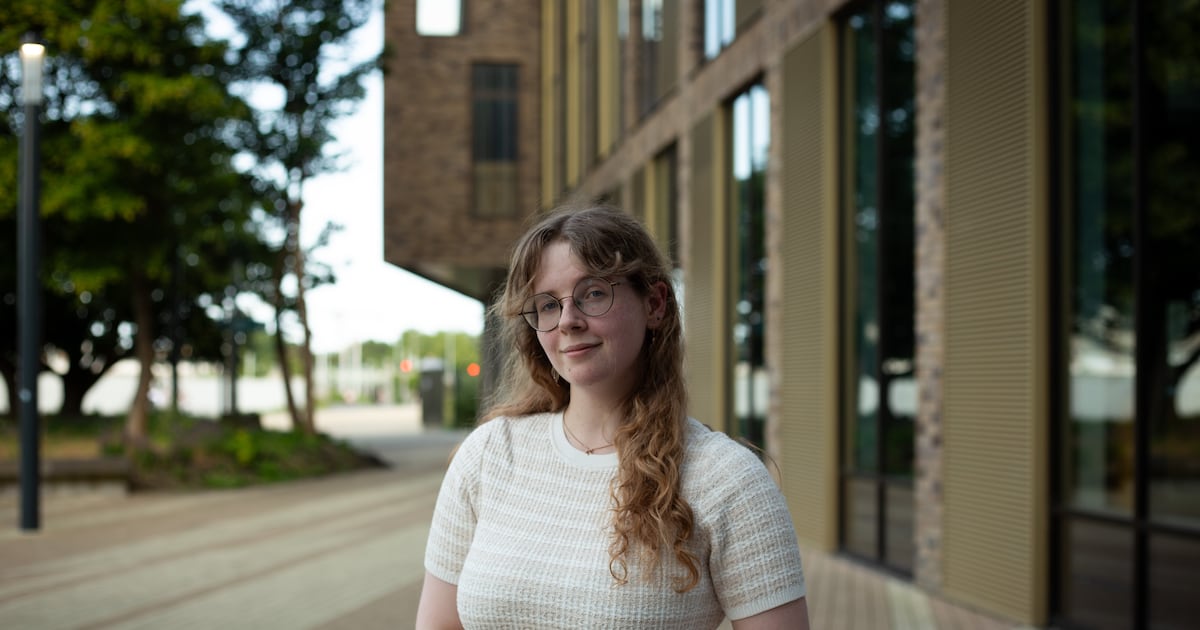
University student Craig Doyle, who is 21, likens feeling lonely to being in a pit. Even surrounded by friends and in a relationship, you can feel alone in that pit.
He feels guilty bringing it up in conversation because he does not want to hurt the people he knows he is lucky to have in his life.
Doyle, who is one of four SpunOut volunteers talking to The Irish Times about loneliness among young people, lives in Celbridge, Co Kildare, and started studying law and English literature at nearby Maynooth University two years ago. After being very busy from the day of Leaving Cert results onwards, he found the transition to college life isolating. It made him reflect on how much he relied on being constantly surrounded with people for his own happiness.
It might sound counterintuitive but he believes taking time for yourself and finding out who you are when you’re alone combats loneliness. Whereas surrounding yourself with people all the time “doesn’t get you out of that pit”.
READ MORE
Academic resigns from Leaving Cert maths reform group over ‘incoherent and inaccurate’ courses
‘I’m officially retiring from my primary school – and I’ve had a good run’
My daughter’s classmates have left for a grind school and she is desperate to join them
The issues worrying students – and parents – when it comes to Leaving Cert 2026 results and CAO offers
Last year he joined the college drama society and that has greatly improved his enjoyment of student life. He has now found a group of people whom he finds uplifting, whether he is with them or alone.
Sarah, a 21-year-old from Galway, who asks that her real name not be used, also worries about how saying “I feel lonely” would offend people she is close to. However, she wants to talk about the topic because “even though I have friends, I still feel lonely, which is interesting to me”.
She believes experiencing loneliness needs to be normalised as something a lot of people have to deal with.
Her sense of loneliness increased after moving to Dublin for university but, even at secondary school, she never felt part of the group. “Even though I was in a class full of people, I still felt lonely. I was friends with loads of different people from different groups, but I never was, like, part of the group, if that makes sense.”
[ ‘I don’t have a wall around me, I have an electric fence’Opens in new window ]
While she made friends on campus at UCD, most were from Dublin and tended to go off and socialise with schoolmates elsewhere. “I think there’s a lot of pressure on young people to be living their best life, and it’s meant to be the most socially active years. That pressure definitely got to me. I always think I’m not doing enough or I’m not going out enough, or I’m not meeting people enough.”
She feels lonelier in a group. “I feel like I don’t fit in. I think I’ve learned that loneliness and being alone are different. You can feel content while you’re alone and then you can feel lonely when surrounded by others. I really do enjoy being alone, which makes no sense because I also struggle with loneliness.”
[ Loneliness: There’s a reason why we use the term ‘power of connection’Opens in new window ]
Nights out are the worst, Sarah says, acknowledging that alcohol may be a factor. “I feel like no one in the world gets me. I catastrophise so much when I’m in a group. I usually go home early because the feelings are so strong.”
Social media is a significant contributor to her loneliness, even though rationally she knows how fake the lives depicted there are. Taking a break from it has helped in the past. “I don’t know why I haven’t fully deleted it because I keep going back. It would be better if I just deactivated all my accounts.”
She says she has social anxiety and finds it hard to start conversations. “Once I get to know someone, I’m very talkative.”
Volunteering with various organisations “is definitely good for me”, she says, enabling her to meet people and have shared experiences. “It makes me feel less alone.”
Loneliness was not an issue for Bel Nabulele, now 19, until her secondary school in Dublin mixed up the class groups in transition year. She had been part of a core friendship circle of 10 since first year, of whom eight were put in one class and she and another girl went into two other classes.
“I really was just sitting by myself in every class and at break I had no one to sit with.”
Meanwhile, most of her friends were seeing each other all day and going out of school at lunch or arranging activities together. She felt the connection wither.
“It’s just hard when you’re constantly being excluded, even if they’re not trying to exclude you. It just got worse when I got into fifth year because we weren’t friends any more. I would see pictures of them on social media, and they would be going out to the beach or going out to places in the summer, and again, I was not invited.”
Her last years at school were “awful”, she says recalling how she wanted to drop out or study from home but her mother insisted she keep showing up.
About to start the second year of a law degree at UCD, Nabulele says her first year in the University of Galway was busy and she made college friends. But she now hopes to meet people with whom she could form deeper connections.
“I really don’t know how to carry a conversation,” she says several times, and without that “there’s just no way to make friends”. But learning to change how she views herself is helping. Years of sitting alone had made her feel there was something wrong with her.
She asks any extroverts reading this piece to invite the quiet and maybe lonely person like her into a conversation, “because we really don’t talk at all”.
Growing up in rural Co Offaly, Charlie Beaudelot, who is 21, felt very lonely and isolated as a child, which led to mental health issues. “I didn’t really fit in with the community at my secondary school,” she says.
Most of her classmates were interested in sport and music, while she liked reading, public speaking and drama. She did not have access to social media until she was aged 15, “so didn’t really have a way of communicating with the small group of friends that I did have”.
It was only when she discovered youth work at age 17 that she met people to whom she could really relate. “I realised I wasn’t this strange person that people didn’t like. I just hadn’t found my people.”
However, her first year of studying to be a dietitian was difficult. Still living at home, she was travelling around five hours a day to attend lectures split between Trinity College and TU Dublin.
“I found myself very isolated and struggling with loneliness then as well.” Even when she got accommodation in Dublin, she immediately started working long hours in a nightclub to pay for it. Again she felt squeezed out of college social life but was desperate to accept every invitation she could, to make up for lost time.
“You burn yourself out because of that loneliness you feel when you’re younger and then you’ll end up feeling lonely if you’re ever alone at other times. It’s very strange.”
However, going into her final year she believes she now benefits from living in Dublin and has built a better system for herself. Volunteering has helped greatly.
“I still have my moments of loneliness where I would find myself struggling, especially when I have to go back to Offaly for periods of time.” This, she adds, is something that other college friends not from Dublin also experience when they go home.