
Pregnancy involves many appointments, but this Canberra trial aims to change that
Posted Wed 9 Sep 2026 at 5:59pmWed 9 Sep 2026 at 5:59pmWed 9 Sep 2026 at 5:59pm, updated Wed 9 Sep 2026 at 6:00pmWed 9 Sep 2026 at 6:00pmWed 9 Sep 2026 at 6:00pm
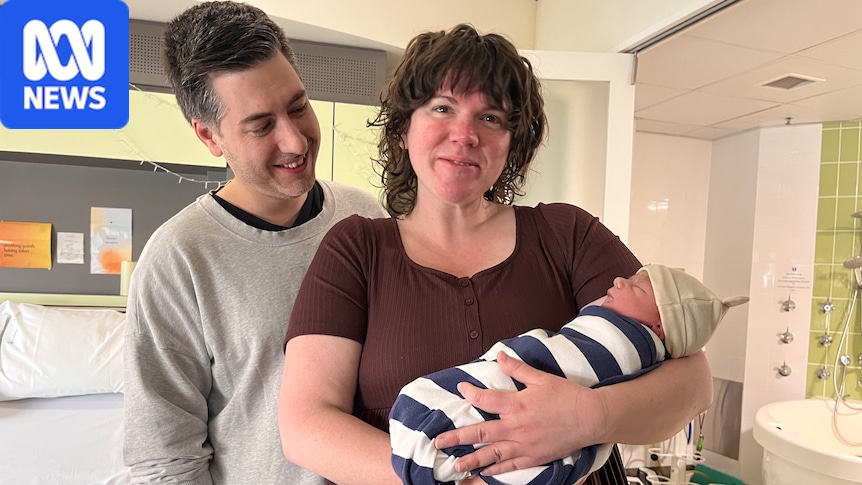
When baby Frankie was born in the early hours of Wednesday morning, he was something of a surprise.
Despite being overdue, he came into the world very quickly.
“Runs in the family, procrastinating, apparently,” mum Sarah Fox said.
“He came out extremely fast — we got here at 1:30am and at about 2am [he was born],” dad Sebastian Fox said.
But not all babies land in the world so easily.
It is with that in mind that a new trial has been launched at the Canberra Hospital that aims to increase continuity of care from midwives.
Juggling appointments and life
One of the consistent obstacles faced by pregnant patients is the number of appointments they must attend while also managing the daily demands of their lives and families.
It is something those working in midwifery at the Canberra Hospital are acutely aware of.
“It’s really difficult for women because often they’re still working, particularly in early pregnancy, and so to take time off work or away from their family, other children … they get held up in the health system,”
midwife Rachel Hetenyi said.
Ms Hetenyi is the Maternity Clinical Care Coordinator at the Centenary Hospital for Women and Children and is one of six who have signed up for a new trial aimed at giving midwives more scope within their roles.
Under the trial, the midwives will be able to prescribe some medications and tests that up until now have been ordered by obstetricians and other doctors.
“Having endorsed midwives to help move that process along, not be waiting for our obstetric colleagues who we know are incredibly busy and tied up in other areas … I think it will be life-changing for women,”
Ms Hetenyi said.
‘A really exciting next step’
Those permitted to participate in the trial will be endorsed midwives — registered midwives who have completed additional education and met national regulatory requirements established by the Nursing and Midwifery Board of Australia.
During the trial, they will provide care across a range of maternity settings at Canberra Hospital and North Canberra Hospital, including birth suites, maternity assessment units, continuity of midwifery care services and antenatal and postnatal care, the ACT government said.
“This is a really exciting next step for maternity services,” ACT Health Minister Marisa Paterson said.
“And this provides a great opportunity for people who are coming to the hospital pregnant and requiring maternity services. It means that they don’t have to go to a separate medical practitioner to have the tests ordered or to receive the medications.
“As much continuity of care and as easy as we can make it for people who are receiving maternity services, the better.”
Ms Hetenyi said she was interested to see the impact of the trial.
“I’m hoping it will make a big change for our maternity assessment unit, the women who present there,”
she said.
She said many of the reasons patients might present to hospital or to a medical centre for care could now potentially be dealt with more efficiently.
“It may be early pregnancy nausea, they may need to have some pathology done, they may need a diagnostic, an ultrasound of some kind,” she said.
“It could be a presentation of early labour, and they need some analgesia and some encouragement to continue at home, which we know is the best place for women to be in early labour.”
Hopes for an ongoing program
There is hope the trial will lead to an ongoing program aimed at providing continuity of care during pregnancy.
Canberra Health Services has previously invested in multiple initiatives that had the goal of reducing the rate of premature births by providing increased access to a midwife and pre-natal care.
Ms Hetenyi admitted there was frustration when it came to continuity of care in the ACT.
“I think there is frustration within the midwifery service that midwives can’t work to their full scope of practice,”
she said.
“Bringing this trial on board helps with that, and it just improves the care across the board for women and families.”