
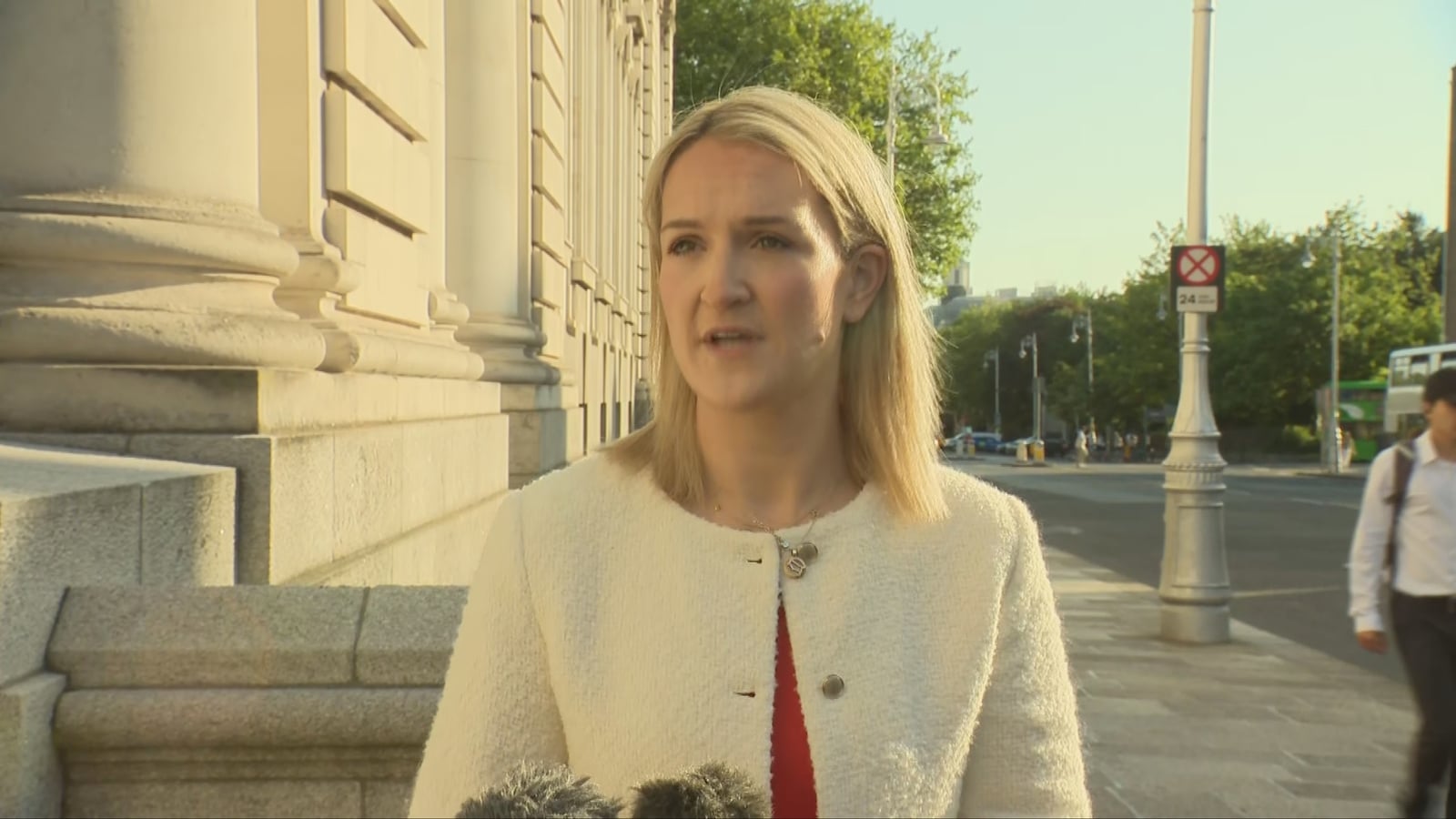
Minister for Foreign Affairs Helen McEntee has described Russia’s alleged involvement in last month’s drone attack on a German airport as an attempt to “divide” EU views on the war in Ukraine.
In a statement before today’s informal meeting of EU member state foreign ministers at Druid’s Glen in Co Wicklow, Minister McEntee said: “Russia’s attempted drone attack at Leipzig airport is part of a clear trend.
“Russia is attempting to divide us and weaken our support for Ukraine. It will not succeed.”
The situation – which Germany yesterday alleged was orchestrated by the Kremlin – is certain to be raised at the EU member states’ foreign ministers meeting in Wicklow today.
Today’s meeting will also involve a discussion on what economic support Ukraine will need into winter.
EU member state foreign ministers will later debate what sanctions the EU could impose on Israel over the conflict in Gaza, as well as what position the EU should take in the ongoing US-Iran stand-off over the Strait of Hormuz.
The discussions come as 11 member states this week wrote to the EU’s high representative on foreign affairs, Kaja Kallas, to say future foreign policy decisions should be decided by a simple majority to avoid any single member state blocking potentially controversial moves.
The member states – Austria, Denmark, Belgium, Finland, France, Germany, Luxembourg, the Netherlands, Romania, Spain and Sweden – are understood to have decided to act after the initial blocking of funding for Ukraine by the former Hungarian leader Viktor Orbán last year.
Separate issues including the EU’s relationship with US President Donald Trump are also likely to be discussed.
In addition, following on from yesterday’s defence meetings, there is also likely to be further discussion on a potential future arrangement for Ireland to join the British and EU Joint Expeditionary Force in the north Atlantic and Arctic circle designed to counter potential Russian moves.
Today’s meeting will be attended by a number of non-EU member state guests.
They include British foreign secretary Ed Miliband, and his counterparts from Ukraine, Canada, Iceland, Norway and Switzerland.
The number of non-EU member state guests is the highest in more than a decade, underlining the increased emphasis on international alliances in uncertain global times.