
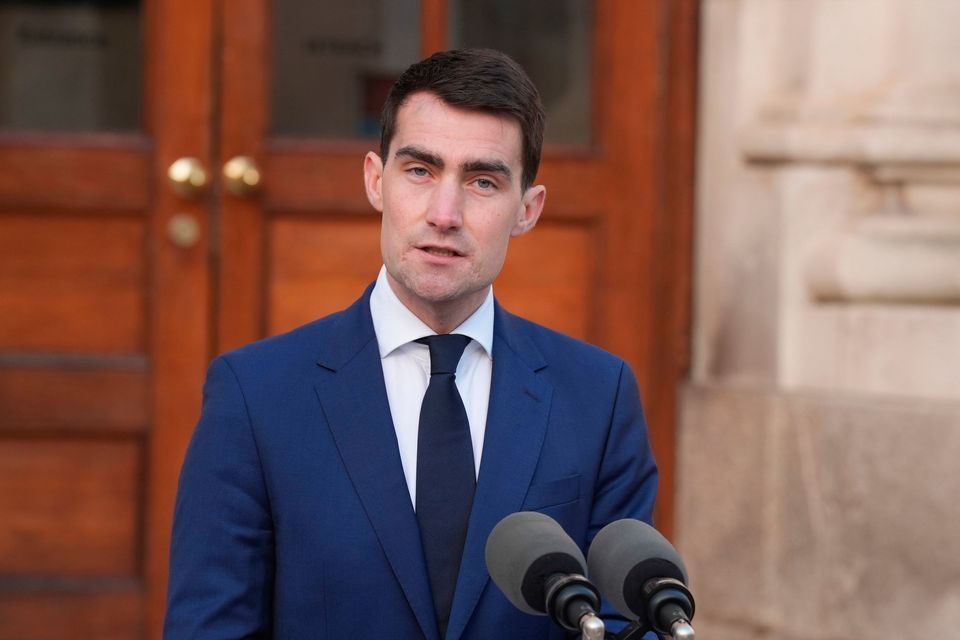
Expenditure minister Jack Chambers has said it would be “deeply unfair” to the public if there is significant disruption due to industrial action over public servants’ pay.
He rejected claims that their earnings have lagged behind the cost of living.
Mr Chambers said successive wage deals have protected the incomes of state workers including nurses, gardaí and clerical officers.
The minister was speaking as members of 19 unions have been balloting on industrial action after their leaders found there was no basis for talks on a new agreement.
The last pay deal expired at the end of June.
Fórsa general secretary and chief union negotiator Kevin Callinan has told members that industrial action will begin from September 30.
He has claimed there was a 5pc gap between public servants’ pay and inflation over the last five years.
“It would be deeply unfair on the general public for there to be significant disruption to their daily lives because unions are unwilling to sit down and engage constructively on a new agreement,” said Minister Chambers.
“My officials remain ready and willing to engage and that should happen without any further delay.”
He said recent pay deals agreed between Government and unions through constructive engagement and dialogue have protected incomes for public service workers above increases in inflation in recent years. Mr Chambers said the lowest incomes were best protected.
“Over the lifetime of the last public service pay agreement, there was a cumulative headline increase to public service pay of 9.6pc compared to inflation at 6.6pc,” he said.
He said from 2019 to 2025, the cumulative headline increase in public service pay of 22.5pc was broadly in line with inflation at 23.2pc.
“For the lowest paid public servants, the cumulative increase was 36.4pc. Nurses, gardaí, clerical officer workers’ incomes all exceeded inflation in that period.
“Successive public pay agreements have delivered for the country, ensuring provision of high-quality public services, and pay agreements have equally delivered for public sector workers protecting incomes above inflation levels.”
A total of 96pc of Fórsa members have backed industrial action including strikes in what general secretary Kevin Callinan said was the largest ever strike ballot in Ireland.
Mr Callinan has demanded a formula or measures to link public servants’ pay with inflation. The union is expected to decide on targeted forms of industrial action this week.
Mr Callinan has warned that winter strikes could have “very serious effects”.
Fórsa represents 90,000 members in sectors of the public service including health and welfare, the civil service, local government, state agencies and education.
Siptu members have also voted overwhelmingly in favour of industrial action.
Meanwhile, Connect trade union members are set to begin industrial action across the public service this month.
A spokesperson said the dispute stems from significantly lower earnings for skilled craft workers in the public sector compared with their private sector colleagues.
Connect public service official, Brian McAvinue, said the workers provide vital electrical, plumbing and essential craft skills in health, local authority and governmental services.
He said there is a simple solution that involves reinstating an “analogue wage setting mechanism” to compare their pay, which was in operation until 2008.