
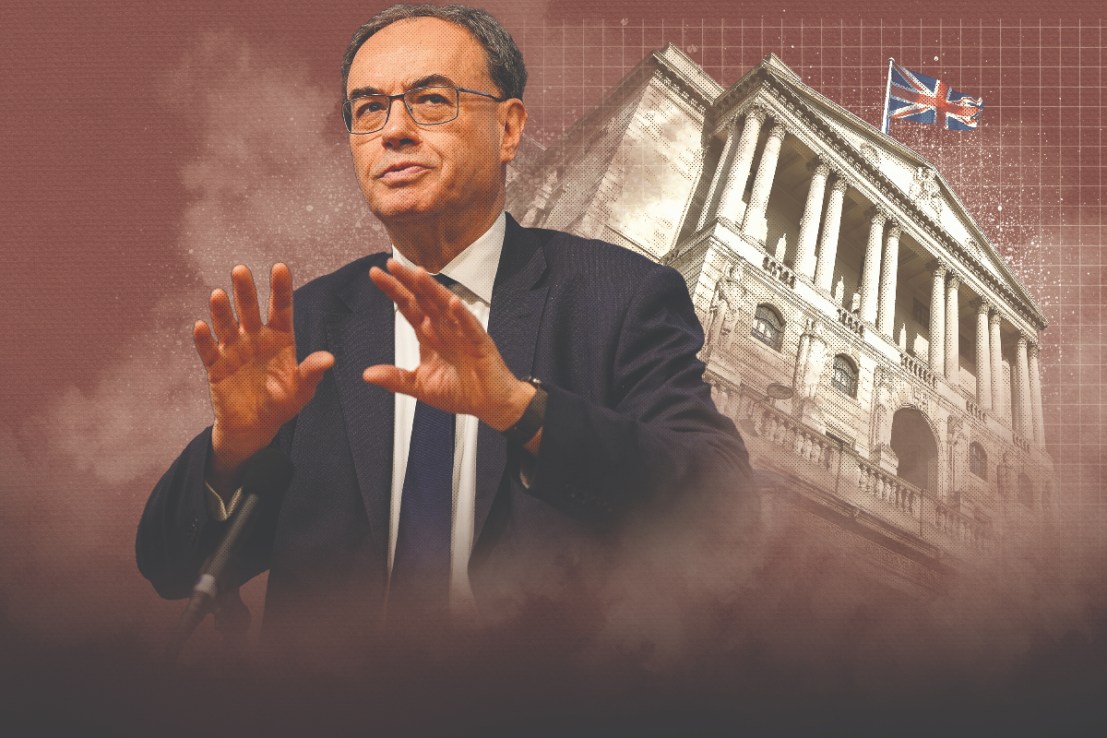
Bank of England governor Andrew Bailey has warned inflationary pressures are still buffeting the UK economy and energy prices could rise further next year if the war in Iran continues.
Speaking to MPs on Tuesday, the Bank chief said that the risks to inflation were “to the upside” and energy prices “could be higher still” due to the conflict, which has triggered a surge in oil prices and stoked inflation fears globally.
“The conflict is still going on and it is also causing a high level of energy prices and quite a bit of volatility in energy prices,” Bailey said, adding that rocketing energy prices were “feeding through into financial markets”.
Energy costs have risen sharply after the Islamic republic blockaded the Strait of Hormuz and choked off the supply of oil from some of the world’s biggest producers. Brent crude prices climbed toward $100 a barrel on Tuesday after the Iran-aligned Houthi militia attacked several refineries in Saudi Arabia and caused a halt to some operations.
Speaking in parliament, Bailey warned that higher short-term bond yields, which are determined by traders, suggesting there could be three interest rate hikes over the next 12 months were “consistent” with a pessimistic view on risks facing the UK economy.
However, he insisted there was “no secret plan” to hike rates in the coming months and the Bank’s Monetary Policy Committe would be led by data.
Interest rates meeting coming
The group of ratesetters will decide on whether to hike interest rates next week. The governor raised concern on supply chains for oil and gas production in the Middle East, which remain under threat as the US, Israel and Iran have failed to agree to a peace deal.
In its last report from the summer, officials at the Bank warned that inflation could jump to over four per cent – double the Bank’s target rate – in the scenario where oil prices hover around $100 per barrel for several months. Inflation in the year to July was 2.9 per cent, up from 2.6 per cent in the month before.
The warnings came after it was revealed on Tuesday the UK would pay the highest borrowing costs on new debt in nearly 30 years. While government borrowing costs globally have surged in recent weeks amid fears over persistent inflation, the UK has been hit hardest among developed nations.
Bailey said that pricing on UK government bond yields in markets was a “reflection” of fears that inflation could spike.
He also said that traders had priced in a premium on top of expectations in order to cover the risks of prolonged trade disruption across the Strait of Hormuz which could lead to higher prices for households.
Higher borrowing costs were “entirely consistent with the view that the risks are on the upside here,” Bailey warned.
Economists at the Bank have suggested that a rise in inflation would depend on second round effects, which occur when higher prices push up wage growth and vice-versa.
Bailey said high levels of youth unemployment at a rate of around 16 per cent were “frankly concerning” although a slowdown in the jobs market could soften price pressures in the economy.