
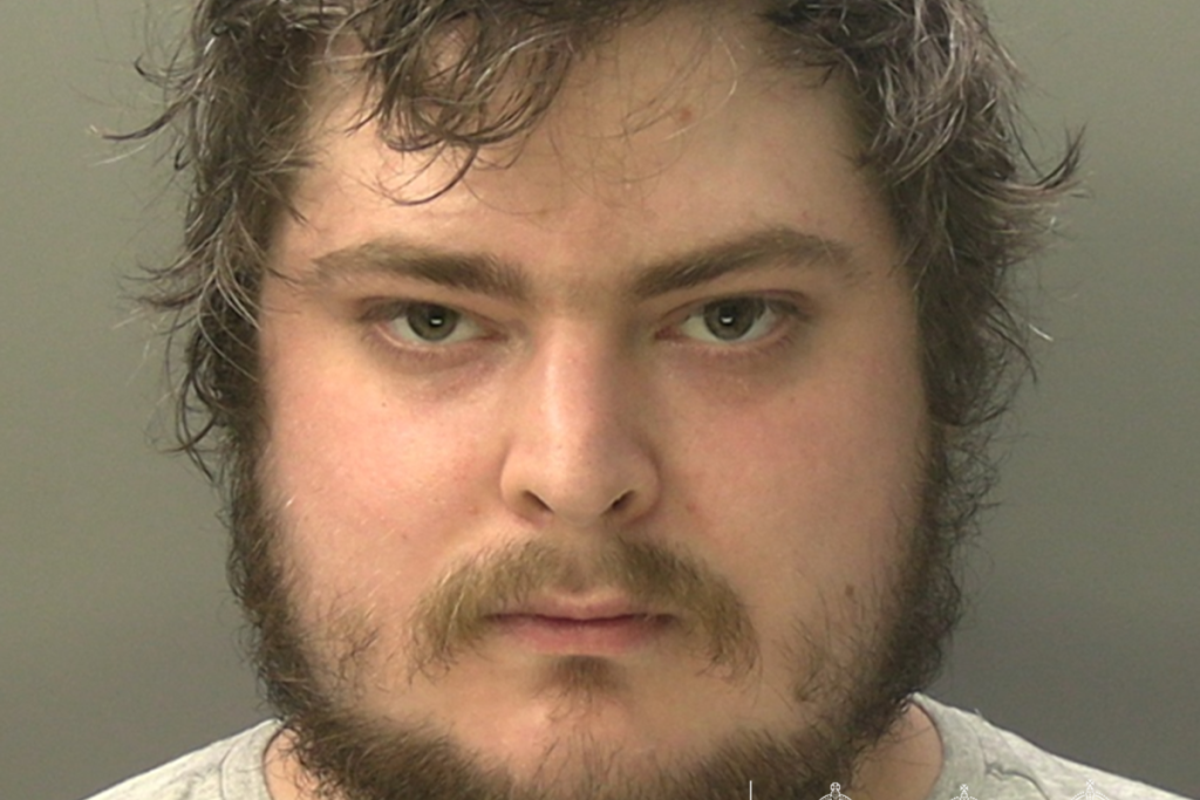
A man who encouraged a hoax call claiming there were nail bombs and hostages at a Cardiff hotel, leading to “widespread panic and disruption”, has lost a challenge against his jail sentence at the Court of Appeal.
Callum Dare was sentenced to two years and three months at Cardiff Crown Court after admitting in June to encouraging and boasting about “swatting” incidents.
The 26-year-old ran a dark website between 2018 and 2019, when he was aged between 18 and 19, where he shared links related to swatting.
This included sharing information about a 2016 hoax call made to police in Los Angeles in the United States that claimed there were bombs under chairs at the University of California, which led to the site being evacuated.
Another false call was made to a journalist in Cardiff claiming that there were nail bombs and hostages at a hotel in the city centre, which led to the area being sealed off.
Dare, of Talbot Green, South Wales, later admitted encouraging or assisting the commission of malicious communications and possession of articles for use in frauds, and was sentenced in July.
He sought to challenge his jail term at the Court of Appeal, with his barrister telling a hearing on Tuesday that it should have been suspended rather than one of immediate custody.
But three senior judges dismissed the appeal bid, ruling that the sentence handed down by Judge Tracey Lloyd-Clarke was “entirely open to her”.
Mr Justice Linden, sitting with Lord Justice Popplewell and Mrs Justice Hill, said: “It is abundantly clear that she took into account all of the factors of the case.
“The conclusion that she reached was well within the scope of her discretion.”
Dare, who watched proceedings from HMP Parc, was arrested after being identified by a joint investigation by the FBI and Canadian authorities, with information handed to South Wales Police.
The Crown Prosecution Service said in July that when Dare was arrested, police found files containing “sophisticated phishing fraud” on his devices which were “designed to obtain personal or payment details of dark web users for use by fraudsters”.
Sentencing him, Judge Lloyd-Clarke said that she was “satisfied that this offending is so serious that the appropriate punishment can only be achieved by immediate custody”.
But barrister Peter Donnison, for Dare, told the Court of Appeal on Tuesday that the judge “fell into error by treating deterrence as a trump card” and that the “factors weigh in favour of suspending the sentence”.
He continued that there was “strong personal mitigation”, including the fact that Dare had no previous convictions, had pleaded guilty before a trial, and has autism and ADHD.
Mr Donnison also said: “It is not offending that is prevalent… and therefore there was not a requirement for a deterrent sentence.
“An immediate custodial sentence was not justified on the ground of deterrence, in the view of Mr Dare’s age, in the view of the significant amount of time that there had been since the offending, (and) the prospect of rehabilitation.”
But Mr Justice Linden said in relation to the hoax in the United States that although prosecutors did not allege that Dare had made the call, he “appeared to be seeking to take credit” online.
He continued that the hoax in Cardiff caused “widespread panic and disruption”.
He added: “The offending in this case was also akin to any encouragement to waste police time… where any deterrence is fully warranted.”