
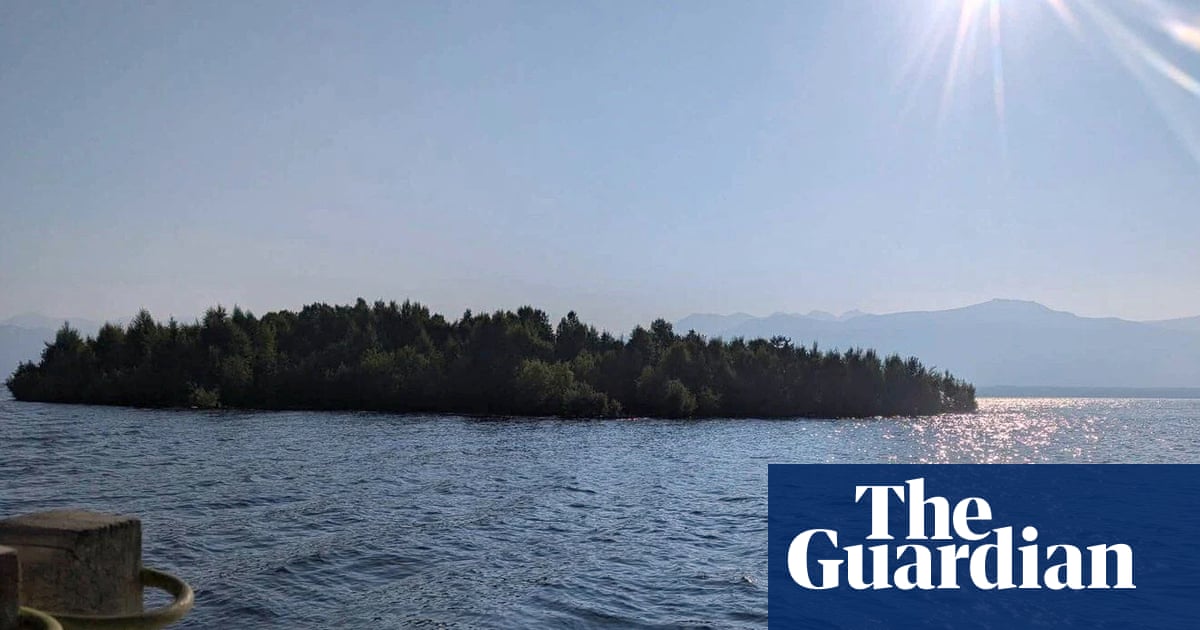
‘Unbelievable’: how a tiny island in Canada appeared, vanished, and reappeared miles away
The 500ft-long, heavily forested land mass surprises locals by popping up on Williston Lake in British Columbia
A thickly forested island appeared mysteriously on a western Canadian lake. Nearly 500 feet long and 250 feet wide, the land mass took locals and experts by surprise. It wasn’t on any maps or navigation charts.
One boater approached and took a video of the island, capturing nearly 100 trees undulating in the chop of the lake.
And then, within a day, it disappeared.
Earlier this week, the island made its second appearance – nearly 20 miles from its original location – in stunning aquatic displacement that has left residents wondering how an entire island can simply vanish.
The mystery has unfolded in the middle of Williston Lake, a long and narrow reservoir created after the W.A.C Bennett dam flooded the region in the early 1970s. At nearly 650 square miles the largest body of freshwater in the westernmost province.
Bob Gammer, a spokesperson for BC Hydro, the government-owned utility that operates the reservoir and dam, said the island was “quite something and rather unbelievable” when he first saw the images.
“In the days of AI, you really needed another form of verification or evidence like a corroborating eyewitness account,” he said. “And soon, we got that.”
Satellite imagery confirmed the island was in fact real, and floating in the main body of the reservoir, roughly 60 miles west of the dam.
BC Hydro believes the island is the result of years of trees and plants growing largely undisturbed on the woody debris along sheltered sections of the reservoir’s shoreline.
Similar islands have shown up across the globe, including Wisconsin’s famed Forty Acre Bog. The giant, floating island on Lake Chippewa is knit together by peat, mud, roots and trees.
Measuring roughly 125,000 sq feet in size, the British Columbia island is also bursting with life: birds and small animals are living among the mix of coniferous and broadleaf trees. Observers suspect the root system in the water hides some of the lake’s best fish.
Gammer likened the growing conditions to hydroponics and said: “Well-fed trees growing on a decaying food source with lots of water … they could grow pretty quick.”
The reservoir, he added, is higher than it has been in 14 years, as a result of high winter snowpacks and consistent summer rains that have raised water levels in the Peace River and the lake.
“Suddenly, there are all of the right conditions to potentially lift this kind of little island from where it was, and bring it out into open water,” he said.
BC Hydro doesn’t know how old the trees on the island are, but with the right conditions the forest could “just stay there for years” and grow. Local people speculated the trees could be decades old.
“It’s not like they’re just a bunch of little shrubs. This is an island with larger trees and it’s something you really have to wrap your mind around,” said Grammar. “It’s not an everyday thing. This is really really unusual.”
Rocky Avery, a friend of the boater and a longtime resident of the area who first posted the clip to social media to warn others about a possible hazard, said he would “totally jump on that island if I could”.
“It’s probably a bit shaky on the outer sections, but with those huge trees in the centre, I imagine someone could walk on it,” he said.
Gammer cautioned boaters from attempting to become the first to set foot on it, warning that video shows trees moving back and forth on a “delicate, thin layer of logs”, adding it is “very unsafe” and “very unstable”.
Avery’s social media posts about the island prompted a flurry of excitement and a seemingly inescapable nod to the current political situation in Canada. Recently, the US president, Donald Trump, chose to rename Lake Ontario after trade talks collapsed between the two countries. The announcement has prompted anger, frustration and mockery from the Canadian public.
“I’m surprised Trump hasn’t named [the island] and claimed it,” commented one user on Avery’s post.
Explore more on these topics