
Advertisement
Stressed home owners are considering selling up and buying a smaller property, are purchasing with their parents, or are asking to extend the number of years on their mortgage to reduce the amount they have to pay off their home loan each month.
Home owners in outer suburban Sydney and Melbourne mortgage belt suburbs have been hit hard by interest rate rises and dominate a new list of home loan arrears hotspots, and are looking for creative ways to make ends meet.
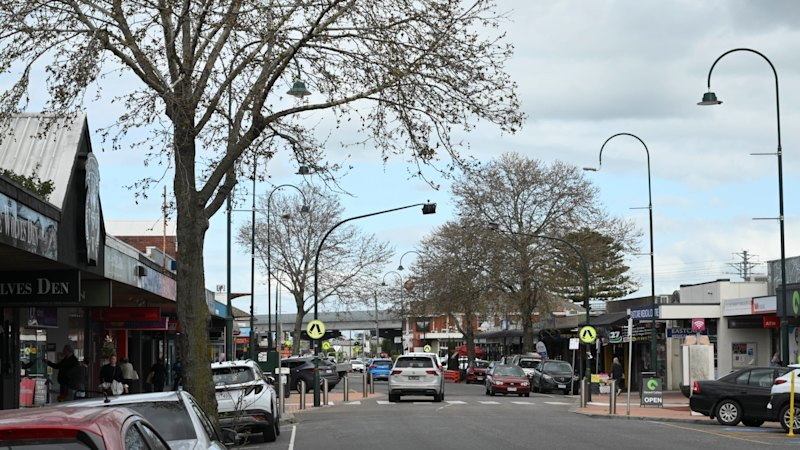
Some owners are falling behind, with data from credit rating firm S&P Global Ratings showing Pakenham in Melbourne’s outer south-east recorded the largest share of mortgages in arrears in June – 2.88 per cent of loans 30 days or more late.
That was followed by Constitution Hill in Sydney’s west (2.42 per cent), Point Cook in Melbourne’s outer west (2.4 per cent), Baulkham Hills in the north-west of Sydney (2.26 per cent) and Brookfield, also in Melbourne’s outer west (2.04 per cent) making up the top five worst-hit areas. The only suburb outside NSW and Victoria in the top 10 for arrears was Alexandra in Mackay, Queensland.
Advertisement
Nationally, mortgage arrears were relatively lower at 0.85 per cent in June, on S&P data. The RBA recently noted the typical borrower is further ahead on their mortgage than the pre-pandemic average.
It comes as national home values fell 0.9 per cent in August, to be 3.6 per cent below the March peak on Cotality data.
S&P Global Rating’s director of structured finance Erin Kitson said arrears numbers in the outer suburbs had been rising steadily as home owners’ budgets were pushed to breaking point.
“The numbers have been increasing, but they are still low … that doesn’t mean the higher costs including the higher cost of living aren’t seeing budgets stretched,” Kitson said.
Advertisement
Outer suburban buyers were likely to have lower amounts of savings, lower overall incomes and higher amounts of debt, meaning they were more sensitive to interest rates rising, Kitson said.
Some who bought at the peak may owe more than their home’s value and may be unable to refinance to ease the rising mortgage burden, leaving them at risk of late repayments, she added.
MJ Financial Chiefs director and mortgage broker Michael Wallace said people in the Pakenham area were finding their finances tighter than before.
“I think people are definitely pulling away from going on nights out – or having a fancy dinner and even takeaways because things are so tight,” Wallace said. “It seems like a lot of people are just getting by now.
Advertisement
“They might get to a point where they have to sell their place and downsize … They have it as a bit of a back-up plan.”
Others are considering selling up and moving further out where property prices are cheaper, or had sold up and bought a property with their parents to share costs.
“A few people bought with their parents – their parents sell up as well, and they buy something together – that’s become more common in the past six months than it was before.”
Loan Market Elevate general manager Michael Chadwick, who works in Sydney’s Hills District including Baulkham Hills, said customers were frustrated and felt their disposable income was constantly being squeezed by rising mortgage repayments, energy bills and the cost of living.
Advertisement
“They are actively looking to reduce repayments. Some request to extend their loan terms … from 25 years to 27, 28 or 30 years,” Chadwick said.
While it saves on monthly repayments, it could cost more in interest overall. “We don’t want to see it, but that’s what customers are asking us for,” he said.
Some borrowers were looking to refinance, but may find they would only save a small amount.
Others were looking to fix their interest rates to get steady repayments, Chadwick said.
Advertisement
In Melbourne’s west, MoneyQuest Point Cook mortgage broker PJ Singh said families were cutting down on groceries, or changing where they shop from Coles and Woolworths to Aldi.
He said some of his clients were more worried about losing their jobs than interest rate rises, particularly IT workers who had come up against AI.
“With AI there have been a lot of job reductions so it’s not possible to make mortgage payments if you’re not earning money,” Singh said.
There will be a nervous wait for some until the next RBA decision in late September, when NAB predicts another rate rise. CBA and ANZ predict a hold in September but another rise in November.
Advertisement
S&P Global Rating’s Kitson said it was likely the number of borrowers falling behind would increase if there was another rate rise, though it wouldn’t be a surge.
The low unemployment rate would help workers to pay their mortgage though their budgets would be stretched.
“It’s going to be modest – we’re not going to see a material spike in arrears,” Kitson said.
You have reached your maximum number of saved items.
Remove items from your saved list to add more.
More:
Melissa Heagney-Bayliss is a property reporter at The AgeConnect via X or email.AdvertisementAdvertisement