
Viridis Mining and Minerals has fired the starting gun on the development of its Colossus rare earths project in Brazil, placing the first major equipment purchase order to meet a targeted 2028 production schedule.
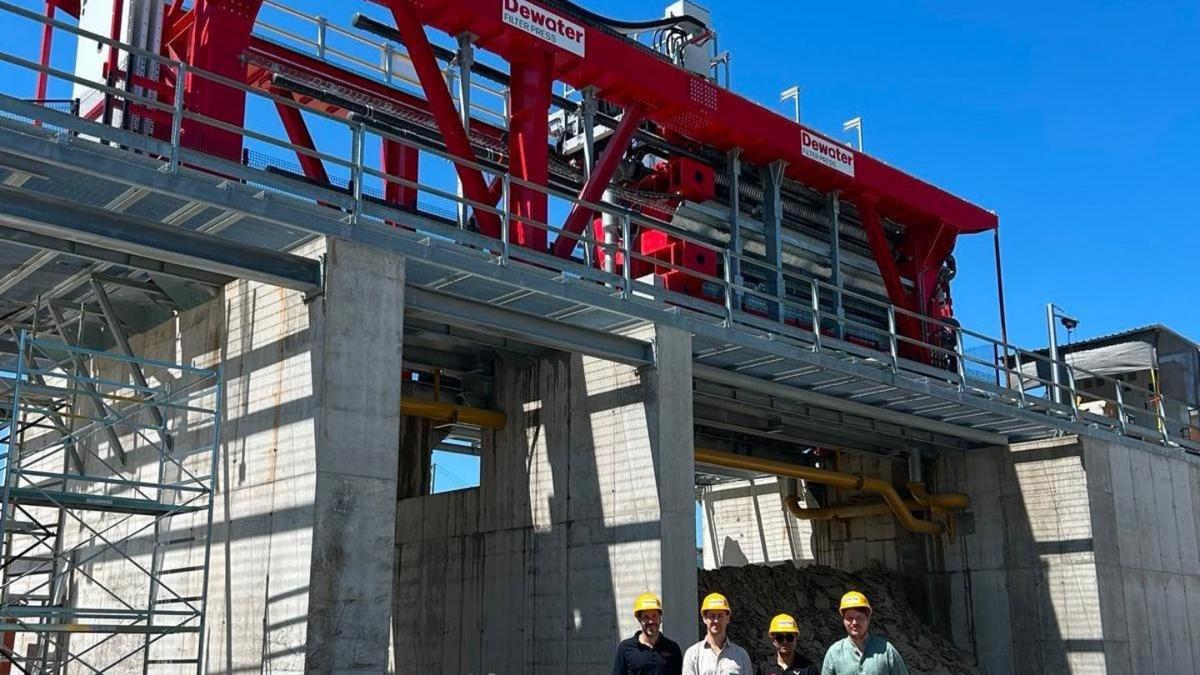
The company has awarded the contract to specialist Italian manufacturer Dewater Filter Press Srl for a residue pressure filtration package. The order marks a critical step in the transition from project development to execution. The latest move follows the company’s recently completed definitive feasibility study (DFS) and the securing of up to US$120 million (A$167 million) in strategic equity funding.
The filtration package is considered a long-lead procurement item, with an expected 12-month manufacturing period. Management says placing the order now is crucial to ensure the equipment lands in step with the planned construction and commissioning sequence of Viridis’ proposed 5 million-tonnes-per-annum processing facility.
The Colossus project is an ionic adsorption clay-hosted rare earths venture now set on a fast-track development pathway. A globally significant maiden mineral resource estimate was first announced in June 2024 and has since been subject to several major upgrades. The current inventory sits at 493 million tonnes of total rare earth oxides (TREO) grading 2505 parts per million (ppm).
The filtration equipment is a key component of the Colossus processing flowsheet. It is designed to undertake the solid-liquid separation of processed clay in a dewatering process, which then produces a filter cake from residual clay at the required moisture specification before being returned to the mine as part of progressive rehabilitation.
Viridis’ progressive rehabilitation approach is an important part of the environmental strategy for Colossus and makes up a cornerstone of the project’s Environmental Impact Assessment (‘EIA’) and Preliminary Licence approvals. The company’s approach has garnered strong support from the local community and municipal and State governments.
The selection of Dewater came after an extensive 12-month competitive tender and technical evaluation process that included dedicated test work on Colossus clay residue material. Importantly, Viridis says the purchase order with Dewater has been structured with staged engineering, manufacturing and payment milestones to limit its financial exposure before a final investment decision is made.
Significantly, the company is not required to commit the full contract value prior to final investment decision (FID), meaning that FID represents a contractual hold point before the Company issues its full notice to proceed. This flexibility allows Viridis to advance its critical-path engineering and procurement while limiting its exposure to high capital commitment before that final decision.
Following completion of the DFS and with our equity funding requirement now addressed, our focus is firmly on maintaining momentum through the commencement of EPCM and progressive commitment of critical-path packages required to protect.
Another important aspect of the award to Dewater and the likely delivery timing lies in the ongoing low availability of large-scale, non-Chinese heavy rare earths production. Viridis’ ability to potentially kick off production as early as 2028 would position the Colossus project as an important diversified source of that critical magnet rare earths supply.
The move to lock in key equipment also comes as Viridis, in a nod to its growing scale, is set to be added to the S&P/ASX 300 Index later this month,
The project already has strong government backing at multiple levels. It received a landmark environmental approval late last year and Viridis has since participated in a Brazil-US forum on critical minerals, presenting the project to government agencies and financing institutions from both nations. The company’s subsidiary, Viridion, was also endorsed by the Brazilian government to establish Latin America’s first rare earths refining and recycling hub.
While Colossus is the company’s flagship, Viridis also holds a portfolio of other exploration assets in Australia and Canada.
Its Smoky halloysite project in New South Wales contains a historic quarry that returned high-grade drill results, including a 13-metre hit grading 86 per cent halloysite from just 4m downhole. Halloysite is a versatile clay mineral similar to kaolinite with wide applications in nanotechnology, ceramics and industrial fillers.
In Canada, the company has earned a 51 per cent interest in the South Kitikmeot gold project, which hosts historical high-grade gold intercepts warranting follow-up, while in WA, the company’s Boddington West gold project sits just one kilometre from the world-class Boddington gold mine, 130km southeast of Perth.
Right now, however, all eyes are currently fixed on Brazil. The placement of this first major equipment order signals that Viridis now has the bit between its teeth and is moving with some urgency past the study phase and into the tangible world of construction and engineering. With its funding secured and the first long-lead item on the books, the path to becoming a producer in 2028 is starting to look a lot clearer.
Is your ASX-listed company doing something interesting? Contact: [email protected]
Get the latest news from thewest.com.au in your inbox.
Sign up for our emails