
Sept. 1, 2026, 2:00 PM EDTBy Rob Wile
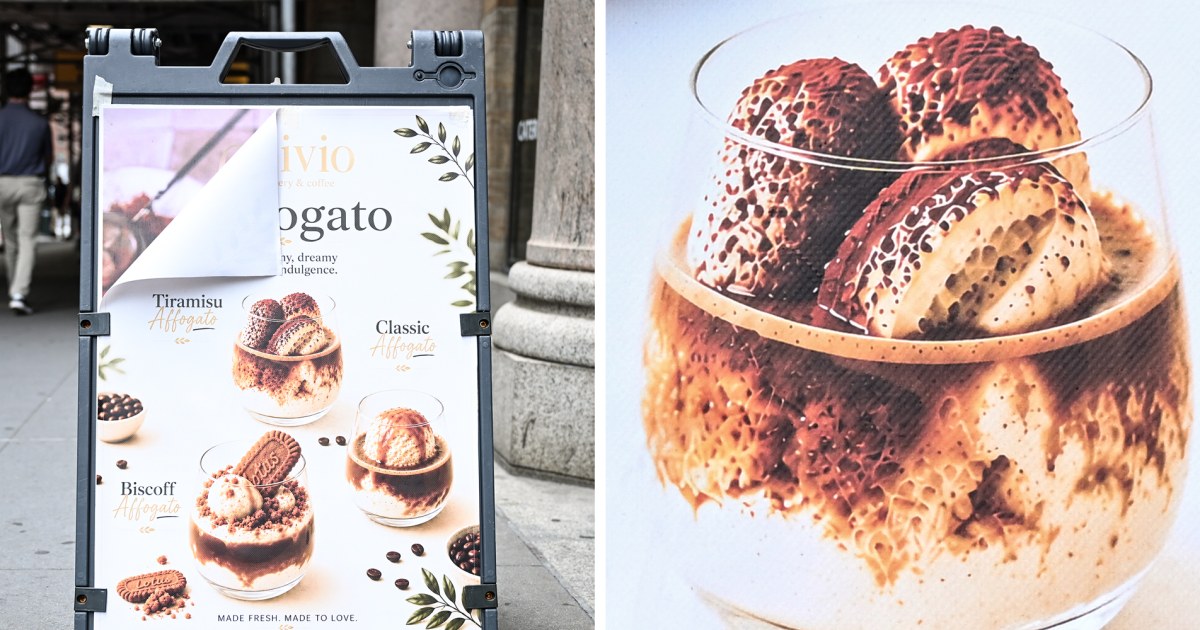
AI “slop” is now increasingly on offer at brick-and-mortar establishments.
As AI image-making technology has grown more advanced — and cheaper to use, in some cases being free — images with a distinct “slop” flavor, namely ones with surreal or even disturbing attributes, have begun appearing on bodega, cafe, and restaurant menus.
There’s the shrimp scampi whose shrimp look more like miniature life preservers.
A breakfast burrito with filling that looks more like something out of a horror movie.
And “protein” options that look like they’re covered in bugs.
One X user said she attempted to order an item advertised on a café’s outdoor menu only to learn it didn’t exist and was instead the product of ChatGPT.
The trend comes as the use of AI has grown from a tech-employee specialty to a nearly ubiquitous pursuit among white-collar workers — and as overall inflation in the economy has remained stubborn. The confluence of lingering cost pressures and advancing technology appears to be translating into a boom in smaller businesses deploying AI-designed graphics and logos.
There have been real-world consequences to the trend of AI slop making the jump from online into the real world. A coffee shop in San Francisco paid hundreds of dollars to have graffiti removed that appeared to be in response to its use of AI-generated food images on its facade, SFGate reported.
“I want people to come to our restaurant, but, like, why is this such a big deal that it influences people on such intense level,” co-owner Lyndsey Lozano told the outlet. “Like, is it really that horrific that you have to act on such a feeling?”
Lozano could not be reached for additional comment.
Many of the establishments displaying the food images likely created by AI are smaller, likely family owned establishments, said. Paul Shovlin, an assistant professor of English at Ohio University who studies AI. He said that it may simply be the case that many of the places displaying the AI food are running on shoestring budgets.
For some longtime designers, the advent of AI-related image making has been maddening — not to mention bad for their bottom lines.
“ChatGPT will tell the user that their design is genius,” said Daniel Silva, owner of Silva Heeren, a longtime graphic design firm in Miami. “But then we tell them that ChatGPT isn’t giving them the right file or the right resolution and that it won’t be cheap to fix it. And they often go running.”
Silva said he has seen small business and DIY customer business plunge as a result of AI, and he’s been forced to reinvent his offerings.
“We no longer sell creativity,” he said. “We sell experience.”
Other businesses are uploading posts to social media promising not to use AI in their design work. Jill Winger, co-owner of Chugwater Soda Fountain in Wyoming, posted a photo of her daughter holding a handwritten sign that said in part, “We will not be using AI flyers or photos to promote ourselves.” It ended up getting 119,000 likes.
It follows other evidence that an AI backlash is afoot. In addition to the wave of anti-data-center political activity, Glassdoor now finds a net-negative view of AI among U.S. employees, while Brad Olesen, chief content officer at financial site Benzinga, recently wrote that his company was pulling back on using AI-generated texts in favor of human-written ones.
“Search started rewarding the human byline again and so did readers,” he wrote. “We watched it show up in the traffic numbers, plain as day.”
Winger said she is not a purist and uses AI technologies when she has to plan large cooks. But she said she can tell a pushback to the pervasiveness of AI in society is growing.
“I’m seeing which way the pendulum is swinging,” she said.