
Advertisement
Rainfall over the next four weeks will determine the survivability of crops and livestock in Western Australia’s Wheatbelt region, with farmers concerned water will need to be carted in at a cost of millions of dollars to help them survive into the summer months.
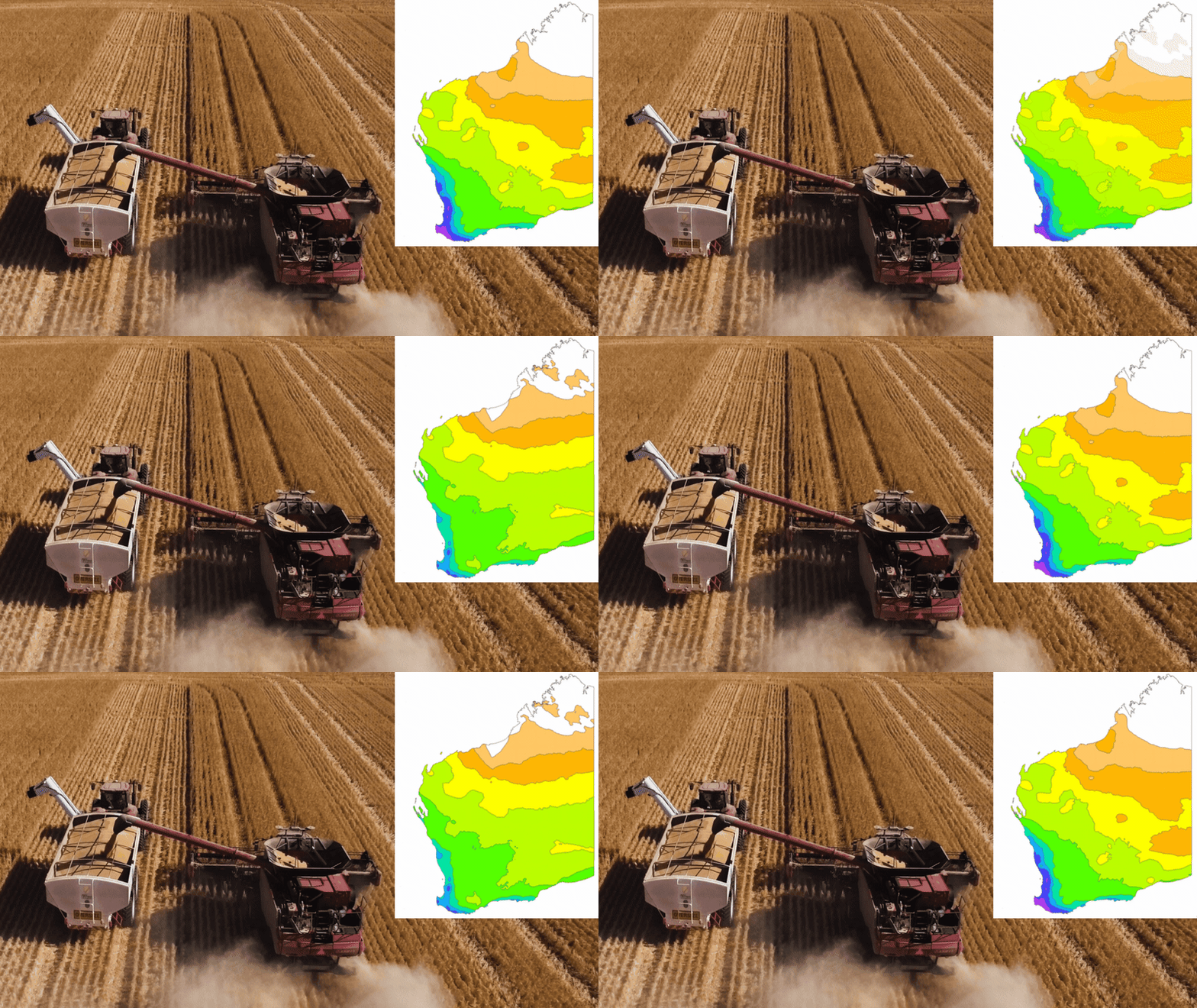
Lower than average rainfall was recorded across the majority of WA this winter, Bureau of Meteorology data shows – even in the state’s South West, which is usually known for higher rainfall levels.
WA Farmers Federation chief executive Trevor Whittington said a section of the Wheatbelt that was normally a reliable spot for rain was on an “absolute knife’s edge” as spring arrived.
“The next four weeks of rainfall will determine if things are salvageable or if this season is a wipeout,” he said.
Advertisement
“January and February will certainly be difficult months for farmers regardless of what happens.”
Last week, Whittington and others met with Agriculture Minister Jackie Jarvis to discuss that potential wipeout, and plan a way forward should it be needed.
“They are watching as closely as we are over the next month to see what happens,” Whittington said.
“The state government might have to look at declaring water deficiency for places in the region, including towns down the Rabbit Proof Fence, and start carting water in.
“Last time it was needed, it cost around $30 million to transport the water all the way out to places like Lake Grace – it’s either that or farmers will need to look at selling livestock.”
Advertisement
WA Farmers Grains Council president Mark Fowler runs several operations in the Wheatbelt – one in Williams and one in Harrismith – and said this year had been the worst since 2010.
While that pocket of the region normally receives around 350 millimetres of rain, this winter it only received between 150 and 160 millimetres.
Frost has also had an impact on canola, with temperatures plummeting at night.
There were also concerns for crops usually less susceptible to the cold like wheat and barley, although they were “looking better than they should”, Fowler said.
Advertisement
It is a marked difference from the success of the region recorded in previous years.
In February, Jarvis revealed a record harvest built on recent successive gains had made the grains industry the largest contributor to the state’s agriculture sector and a valuable export earner.
Fowler said the predicted fall would be difficult to shoulder.
He said he would be focusing on his hay harvest this year, given it was more resilient in the conditions than his other crops like oats were.
“We have tightened our belt – we know it might not be a good harvest which does happen in farming, but not usually in this area,” he said.
Advertisement
“Especially with a super El Niño predicted to create a hard, dry finish to the season, we’re hoping for the best and planning for the worst, and there is not much room for failure.”
In a different region of the state, Pemberton potato farmer Dom Della Vedova said his farm had fared better than others due to having leftover water sitting in the dams from last year.
He irrigates his crops, spread across 36 hectares, every two days, and said he would be telling a very different story if he had no reserved supply to rely on.
“We would’ve absolutely been in trouble, and the reality is anyone who did not have leftover water would be stuffed,” he said.
Advertisement
“There are pockets in the area surrounding us that got less rainfall than the rest, and those farms would be in some strife regardless of how much water they had reserved.
“Where our farm is, I would say we were down 250 millimetres of rainfall across winter compared to what we would usually see.”
He said the cost of refilling the dams, done by plane, was around $2.50 per litre of water given the cost of fuel.
One of his smaller dams is 20,000 litres.
“We are absolutely concerns that costs are going to get too high, and we won’t be able to keep up,” Della Vedova said.
Advertisement
“The price of spuds would be through the roof.”
What does the data say?
It was the driest July since 2012, with rainfall across the entire state “very much below average” everywhere except the Kimberly and parts of the interior, which were average, according to the Bureau.
In June, rainfall was below average for parts of the Kimberley, Pilbara and South West Land Division, but above average across the rest of the state.
And rainfall totals in August were above to very much above average for most of the southern half of the state, except in the Central West district and the south-west, where they were broadly below average.
Advertisement
The Bureau has predicted that spring rainfall is very likely to be above average across most of the state.
“The exception is the south-western corner, where below-average rainfall is likely,” the Bureau states.
“This does not mean it will be dry all the time in south-western areas, but there’s likely to be less rain than usual.”
The combination of below-average rainfall and warmer conditions may also further increase fire risk in the south-west.
Advertisement
There is also an increased fire risk this season across the Cape Range, Wooramel, Western Murchison, Geraldton Hills and Yalgoo areas.
Above-average temperatures are likely across most of the state.
Spring also marks the beginning of northern Australia’s official wet season, which starts in October.
The first significant rains of the wet season are likely to arrive earlier than usual across most of WA’s north, except parts of the north-west coast.
You have reached your maximum number of saved items.
Remove items from your saved list to add more.
More:
Holly Thompson is a journalist with WAtoday, specialising in education and the environment.Connect via X or email.AdvertisementAdvertisement