
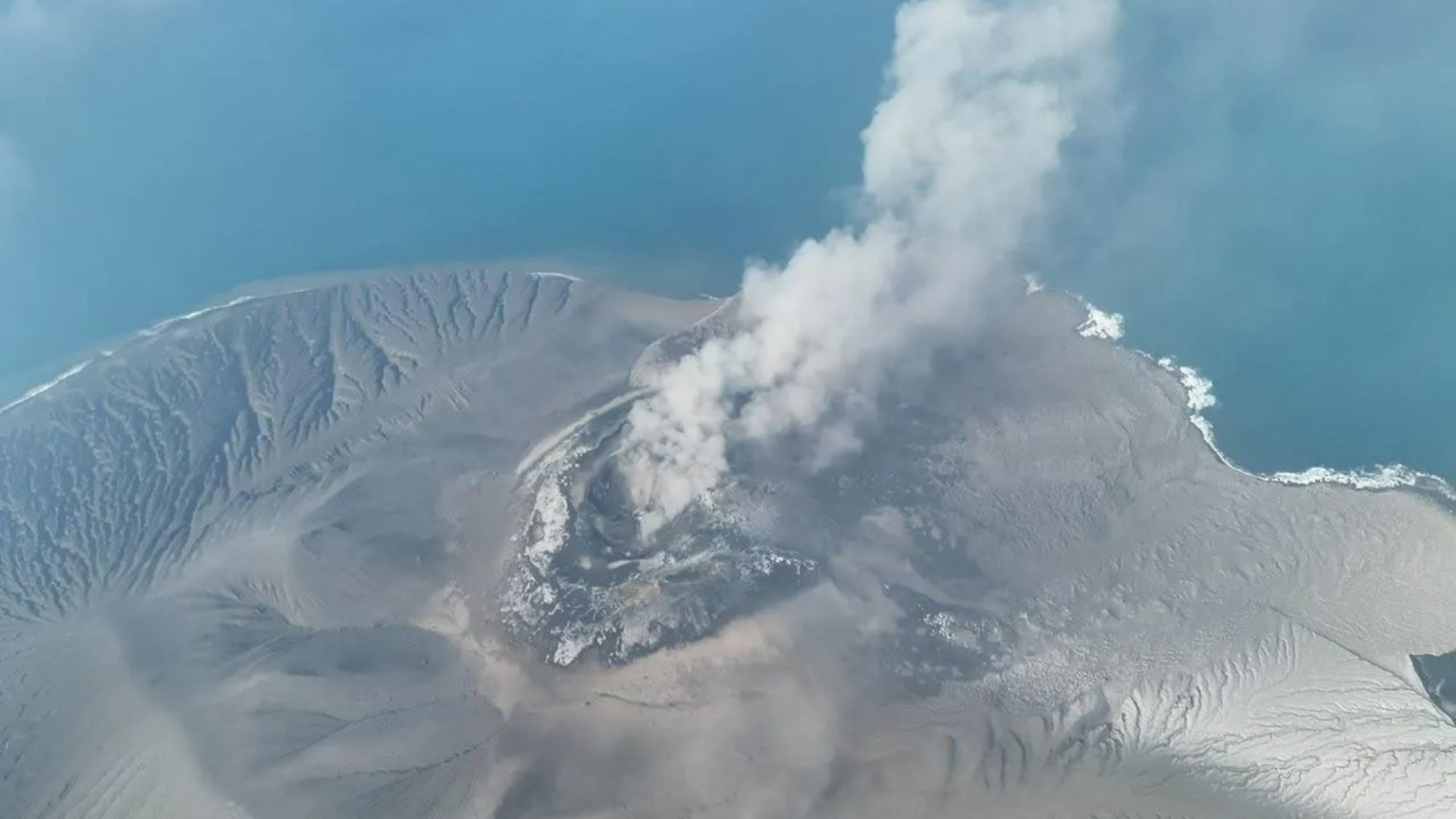
AT LEAST 170,000 air passengers have been left stranded after after a furious Indonesian volcano blasted enormous plumes of ash 15km into the sky.
Eight airports have been forced to close as vast clouds of volcanic ash billowed across the skies.
6
6
6
6
Jakarta’s Soekarno-Hatta International Airport was among those shut, with officials warning that the ash could pose a serious danger to aircraft engines.
A staggering 1,558 flights have been delayed, with the affected airports expected to remain closed until midnight as authorities scramble to assess the fallout.
The eruption began late on Friday and has continued to rumble ominously, with the volcano unleashing towering lava fountains and relentless seismic tremors.
Its booming eruptions have echoed across surrounding regions, with authorities warning of continued volcanic activity.
Two further eruptions struck in the early hours of Sunday, adding to fears among residents and travellers.
The health minister has urged people living in ash-hit areas to stay indoors and wear face masks.
Officials warn the fallout could cause respiratory problems as well as irritation to the eyes and skin.
The ash has already begun causing misery on the ground, with several schools cancelling activities after students and residents complained of sore, irritated eyes.
Most read in The Sun
BOAT CRISIS
Migrant mega-dinghy carrying 140 reaches UK after ‘longest Channel crossing’
LANDSLIDE VICTORY
Germany’s far-Right set for big win in state election, exit polls show
CRASH TRAGEDY
Tributes to ‘beloved’ mum, 38, who died after car hit wall in UK city
6
6
Schools have been given the green light to to switch temporarily to online learning.
Some fisherman were also forced to abandon trips out to sea after reporting similar problems.
One resident, Aldi Candra Prayogi, told local newspaper Kompas that the ash had left his eyes feeling as though they were filled with “small grains of sand”.
He said he had been forced to use eye drops to ease the irritation, while the layer of volcanic dust was so thick that he had to sweep his front yard every five minutes.
There has been no tsunami warning linked to the latest eruptions, and officials have reported no casualties or ordered any evacuations.
But authorities have warned people to stay at least 3km from the volcano’s active crater, with the nearest settlement more than 16km away.
Anak Krakatau – meaning “Child of Krakatoa” – rose from the sea in the early 20th century inside the enormous underwater caldera left behind by the catastrophic eruption of Mount Krakatoa in 1883.
That eruption was one of the most powerful in recorded history, with explosions heard thousands of miles away and vast quantities of ash blasted into the atmosphere.
More recently, Anak Krakatau itself made headlines when a section of the volcano collapsed into the sea in December 2018, triggering a devastating tsunami that swept into coastal communities on Java and Sumatra.
At least 430 people were killed and thousands more were injured or displaced as huge waves slammed into the shoreline.
Researchers later found that some of the chunks of rock involved in the collapse were an astonishing 70 to 90 metres high, while the island was left at only around a quarter of its previous size.
The latest activity has been building since July, according to Indonesia’s Geological Agency, with Sunday’s eruptions described as the strongest during that period.
Lana Saria, head of the Geological Agency, said the repeated blasts suggested magma and volcanic gases were continuing to rise beneath the volcano.
But she warned there was no way of knowing whether the heightened activity would develop into something far larger.
Officials say the immediate dangers include thick ash, high concentrations of volcanic gases and chunks of scorching rock being hurled from the crater.
And with the volcano sitting in the Sunda Strait between two of Indonesia’s most heavily populated islands, authorities are continuing to monitor every movement beneath the restless peak.
Indonesia lies on the notorious Pacific “Ring of Fire” – a vast 25,000-mile horseshoe of volcanoes and earthquake zones encircling the Pacific.
Around 90 per cent of the world’s earthquakes occur along the belt, which is also home to roughly 75 per cent of the planet’s active volcanoes.
More to follow… For the latest news on this story keep checking back at The Sun Online
RECOMMENDED STORIES
Thesun.co.uk is your go-to destination for the best celebrity news, real-life stories, jaw-dropping pictures and must-see video.
Like us on Facebook at www.facebook.com/thesun and follow us from our main Twitter account at @TheSun.