
Vietnam dentists target Australians on social media amid plans to expand medical tourism industry
Posted Sun 6 Sep 2026 at 3:08pmSun 6 Sep 2026 at 3:08pmSun 6 Sep 2026 at 3:08pm
In short:
Vietnamese dental clinics are targeting Australians through social media, prompting more people to travel there for cheaper dental work.
The country’s Health Ministry says Australians are among the top foreign nationalities receiving medical treatment there.
What’s next?
Vietnam hopes to increase its medical tourism sector and attract twice as many international patients over the next four years, which has Australian dentists concerned.
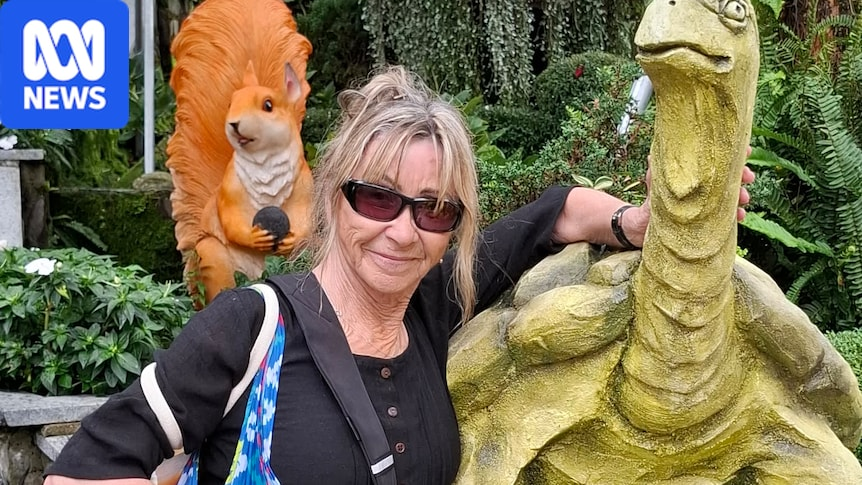
Wendy Middleton used her hands to hide her “awful teeth” when she spoke for more than 20 years.
The 67-year-old from Adelaide’s north had stopped going to the dentist years ago because she said she “couldn’t afford it”.
But two years ago, her teeth were no longer just a cosmetic issue. She was in so much pain, she could not eat properly and needed urgent dental work.
She said the public waiting list was too long and her local dentist quoted her about $40,000 to fix her teeth, which required multiple crowns and extractions.
“There’s no way I could afford it,” she told the ABC.
“I’d be paying it off for the rest of my life.“
Then the casual disability care worker started to see advertisements on social media for dental tourism packages in Vietnam.
For about a third of the cost of the work in Australia, she was promised the same dental procedure along with flights, accommodation, visas, airport transfers, meals and medication.
She was initially worried it was “a scam”, but after conducting her own research, she said she was willing to take the risk and booked the package.
Ms Middleton’s story is not unique. According to Smartraveller, dentistry is one of the most common medical procedures that Australians travel overseas for.
However, it is hard to know exactly how many head abroad for medical work because Australia does not track this information.
One dental practice operating in Hanoi and Da Nang, Australian Dental Clinic, told the ABC the “majority” of their foreign clients were from Australia.
“We do see an increase in the flow of Australian visitors,” practice manager Nguyen Nam said.
Vietnam’s Health Ministry also lists Australians as one of the top nationalities receiving medical treatment in the country.
While Ms Middleton’s experience of having dental work in Vietnam was positive, consultant prosthodontist Scott Davis said he often saw patients returning from abroad with negative outcomes.
Dr Davis, a spokesperson for the Australian Dental Association, said Australians travelling overseas for dental work had become “a bigger problem” in recent years.
“I see a lot of people who’ve had complications,” Dr Davis told the ABC.
“Ultimately, if I travel a very long way to have dental treatment, I’m trying to condense what normally might take three to six months into two weeks.
“Biology just doesn’t listen to that.”
He said he wished Australia, like the United Kingdom, collected information about citizens who have adverse outcomes from medical work abroad so the scale of the problem was clearer.
Aussies targeted with social media advertisements
Dentists in Vietnam are actively targeting Australians through social media advertisements and influencers to drum up more business.
It was how Ms Middleton and many other clients of Vietnamese dentistry practices first became aware of the services.
“That’s what I’ve been watching because it has been growing,” said associate professor Giannina Warren.
Dr Warren is the senior program manager in communications at RMIT University Vietnam with expertise in place branding — how cities and destinations promote themselves.
She said it was “interesting” how many Australians and New Zealanders were creating content of their dental tourism experiences in Vietnam through TikTok and Instagram.
“This is happening in the digital space, and it’s happening in an organic, user-generated way,” she said.
She said popular dental clinics in Vietnam were also using targeted Facebook advertisements and online videos to build their brand and business.
Vietnam plans to expand medical tourism industry
Despite warnings from the Australian government about the risks involved, Asia has been a common spot for Australians to seek out dental, medical and cosmetic work.
Almost half of Australian travellers have — or would consider — going overseas for a medical procedure, mostly due to the lower cost of treatment, according to 2025 data from the Department of Foreign Affairs and Trade and the Insurance Council of Australia.
Now, Vietnam has plans to become one of South-East Asia’s leading medical tourism destinations. And that has Australian dentists, including Dr Davis, worried.
About 300,000 foreign residents and visitors currently use medical services including dental, fertility treatment and other cosmetic procedures in Vietnam each year, according to Vietnam’s Ministry of Health.
But under a draft scheme being prepared by the Health Ministry, the Vietnamese government wants to more than double that, aiming to attract about 750,000 international medical tourists a year by 2030 by teaming up with the country’s Department of Tourism.
“I do think they have a long way to go in terms of building the narrative and working constructively with the private sector,” Dr Warren said.
“That’s the key thing when it comes to medical tourism, trust is the currency … and that has to come from a layer that’s above the providers.“
Dr Warren said she had been impressed with the medical care she had received in Vietnam since she moved a few years ago but the industry had a lot of room for growth.
“That’s a story I want to tell to the world about how high level the care is here,” she said.
“Vietnam has not been doing a great job of telling that story.”
Dr Davis said if the growth plan went ahead, he believed the number of Australians travelling to Vietnam for dental work “would increase”.
“My concerns with Vietnam doing this is they are a long way away, the medical legal protections for foreign citizens having care is nowhere near as robust as it is in Australia,” he told the ABC.
“So if you do have adverse outcomes, you have very poor opportunities to effectively receive compensation.
“It’s possible, but I’ve been informed it takes years, it’s complex, might require multiple visits.”
He also warned prospective clients to be wary, saying advertisements “may convey outcomes that are achievable that perhaps may not be achievable”.
“Are the testimonials true, is AI being used in the before and after images, are you going to get what you think you’re purchasing?” he said.
“That’s something you should approach with trepidation.”
Calls for dental reform in Australia
For Ms Middleton, the dental work she had done in Vietnam has been life-changing.
She said Australia needed to overhaul its dental industry if it wanted to encourage citizens to stay local.
“This is the best thing I’ve ever done; the confidence level I now have is through the roof,” she told the ABC.
“Australia needs to regulate the price and cut them down.
“I can go back [to Vietnam] 10 times, and I still won’t pay $40,000. If they brought their prices down here in Australia, people would stay.”
Dr Davis said Australia needed “greater efficiency, simplicity and better support of the industry to allow us to provide health care at a lower price point”.
“Regulatory oversight and compliance with the plethora of rules makes health care more expensive generally,” he said.
“Governments could do a better job.
“I believe people would rather be treated by someone close to home than a very long distance away and be able to see them if there are complications readily.”
Dr Davis warned anyone considering having work done overseas to do their research on the practice, to ensure they were not being advised to have more work done than they actually needed and to check the qualifications and training of the medical professional carrying out the work.
He said just because some clinicians at the practice may have trained in Australia, it did not mean you would be seen by that person.
Australia’s Department of Health, Disability and Ageing warned anyone considering dental treatment overseas to understand the risks, seek advice from a registered health practitioner in Australia, and check what aftercare, insurance and consumer protections were available.
A department spokesperson told the ABC it was not responsible for regulation of the dental industry; instead, that fell to the Dental Board of Australia with oversight from the Australian Health Practitioner Agency (AHPA), which both operate independently of government.
Dental Practices are also subject to additional state and territory legislation, including public health and work safety laws.
“Our role is to help protect the public by ensuring dental practitioners are appropriately qualified, trained and safe to practise,” an AHPA spokesperson told the ABC.
“Our regulatory responsibilities do not extend to dental practitioners or services provided in overseas jurisdictions.”