
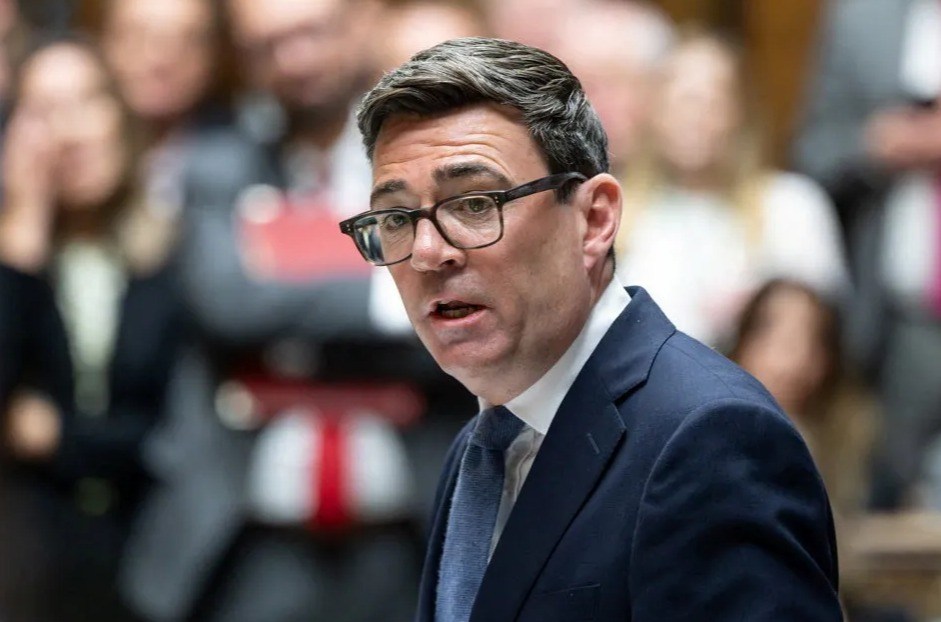
ANDY Burnham has hinted he could hit some London homes with higher taxes.
The Prime Minister has previously backed replacing council tax and stamp duty with a new tax system that could leave homeowners in London and the South East paying more.
In an interview with The Standard, Mr Burnham said he wanted there to be “fairness” in the taxation of homes.
He has made clear he has no plans to implement a major reform immediately.
But he hinted he could bring something like this in at a later stage, which could include raising tax on higher-end properties.
“Moves were made in the Budget last year, council tax has got to be fair across the country, and I don’t have any further plans in that regard… in this moment,” he said.
Read more on Andy Burnham
‘COMMON SENSE’
Burnham ‘set to give green light’ to new North Sea gas drilling this month
TAX FEARS
All the taxes most likely to go up in the Budget – how to protect YOUR money
“But it’s important that there’s a sense of fairness between all parts of the country.
“We’ve got to make sure that London isn’t seen from the outside as somewhere that gets different treatment.
“Obviously, different approaches apply in different places, but it’s just really important that when it comes to fairness, I don’t want to see a situation where there’s resentment towards London.”
Mr Burnham hit back at accusations he was being “anti-London”, saying he was “proud” of the capital city.
Most read in Money
THAT’S SUPER
Waitrose makes major change to 52 stores – is yours affected?
JOBS CULL
Jaguar Land Rover to cut 4,000 jobs as bosses to announce redundancy programme
PRICE HIKE
Vaping cost set to soar by £280 a year with new tax ‘most haven’t even heard of’
RECORD RATES
Retirees cash in on bumper £8,150 payouts for the rest of their LIFE
“We want London to do well. But the best thing is that London doesn’t become different and remote from other parts of the country, and that’s really important,” he said.
It comes after the Labour Government slashed funding for some of London’s wealthiest councils.
The Fairer Funding Review has changed how Whitehall funding is split up between local authorities, with areas with higher deprivation levels given more help.
Wandsworth, Westminster, Kensington and Chelsea, Hammersmith and Fulham, City of London, and Windsor and Maidenhead have all seen big cuts to their funding as a result.
However, they have each been allowed to raise council tax above the 5% yearly cap to make up for it.
How could Burnham change property tax?
The Government is understood to be looking at scrapping council tax and stamp duty altogether and replacing them with a brand new property tax system.
One option is a proportional property tax based on a home’s current market value.
The model was proposed by the campaign group Fairer Share and would charge homeowners 0.48% of their property’s total market value each year.
Any increase would be capped at £1,200 above a household’s existing council tax bill.
However, second-home owners and those living abroad would pay double the standard rate, at 0.96%.
The other option is a land value tax, based purely on the value of the ground a property sits on.
Officials at the Treasury were already exploring options before Mr Burnham took over at Number 10.
Former housing secretary Steve Reed confirmed in his final Commons select committee appearance that reforms to both council tax and stamp duty were being actively considered.
Under the land value tax model analysed by Tax Policy Associates, homeowners could face an annual charge equal to 1.28% of the value of the land beneath their property.
Unlike some previous property tax proposals, owners would not be able to defer payment until the property was sold or they died.
The impact of either would be particularly brutal in the capital.
More than 21,000 London homes could face annual bills of over £50,000 under a land value tax.
Kensington and Chelsea alone accounts for more than 15,000 of those properties, while Camden, Hackney and Haringey would also be among the worst-affected boroughs.
Nor would the pain be confined to London.
Across the UK, a further 576,000 homes could face annual bills exceeding £10,000.
RECOMMENDED STORIES
The estimates from Tax Policy Associates assume that the land value tax would completely replace council tax, which currently places homes into eight bands based on their 1991 values.
Stamp duty, the one-off tax paid when buying a property, would also be abolished under the plan.