
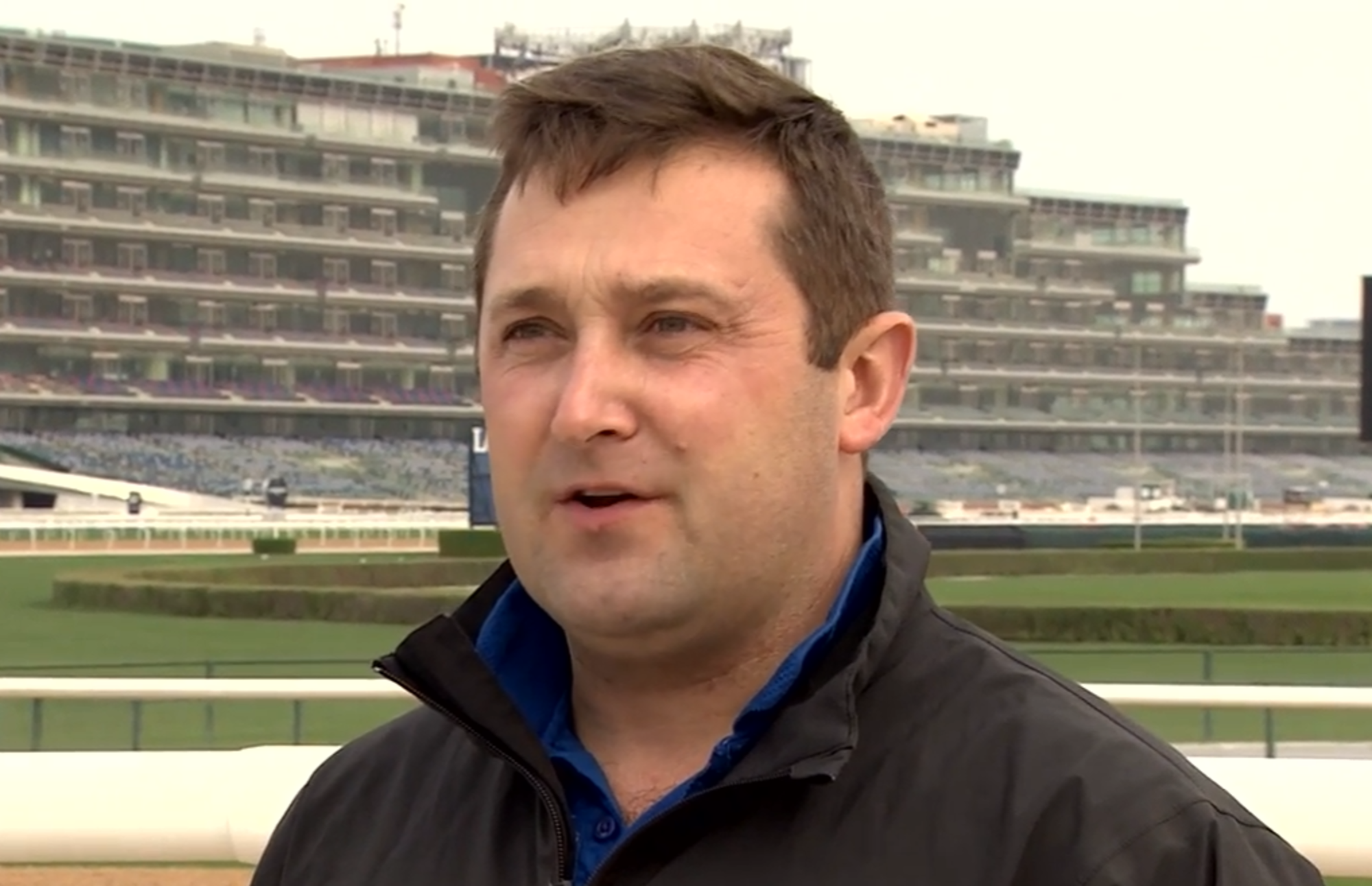
Carparks, swanky offices and social housing – Khalil de Burca’s Real Estate Investment Trust GDL has amassed a huge swathe of property
The head of a real estate investment trust that floated on the Irish stock market last week was bankrupted three times before bouncing back with the €135m listing, the Sunday Independent has established.
From horseracing to property investment and bankruptcies to riches, Kahlil de Burca has defied the odds to secure a €135m stock market listing in Dublin for real estate investment trust GDL.
But to some professional firms and investors based in Ireland, the company remains a mystery.
A real estate investment trust (REIT), GDL Management burst onto the Euronext Dublin last week with its €135m flotation, boasting a string of assets across Ireland and the UK that are either owned or in the process of buying.
They range from individual houses, to large car parks, swanky offices and substantial development sites.
A low-profile property firm with offices in Dublin and Loughrea, Co Galway – HPS Real Estate performed dozens of valuations for GDL for its flotation. HPS Real Estate is headed by managing director Ryan Hanly (23).
GDL, where Mr de Burca is chief executive, is targeting significant expansion, helped in part by the Kuwait-based Al Ritaj Investment Company, which has converted a long-term loan facility into an equity interest in GDL.
GDL’s main focus is the construction and acquisition of social housing properties in Ireland, including assets bought under the Government’s mortgage-to-rent scheme.
For Euronext, it was a rare flotation at a time when there has been a flood of exits over the past number of years. Paddy Power owner Flutter Entertainment, CRH, Greencore and DCC were among the firms that abandoned the Dublin market.
The debut – which had been postponed because of legal proceedings in Ireland not directly related to the flotation – was a remarkable coup for GDL and Mr de Burca. It was welcomed by Euronext, which congratulated the firm on its admission to trading.
Adjudicated bankrupt three times in the UK between 2008 and 2020 – twice on foot of petitions by creditors – Mr de Burca now has an 11pc stake in GDL that’s valued on paper at close to €15m based on the company’s market capitalisation. And that’s apart from his €120,000 annual salary.
His mother, Marian Bourke (71) has a 10pc stake in the company and is an executive director. She’s listed as having “served with the Western Health Board and the HSE for over 30 years, managing various aspects of operational risk in the sector from care to delivery”.
She now heads GDL’s hospitality division.
Another shareholder is Aaron Anderson, Mr de Burca’s step-brother. He owns 10pc of the company.
The GDL prospectus notes that its independent, non-executive director, Josephine Chini, “has a personal and professional relationship with Mr de Burca since 2019, arising from Mr de Burca’s business activities in Sweden”. She also owns 10pc of GDL.
Another 10pc-shareholder is a UK company, SF Conway Holdings, owned by what GDL says is a “professional client” of Mr de Burca.. SF Conway Holdings is owned by Sean Francis Conway. He’s involved in infrastructure construction and the horse industry.
But the road to success was far from smooth for Mr de Burca, a former jockey who once raced in point-to-point meetings.
Galway-based Kahlil de Burca – whose full name was listed the UK’s official gazette in 2008 as Kahlil Joseph Casey Burke – had been involved in horse racing for decades before coming to prominence in the property sector.
But his record is a chequered one: a mix of financial distress, a ban and a fine, and some success on the track, both in Europe and the Middle East.
His first bankruptcy was confirmed by Cheltenham County Court in the UK on July 15, 2008.
At the time, he was listed as a racehorse trainer trading under Kahlil Burke Racing, in Northleach, Gloucestershire. The same month, a petition was filed by a creditor to have that company wound up. It appears that winding-up did not occur, but by 2010 the firm had been compulsorily dissolved.
Things only got worse.
In 2009, The Express newspaper ran a story where the British Horseracing Authority (BHA) had been criticised for not removing Mr de Burca’s licence. A string of creditors, including a property developer, a vet and racehorse owners all claimed they were owed money by him.
A previous landlord, who had rented out an equine premises to de Burca, then Burke, said he had to ask the trainer to leave his premises.
“He didn’t pay his rent or staff,” landlord Ean Branston said at the time. “He cost me around £30,000 in lost business and £16,000 in actual debt.”
According to the British Horseracing Authority, Mr de Burca was disqualified from acting as a trainer in November 2009 on foot of a decision by its disciplinary panel.
The Guardian newspaper noted in 2012 that the disqualification arose because Mr de Burca falsified vaccination details on veterinary records and then lied about it to the authority.
Mr de Burca said he appealed that ban, but later withdrew the appeal. He said he withdrew it on the basis that the BHA “are not governed by law”.
“You’re basically trying to get a private members’ club decision overturned,” he said. “The legal advice I was given was, don’t waste the money, and I transitioned back to corporate finance and got on with life.”
Mr de Burca said he made complaints to the UK’s Press Complaints Commission regarding reporting published about him in 2009, which he says were upheld, resulting in him being “exonerated”.
The Commission was disbanded in 2014. Its archive currently shows no record of any complaint involving Mr de Burca and articles from the time remain available on professional search engines.
However, the Press Complaints Commission did not publish all of its decisions on investigated complaints, and for data protection reasons its archive no longer includes complaints that were resolved by agreement between the parties.
“Go to the Press Complaints Commission… and you’ll find that I got a full printed retraction,” said Mr de Burca. “Journalists went off with their own narrative and they were corrected by the Press Complaints Commission.”
He insisted that any papers that printed anything at that time in 2009 had to print retractions.
He has also said he was only bankrupted twice, rather than three times.
The first time was in 2008, the second in 2016 and the third bankruptcy order was made in 2020.
Speaking to the Sunday Independent, Mr de Burca said that the last bankruptcy was “quashed”.
Asked why it was quashed, he said: “That’s between us and the receivers”.
Under the requirements of the listing prospectus for GDL, Mr de Burca was under no obligation to disclose any bankruptcies imposed or previous company directorships he held, for a period earlier than five years before the prospectus was dated.
Therefore, the bankruptcies weren’t disclosed in the GDL prospectus.
Asked if he believed the bankruptcies should, nonetheless, have been disclosed to potential investors in the now stock market-listed firm, he said: “Anyone that’s involved in us knows all about it.”
He said that creditors being left out of pocket following a bankruptcy is typically what happens.
“When a business fails and goes bankrupt, that happens,” he said. “Once a receiver goes in, it’s a receivership, and a trustee takes over. I’ve had plenty of people go bankrupt and owe me money, but I don’t go crying about it. That’s just business.”
But asked if potential investors in GDL should be aware of the bankruptcies, Mr de Burca said there’s no reason why they should.
“We’re not out there raising money, are we?” he replied. “We have met all our regulatory disclosures to the Central Bank. We’ve met all our regulatory disclosures. We are not out there raising money, so your questions to me are a little bit unfounded. At the end of the day, we still went through a Central Bank regulation process.
“Rather than try to write the negative about me, why not write the positives, that an Irish business has listed,” he said.
Meanwhile, GDL has a slew of properties it says in its listing prospectus that it has exchanged contracts on.
They include assets such as car parks valued at millions of pounds in the UK, as well as office blocks and individual houses across Ireland.
“This valuation has been prepared by Ryan Hanly and is signed off jointly by Ryan Hanly and David Moggan MRICS, MSCSI, in each case for and on behalf of HRE Property Limited trading as HPS Real Estate,” notes the GDL prospectus.
However, HRE Property Limited is a standalone firm and owns the Hanly Property Specialists business name. Company records show that a firm called Shaughnessy Auctioneering actually owns the HPS Real Estate business name.
Mr Hanly is a director of Shaughnessy Auctioneering, alongside Martin and Beatrice Shaughnessy. The most recent annual return for Shaughnessy Auctioneering, filed in March this year in respect of its 2025 financial year, shows it is wholly owned by Martin and Beatrice Shaughnessy.
There’s not necessarily a legal obligation for a valuer linked to a real estate investment trust such as GDL to be licensed as such by either the Royal Institution of Chartered Surveyors (RICS) or the Society of Chartered Surveyors in Ireland (SCSI).
David Moggan, who operates a real estate firm in Claregalway, Co Galway, is a registered valuer with RICS, according to the institution’s database.
HPS Real Estate’s MD Ryan Hanly, is registered by the Property Services Regulatory Authority as being licensed to auction property other than land, to engage in the purchase or sale of land, letting land, and property management services.
“He is regulated by RICS,” said Mr de Burca. He said that “of course” Mr Hanly has a licence from RICS.
However, Mr Hanly does not appear to be registered with either RICS or SCSI.
The SCSI said Mr Hanly is not registered by either institution and is not a registered valuer with either entity.
On documents associated with the GDL flotation, it is noted that Mr Hanly is a member of the European Association of Real Estate Professionals and he does appear on that institution’s register as having been a member since January this year.
To be a member of the European Association of Real Estate Professionals, a person must first be a member of a participating association, however. For professionals in Ireland, that’s the SCSI.
Mr Hanly has been asked to clarify if he is a member of RICS and SCSI.
Mr Hanly said that the valuations for the mortgage-to-rent properties on GDL’s books have been prepared by factoring in the long-term leases and state guarantees in respect of the properties.
That has seen properties bought this year, for example, listed as being worth significantly more than their purchase price. Mortgage-to-rent properties can typically be bought at distressed prices that are lower than their market value.
For example, one property acquired this year in Navan was bought for €122,500. Its market value is now listed at €353,500 by GDL.
“There’s a good blend of assets in there,” said Mr Hanly of the GDL portfolio.
He said that as the company, being a real estate investment trust, is likely to hold its assets for some time, “it’s not a complete open market value” as assets are valued.
“Everything else within there is generally a long-income asset, so they’d be valued on an investment-income approach,” he added.
“The nature of all the residential properties [in the portfolio] is that they come through the mortgage-to-rent scheme,” he said. “The likes of GDL would purchase the assets from the loan service providers. That’s based on open market vacant possession value.”
“GDL then, within a period of time, would have to bring them up to housing standards for the housing authority,” he added. “From day zero of them [GDL] owning the property, the lease actually kicks in. That’s a 25-year government-guaranteed lease, so the valuation on them would very much be based on the income. It’s based on your cash flow.”
The rents on the properties are paid by the State, with those rents for GDL’s owned properties ranging from almost €15,000 a year to even more than €29,000 a year for a three-bedroom semi-detached property in Finglas in Dublin.
He said site visits were done on all the GDL properties that are either owned or where it is contracted to buy.
Meanwhile, GDL says it has substantial financial means to complete its acquisitions, including €59.3m of debt drawn to pay the €123.5m worth of 49 properties it already owns. It told investors that new equity of €55.6m was issued to fund the bulk of the remaining cost.
Its backer in Kuwait has provided the bulk of the finance to buy the assets, while other shareholders have also injected capital, according to Mr de Burca.
It appears that GDL could have all the makings of a star listing for Euronext.
“The past is the past,” said Mr de Burca. “I’ve done well for the people that are around me over the years. All I can ask anyone is be true and be fair.”