
Scientists fear Murray River lampreys may have vanished due to algal bloomBy Jackson Byrne and Eliza Berlage
Posted Sat 5 Sep 2026 at 10:15amSat 5 Sep 2026 at 10:15amSat 5 Sep 2026 at 10:15am
In short:
South Australian Research and Development Institute (SARDI) researcher Chris Bice says lampreys have not been seen for two consecutive monitoring periods.
He says the disappearance could be due to a harmful algal bloom.
What’s next?
Scientists hope the elusive species will re-emerge or recover next year.
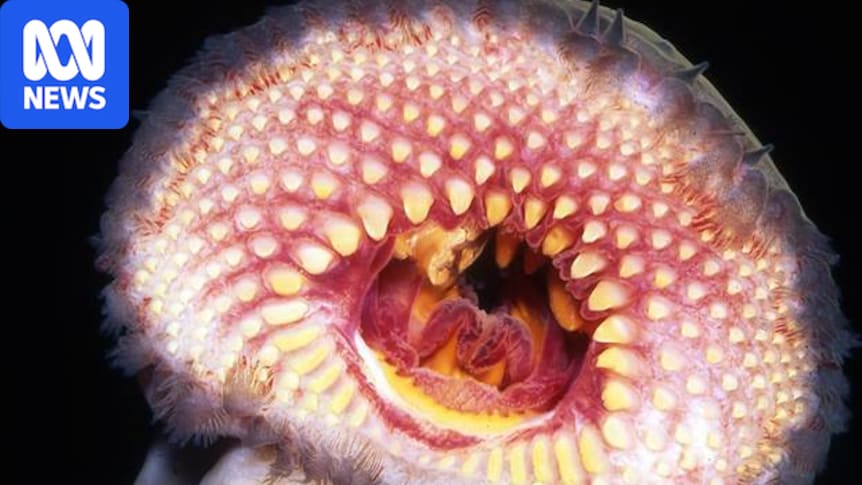
The disappearance of a blood-sucking, eel-like fish could be welcome news for those who are fearful of the toothy creature, but scientists say they are concerned lampreys may be the latest casualty of South Australia’s devastating algal bloom.
Every winter the South Australian Research and Development Institute (SARDI) uses fishway traps to monitor for lampreys as they swim from the ocean through the barrages into the Murray River.
Senior researcher Chris Bice said the team usually caught about 20 to 100 lampreys, but the last two monitoring periods had left them empty-handed.
“This year, unfortunately, we haven’t caught any despite trying reasonably hard,” he said.
While the “incredibly cryptic” fish could be hard to catch, Dr Bice said he was concerned about what may have led to their absence.
“On the weight of evidence, I think it’s pretty fair to say that the algal bloom may have had an impact on the upstream migration of these fish,”
he said.
Beginning in March 2025, South Australia’s harmful algal bloom stretched across more than 20,000 square kilometres and resulted in the death of approximately 1 million marine animals of more than 600 species, according to the Australian Marine Conservation Society.
Older than dinosaurs, but still relatively unknown
Lampreys are part of an ancient vertebrate group and resemble an eel, although they bear no relation.
The species can be traced back hundreds of millions of years and are related to “an ancient family known as the jawless fishes”, according to Dr Bice.
Estuarine ecologist Faith Coleman said while the algal bloom could be a contributing factor to the lack of sightings in the River Murray, there could be several reasons that SARDI was unable to catch them.
“Most farmers will tell you there’s been some really weird things around climate and that may have also changed how the lampreys migrate,” she said.
Dr Coleman also said dead lampreys could have gone undetected due to their biological makeup.
“There is a question of whether they float when they die or whether they sink,” she said.
“We’ve found a lot of species have been badly impacted [by the algal bloom], but because of how their biology works, they have sunk rather than floated and they’ve not come into shore.“
Why are we monitoring them?
SARDI has been undertaking targeted monitoring of lampreys for about a decade but only keep tabs on their movement as they migrate to freshwater to spawn during winter.
Dr Bice said they only had a short window to research the relatively unknown species each year.
“They move vast distances when they’re out in the ocean when they’re attached to large fishes and feeding on them,” he said.
“Right now we know almost nothing about the marine part of their life cycle.“
Despite their alarming appearance, Dr Bice assured people they had nothing to worry about if they were lucky enough to come across a lamprey.
“When they’re on their freshwater upstream migrations, they actually stop feeding,” he said.
“As soon as they enter freshwater, they’re no danger to humans at all.
Dr Bice said he hoped the absence of lampreys could be short-lived as the impact of the algal bloom continues to subside.
“I am optimistic they will turn up again in future years and hopefully next year,” he said.