
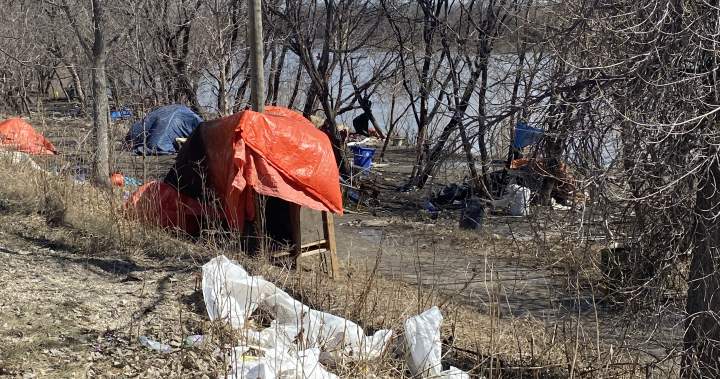
Winnipeg’s Standing Policy Committee will receive a report next week outlining the city response to homelessness, specifically its encampment distance guidelines.
According to the report, there were 72 encampments in the city and a total of 245 people living in them at the end of July. The areas with the most included Point Douglas with 19 encampments, and Fort Rouge/East Fort Garry with 17.
The numbers are still concerning for many in the community, but city officials say it’s a step in the right direction.
“The number of people living in encampments this time this year compared to this time last year has been cut in half,” said Winnipeg Mayor Scott Gillingham. “Last year, there were over 700 people living in encampments in 100 encampments.”
As of June, Winnipeg’s new encampment distance protocol has led to 141 encampments being cleared, according to the report.
Story continues below advertisement
The city offers supports and housing options to those having to leave encampments, but one local shop says the bylaw is just moving these individuals to their doorstep.
“You shut down an encampment, where are they supposed to go? There’s not places for them to be so they just end up in our storefronts,” explained Just Like New to You Thrift Store President Susan Lockhart.
The shop is located on Portage Avenue, with Lockhart saying the issue of crime is the worst it’s ever been. She describes damage to the business being the norm, and a severe beating across the street just this week.
“It was in broad daylight and there were five people just smashing another person,” says Lockhart. “Our handyman who does some help with us, he had his car torched in the back lane. It can be very scary here.”
Story continues below advertisement
The mayor admitting that there isn’t the stock right now to support those exiting homelessness, but says Winnipeg is collaborating with the province to ensure everyone has somewhere to go.
Get daily National news
Get daily Canada news delivered to your inbox so you’ll never miss the day’s top stories.
By providing your email address, you have read and agree to Global News’ Terms and Conditions and Privacy Policy.
“The biggest chokepoint is that there’s just not enough housing at this moment so the city continues to work hard to get more housing built,” said Mayor Gillingham. “We’ve made progress, there’s more work to do.”
As for the provincial efforts, Manitoba says it’s moved 267 people into transitional housing since beginning it’s Your Way Home strategy at the beginning of last year. 85 per cent of those that have entered transitional housing are still housed.
On Friday, the province touting some of its success at a press conference at one of its downtown core housing locations which features 118 of the transitional units.
N’Dinawemak is an Indigenous-led organization that’s providing 24-hour on-site supports for those living there.
“We have three shifts across the board so we run 24 hours,” says N’Dinawemak Senior Director Nicholas Candaele. “If someone has an issue at midnight for example, they have someone they can instantly go to whether that be someone for case management, whether they need a meal, whatever it might be.”
2025 was a record setting year for naloxone being administered in Winnipeg, happening 4,900 times. According to the report released by the city, naloxone had to be administered over 4,000 times in the first half of 2026 alone, on track to smash the recently set record.
Story continues below advertisement
Housing and Addictions Minister Bernadette Smith stresses the connection between homelessness and the addictions crisis. Smith believes transitional housing is a way to recognize that connection and work towards solutions.
“We know that substance use is based in trauma. If we can help folks move from their trauma into a space where they can have some coping skills, some tools in their toolbelts, that if things are happening in their life they’re not turning to substances.”
Smith pointed to Manitoba’s first supervised consumption site which opened last month as a way people are getting connected to services and housing. The minister provided no specifics but said the province would be providing quarterly updates on the site.