
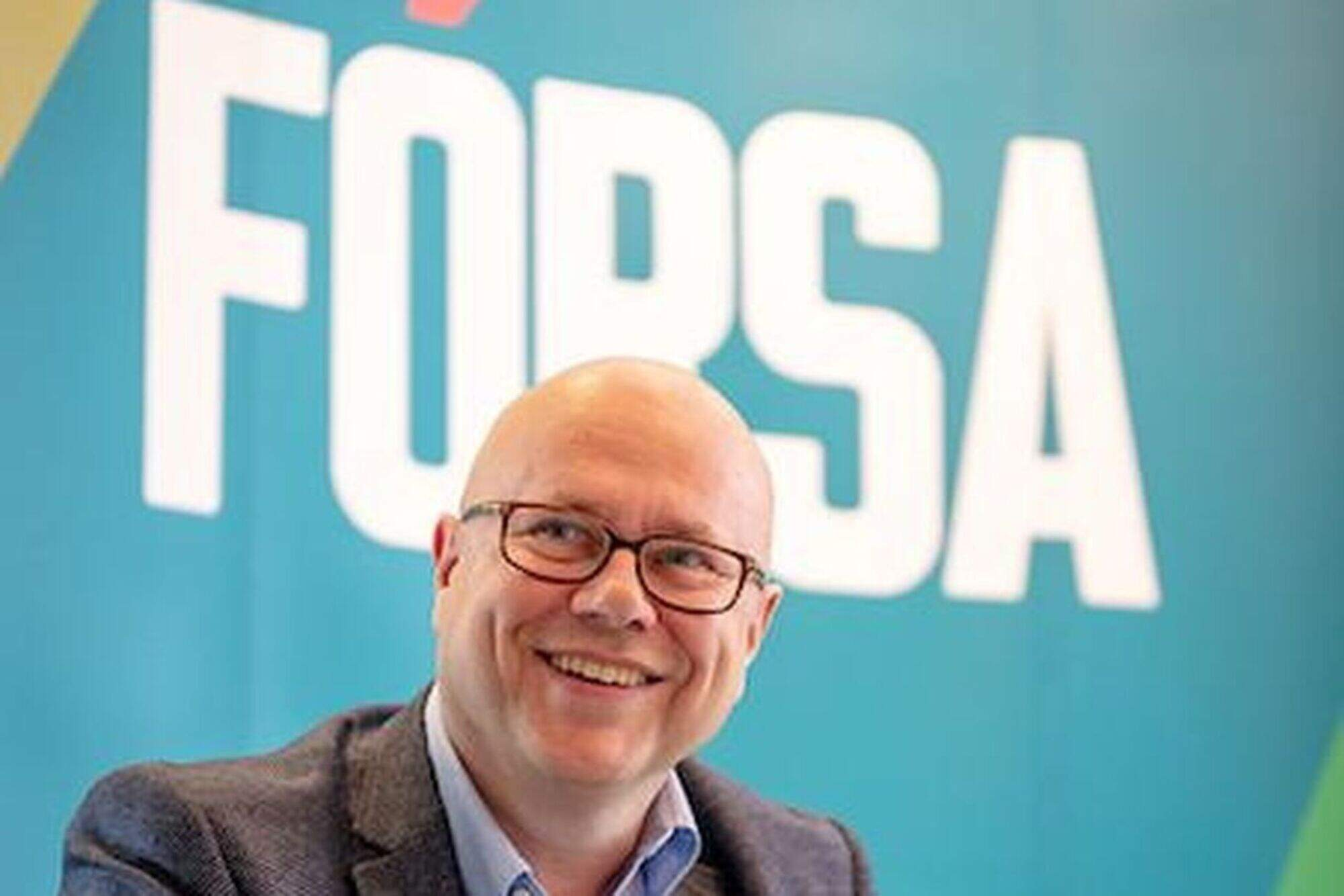
Thousands of public servants who are members of Fórsa have overwhelmingly backed industrial action in a dispute over pay.
The union announced this afternoon that 96pc of members voted in favour of industrial action up to and including full-scale strike action.
Announcing the result, Fórsa general secretary Kevin Callinan said he believed it was the largest-ever strike ballot in Ireland.
Speaking at the union’s headquarters in Dublin, Mr Callinan said there was a 72pc turnout of the more than 80,000 members balloted:
“We will be liaising with other public service committee affiliates of the ICTU in relation to other common actions that might be taken right across the public service by the various trade unions involved.”
It comes after SIPTU announced on Monday that members voted 97pc in favour of strike action and 98pc for industrial action.
A total of 19 public service unions are being balloted after their leaders said that initial talks on a new pay deal with the government collapsed in June.
Speaking today, Mr Callinan said it was untrue to say that unions were unwilling to negotiate.
He said it would probably be the end of the month before action could commence.
Union leaders are demanding that the Government makes a better pay offer.
The previous wage agreement expired at the end of June.
It meant pay rises of 10.25pc for over 400,000 public servants over two and a half years. Successive wage agreements that determine pay for government employees have been agreed since the recession.
Siptu deputy general secretary Adrian Kane said the union would consult other public sector unions to decide the action needed to compel the government to enter “meaningful” talks.
“Trade unions have been available for months to negotiate a successor agreement, but the Government has failed to engage meaningfully,” he said.
“It is unacceptable and has caused a huge swell of anger across our 75,000-strong membership in the public service.”
Mr Kane claimed that the Government has ignored public service workers “while providing extensive financial support to other sectors”.
“The clear lesson is that this Government responds only when it is placed under pressure,” he said.
He said that not only were public service workers having their wages “eroded” by the cost of living, but that their “already overstretched public services are being placed under even greater pressure”.
Last week, Unite officials warned that winter strikes may be on the way without a “meaningful” pay offer.
The Prison Officers Association said a national poll of its members shows 99pc support industrial action, up to and including strike action, if the Government does not “set out a clear and credible approach to aligning pay and living standards” at talks.
The leaders of the Irish Congress of Trade Unions’ public services committee have said there is no viable basis for opening formal negotiations with government officials.
They said the Government had not set out a sufficiently credible approach to public sector workers’ pay and living standards.
Although a specific claim was not tabled, unions said inflation ran at 3.6pc in May and this had wiped out two increases worth a total of 2pc paid this year under the previous deal.
Public Expenditure Minister Jack Chambers has warned that the Government will not sign up to a new deal on pay “at any cost”. He said it must be sustainable and affordable for taxpayers as well as public servants.
A spokesperson at the Department of Public Expenditure said the Government remains available to engage with Ictu and other representative associations on all matters.
“It is disappointing that the opportunity to engage on a successor agreement in recent weeks was not taken,” she said.
“Following the balloting period, it is important that both sides return to the table to work towards a public service pay agreement.”
She said meaningful progress can only be achieved where both parties are open to constructive and sustained engagement, without preconditions on either side.