
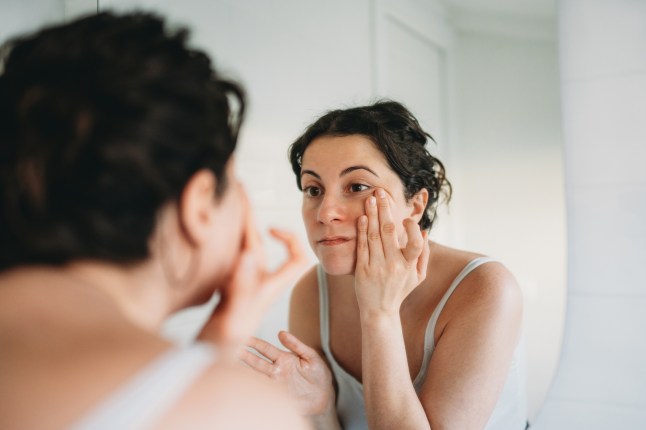
You may have heard of ‘cortisol face’ and ‘Ozempic face’. Now though, it’s all about ‘ferritin face’.
The latest health trend doing the rounds online claims you can spot low iron levels simply by looking in the mirror.
But while there is some truth behind the trend, it’s not quite as simple as TikTok would have you believe.
Because although ‘ferritin face’ isn’t a recognised medical condition, and you can’t diagnose an iron deficiency based on their appearance alone, low iron can cause visible changes to the skin, hair and nails.
Iron deficiency also shows up in a number of additional ways — and since it can sometimes be a warning sign of more serious underlying health issues, it’s worth getting checked out sooner rather than later.
These are the nine key signs should you look out for.
‘Ferritin face’
Ferritin is a protein that helps your body create, store and release iron, so a low ferritin level can indicate that your iron is running low too.
Although ‘ferritin face’ is very much a social media term rather than a clinical diagnosis, it describes a look commonly found in patients with a reduced biological reserve, such as a pale or washed out complexion, dark circles, dry or dull-looking skin, and cracked lips.
At the time my ferritin was at a 2 😅 now it’s at 4. *laughs to keep from crying* #irondeficiencyanemia #anemia #anemic #lowferritin
Pale skin in particular can be a sign of iron deficiency anaemia, with the British Dietetic Association explaining it’s because there’s less haemoglobin available to give blood its usual colour.
However, even though some of these changes may occur as a result of low iron, they can also have plenty of other explanations, from dehydration to hormones — or even just plain old ageing.
Fatigue
Needing a lie-in after a busy week is one thing, but being so exhausted you struggle with everyday tasks is quite another.
Iron is needed to make haemoglobin, the protein in red blood cells responsible for carrying oxygen around the body, meaning deficiency can leave you feeling persistently tired and lacking in energy.
‘Many of the symptoms associated with low iron levels can be easy to overlook because they often develop gradually,’ says Jamie Christie, nutritional biochemist and nutritionist at Just Vitamins.
‘People may notice they’re struggling to concentrate, feeling more tired than usual or finding everyday tasks more draining, but they don’t always connect those changes back to their nutrition.’
Fatigue isn’t specific to iron deficiency though, with Kathryn Basford, GP at Asda Online Doctor, explaining that a number of other things can ‘mimic’ it in this respect.
‘The most common are alternative forms of anaemia, or conditions like hypothyroidism and chronic kidney disease, as these impair red blood cell production,’ she tells Metro. ‘Sleep apnoea can also cause similar symptoms.’
Shortness of breath or heart palpitations
Dr Basford also highlights shortness of breath and heart palpitations among the signs of low iron — and once again, it’s all to do with how the nutrient interacts with haemoglobin.
The Iron Clinic website explains: ‘If you are iron deficient, your blood may not contain enough oxygen for your muscles to do everyday activities such as walking.
‘Your body tries to make up for this by increasing your breathing rate to get more oxygen into your body, and by increasing your heart rate to help move the oxygen around your body.’
Still, if you’re experiencing unexplained breathlessness or persistent palpitations, don’t assume it’s solely because you need more iron — these symptoms can have other causes, and are worth discussing with a GP.
How much iron do you need?
In the UK, the NHS recommends 8.7mg of iron a day for men aged 19 and over and women aged 50 and over, while women aged 19 to 49 need 14.8mg a day.
‘Women with heavy periods are likely to lose even more iron and may benefit from iron supplements, but most people can get enough iron from the foods they eat,’ says Dr Basford.
Good dietary sources include red meat, pulses (like beans and chickpeas), nuts, and dried fruits.
‘Many green vegetables also contain lots of iron, but it’s best to eat them with vitamin C-rich foods to improve how much iron your body can absorb,’ adds Dr Basford.
‘It’s also a good idea to drink less tea and coffee, and eat less dairy and foods with high levels of phytic acid, like wholegrain cereals, as these can make it harder for your body to digest iron.’
Headaches
Headaches are listed by the NHS as a common symptom of iron deficiency anaemia, with some studies suggesting the link is down to iron’s role in the production of serotonin, a brain chemical linked to migraines.
Again, headaches far from unique to iron deficiency, so having one doesn’t mean your iron levels are necessarily to blame.
But if they’re happening alongside fatigue, breathlessness or other symptoms on this list, it may be worth speaking to your GP about a blood test.
Hair loss or thinning
Finding more hair than usual in your brush or shower drain can be alarming — and iron deficiency is one possible explanation.
Ayesha Bashir, prescribing pharmacist and hair loss expert at Chemist4U, says: ‘Low iron can mean there’s less oxygen reaching your hair roots, making it harder for them to grow strong, healthy strands.’
Alongside iron deficiency, thinning or shedding hair can have many causes, including hormonal changes, stress, thyroid problems and other nutritional deficiencies.
As such it’s recommended you seek medical advice if hair loss is severe, lasts for more than six months, involves bald patches or is accompanied by symptoms such as extreme tiredness or unexplained weight changes.
Mouth and tongue issues
According to Dr Basford, low iron can in some cases show up as ‘ulcers in the corners of your mouth’, known as angular cheilitis.
The NHS also lists changes in the way food tastes and difficulty swallowing among less common symptoms, as well as glossitis, where your tongue may feel sore or look red and glossy.
Once again however, these can signal a range of different things — but if issues with your mouth or tongue are persistent or combined with other health changes, it’s time to speak to your GP.
Spoon-shaped nails
Koilonychia is the medical term for spoon-shaped nails; when the nail develops a flat or concave appearance, as if it’s bending upwards from the edges.
Dr Giuseppe Aragona, GP and medical adviser for Prescription Doctor, previously told Metro this ‘can be associated with iron deficiency anaemia,’ so is ‘something [doctors] would consider alongside symptoms such as fatigue or breathlessness.’
There are other potential causes, but once the underlying issue is dealt with, the nail usually corrects itself, which is why it’s important to get checked out.
Itchiness
The NHS lists itchy skin, or pruritus, among the less common symptoms of iron deficiency anaemia, due to reduced moisture retention and barrier function.
There are, of course, countless other causes of itchy skin, so don’t rule out the likes of psoriasis or eczema straight away.
But whereas these skin conditions typically present with localised, visible changes such as red, inflamed patches, scaly plaques, or distinct bumps, itchiness resulting from low iron will be more generalised, without a primary rash, and accompanied by additional signs like fatigue and pale skin.
Tinnitus
As Dr Basford highlights, tinnitus is an often-overlooked potential indicator your iron stores aren’t where they should be.
Although there are many reasons why you may experience a ringing, buzzing, hissing, whistling, or roaring sound in your ears, a 2025 cohort study involving almost 89,000 women with iron deficiency anaemia found an association between the condition and new-onset tinnitus.
That doesn’t mean tinnitus is proof that your iron levels are low, and more research is needed to understand the relationship. But given tinnitus can have many different causes, persistent or troublesome symptoms should be assessed further.
What to do if you think you’re iron deficient
If several of these symptoms sound familiar, don’t simply start taking high-dose iron supplements and hope for the best.
‘Speak to your GP if you think you have low iron levels,’ says Dr Basford. ‘They will ask you about your lifestyle and medical history, and will likely perform a blood test to diagnose low ferritin.’
A full blood count can check whether you have anaemia, while ferritin testing can help assess your body’s iron stores.
It’s also important to work out why you’re low in iron rather than simply replacing it. Heavy periods and pregnancy are common causes, but it could also be down to blood loss from the stomach or bowel.
‘A doctor may issue further tests to uncover the reason for your symptoms, like a faecal immunochemical test that looks for blood in a small sample of your poo,’ Dr Basford adds.
She also warns that while iron supplements can help at times, more certainly isn’t always better. In fact, taking excessive amounts can cause constipation, nausea, vomiting and stomach pain — and very high doses can be dangerous.
If in doubt, always consult a medical professional.
Do you have a story you’d like to share? Get in touch by emailing [email protected]
Comment now
Comments
Add Metro as a Preferred Source on Google
Add as preferred source