
During cricket’s Centenary Test at the MCG in March 1977, football great Austin Robertson, one of Kerry Packer’s men, walked into the Australian dressing room handing out what everybody was told were theatre tickets.
They weren’t theatre tickets. They were sign-on offers for World Series Cricket.
Before long 18 Australian cricketers had signed on to be a part of this new phenomenon.
Among the blokes who took one each were Rod Marsh and Dennis Lillee, two men who would go on to shape my life more than almost anyone outside my own family.
At the time, Australian cricket was torn in half for two years. Officials called it the end of the game.
It wasn’t.
It was the beginning of 50-over-cricket in coloured clothing, professionalism, night cricket, white balls, helmets, and players finally being paid something close to what they were worth.
Today, the IPL (Indian Premier League) has changed the face of cricket as we once knew it. Starting in 2008, it has now run for 19 seasons.
Where WSC lasted two summers and was over in under three years, the IPL took the same basic idea of private money, coloured clothing, cricket built for television and has changed the game forever.
On the back of the IPL success, Cricket Australia has spent the better part of two years trying to bring private capital into the Big Bash League (BBL).
In April, the proposal stalled when New South Wales and Queensland said no. In June, all six States finally agreed in principle to a “self-determination” model, where each State decides for itself whether and when to sell.
Four significant conditions needed to be met. These included a BBL governance structure, CA governance reform, Australian Cricketers’ Association agreement, and clarity on the funding and distribution.
The more people you talked to, this seemed like a real mess, with all stakeholders having their own interpretation of what was best for their own interests and the broader interests of the game.
In the meantime, Cricket Victoria announced they were merging the Stars and Renegades administrations and putting the Renegades on the market. In other words, they were going out on their own. The mess intensified.
Depending on who you talk to today, it doesn’t seem anyone is much clearer, although there is a lot of work going on to find the right answers.
The one question that is — and must be debated strongly — is what is best for Australian cricket, not only now, but also long into the future.
Current CEO of Cricket Australia, Todd Greenberg, has been blunt about where he sees the future.
He believes private capital will come into Australian cricket in our lifetimes, and that if we want to compete globally, it is inevitable.
He’s right.
The IPL is a phenomenon. South Africa and England have followed the privatisation path, as have the Caribbean, Pakistan, the UAE, the USA and most recently a European League.
Due to the global competition, the commercial health of these leagues and, importantly, the international schedule, it is hard to imagine that all these tournaments will still be there in 10 years. But who knows.
Most T20 leagues are worth a tiny fraction of the IPL, but there are private owners who are willing to buy up teams around the world.
Having spent the last three years working in the IPL and The Hundred in England I have had a fascinating insight into the world of private ownership of cricket teams, which is common in other codes around the world.
The Manchester Super Giants who I have just coached in England, exist because the RPSG Group and the Goenka family — who own Lucknow Super Giants in the IPL and the Durban Super Giants in South Africa — paid around £81 million ($153m) for a 70 per cent stake in what used to be called Manchester Originals.
Across that competition, eight teams in The Hundred were valued at more than £975m. Reliance, who own Mumbai Indians, took 49 per cent of the MI London. Sun TV, who own Sunrisers Hyderabad, bought the Northern Superchargers outright for £100m. A group of Silicon Valley technology executives paid £145m for less than half of London Spirit.
More than £500m of that money will go back into English and Welsh cricket. Yorkshire, a proud club that was on its knees, has begun clearing £25m of debt. That money is real, and it is now funding grassroots cricket in England.
You may ask why a sports team can be such a good business.
The thing investors understand is that there are a fixed number of these assets.
For example, you cannot start a rival Dallas Cowboys. Scarcity plus emotion is a rare combination in any market that any wise investor understands.
Jerry Jones bought the Cowboys in 1989 for $150m. They’re now valued at somewhere between $13 billion and $15.5b depending on whose ledger you read. Simple maths suggests that is extraordinary business.
Spanish football team Real Madrid is worth $9.5b and generated $1.27b in revenue last season, the highest of any sports club ever measured.
Manchester United, sits around $6.6b. Russian Oligarch Roman Abramovich paid about £140m for Chelsea in 2003; it sold in 2022 in a package worth £4.25b.
Collectively, the world’s 50 most valuable teams are worth more than $353b, up 22 per cent in a year and more than double what they were four years ago.
In March, the IPL’s Royal Challengers Bengaluru sold for $US1.78b. In May, Rajasthan Royals went for $US1.65b. Both were bought in 2008 for a combined $178m.
Those aren’t sporting numbers. They’re asset-class numbers no longer reserved for just billionaires and Bollywood stars. Private equity companies, current IPL owners and others are all eyeing up these opportunities.
The big question is why sport is so valuable and why do the broadcasters pay so much money for the rights?
It’s because sport is the last thing on television that nobody has written the ending to. You could say it’s the best reality-TV in the world.
We live in an age of infinite content, often not knowing if it is real, fake or somewhere in between.
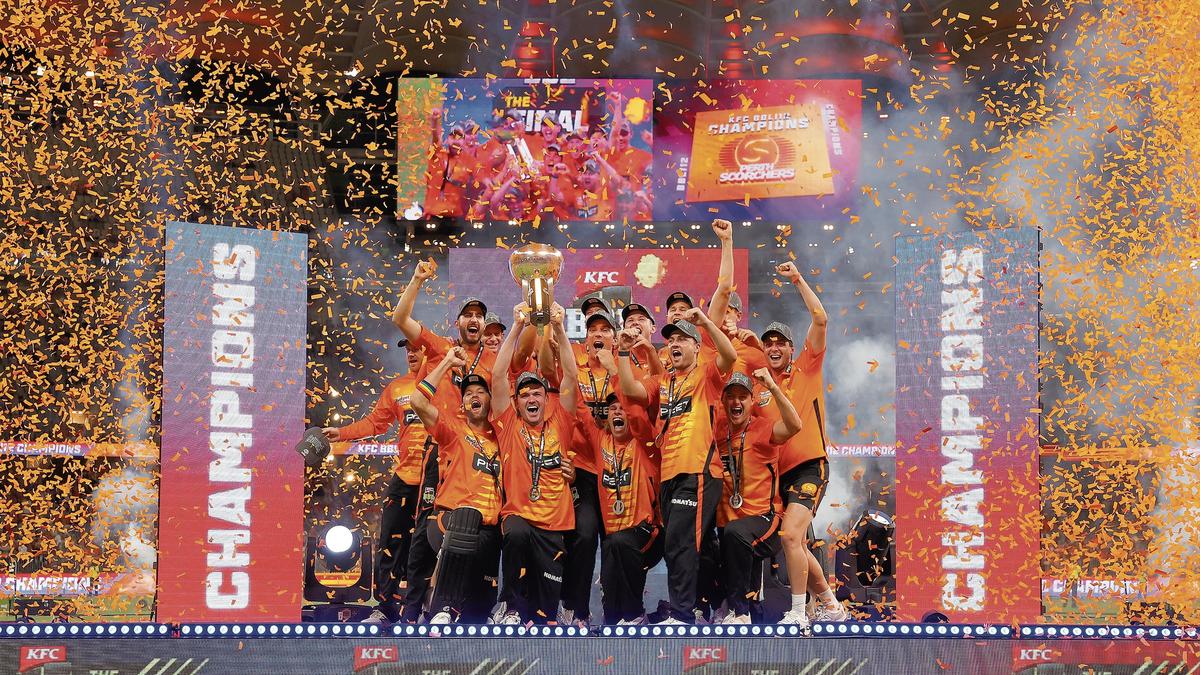
What we do know about sport is that it is real. It happens once, it’s live, and if you miss it, somebody will likely tell you what happened the next day. Thursday night at Optus Stadium was a great example.
Sport also generates genuine tribal loyalty in a world that is running short of it.
While the money is undeniable, I’ve learned, by working inside two privately owned teams, what separates the successful franchises from the expensive mistakes.
It is the relationship between the owner and the people running the cricket that makes the difference. Embracing the partnership is what every team should be striving for when they enter into their agreements.
The money is one thing, the partnership and relationship is the key.
When it works, and I’ve been lucky enough to see it work, the owner brings ambition, passion, commercial reach and a willingness to invest in areas and resources others wouldn’t.
This is no different to any successful or unsuccessful business or sporting team.
It seems inevitable that private investment is coming to the Big Bash. The sort of numbers being discussed are attractive to CA and the State Associations.
Equally, the BBL is an attractive opportunity to private investors.
A useful question worth asking is what Australian cricket is willing to protect to ensure the process is successful and mutually advantageous.
If it chooses to sell off one of its best assets, it must firstly ensure that our grassroots benefit. That must be the model, not an afterthought.
Secondly, Test cricket must remain the summit. Every dollar that flows into franchise cricket makes the baggy green a slightly less rational career choice for a talented 19-year-old.
That is the real risk that no balance sheet will flag.
Australians love Test cricket. It is a part of our summer. Lose that, and there will be a lot of stakeholders, including the broadcasters and fans, who will pull back.
Thirdly, the best domestic players must be available where possible and genuinely rewarded.
It has been an open wound in our game that an overseas signing can earn more than an Australian international player in the same dressing room. We need our best players playing and the private owners will demand that.
Finally, Australian cricket should remain united in its decision-making. Ask any corporate, and they will tell you a splintered corporation is never as strong as a united one.
Kerry Packer’s revolution ended up being good for cricket, but it was good for cricket because the game eventually took the money and kept its soul. That’s the test.
Done well, everyone wins.
Get the latest news from thewest.com.au in your inbox.
Sign up for our emails