
By Nathan Rennolds
Published on
04/09/2026 – 8:38 GMT+2
Share
Add Euronews on Google
Share
It comes after US President Donald Trump cast doubt on US support for the UK in a potential conflict over the territory, pointing to Britain’s lack of backing in the Iran war.
Argentine President Javier Milei said on Thursday that “winds of change” were beginning to favour Argentina’s claim to the Falkland Islands.
ADVERTISEMENT
ADVERTISEMENT
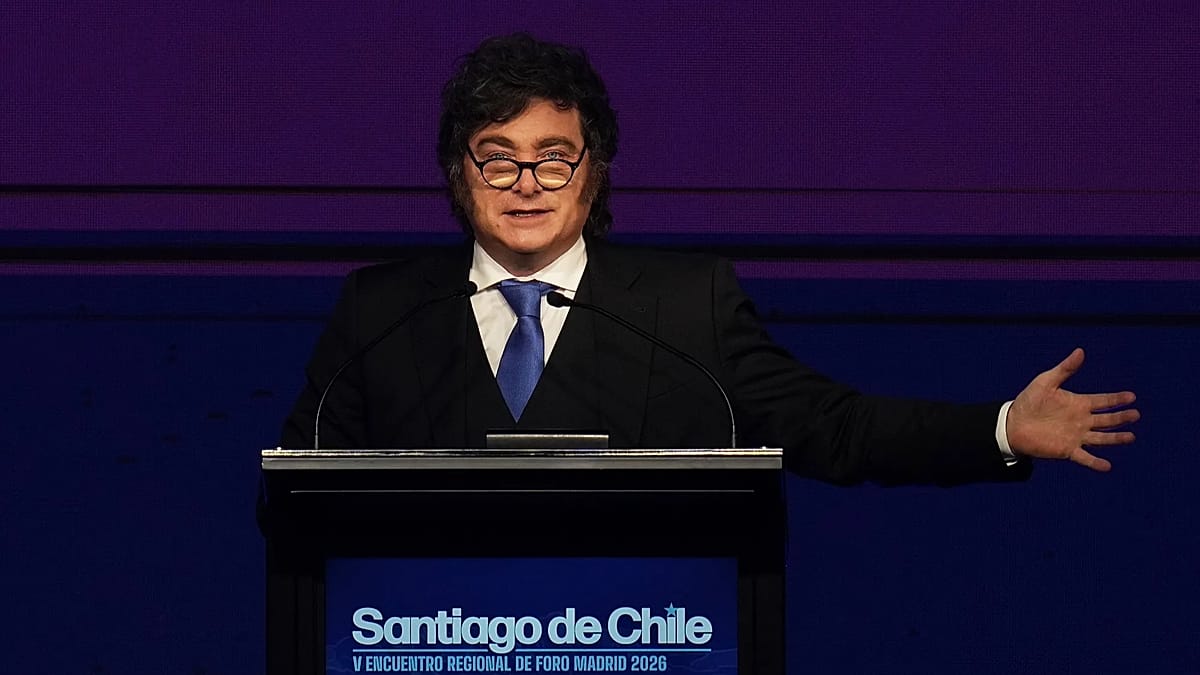
In a TV address, the right-wing leader touted US President Donald Trump’s recent suggestion that Washington could reconsider its neutral position on the islands, which have been at the centre of a long running and bloody dispute between Argentina and the United Kingdom.
“President Trump recently stated that the United States is reevaluating its historical position regarding Las Malvinas,” Milei said, using the Argentine name for the islands.
“This threat is not to be taken lightly,” he continued, adding: “Winds of change are blowing across the world in favor of our cause.”
Trump had earlier this week cast doubt on US support for the UK in a potential conflict over the territory, pointing to Britain’s lack of backing in the Iran war – which began in late February following US and Israeli strikes on Iran.
“Your country is not doing well,” he told GB News. “Don’t forget, you get a big percentage of your oil from the Strait of Hormuz, and you weren’t there to help me. Your country was not there to help me”.
New Sanctions
In his speech, Milei also announced that he would be signing off on a series of new sanctions targeting oil companies working off of the islands, which he described as “under British occupation.”
“For 50 years, the United Nations has called on Argentina and the United Kingdom to refrain from taking unilateral actions regarding the territory, including the exploitation of its natural resources, until the dispute is resolved. However, the United Kingdom has systematically failed to comply with this call,” he said.
He then referenced the British-Israeli Sea Lion oil project, an oilfield roughly 220 km to the north of the Falkland Islands, saying it was due to begin production in the next few months.
“It means that if we do not act firmly and swiftly today, in a few months they will have the material capacity to appropriate the oil reserves lying beneath our sea, something that has never happened before,” Milei said. “If we allow this to happen, we will be creating an incentive for the British government to deepen its occupation of the islands and the exploitation of our resources”.
The Falkland Islands
Sovereignty over the islands has long been a divisive and highly politicised issue, particularly following the 10-week war of 1982, which began after Argentine forces invaded the territory.
Then-British Prime Minister Margaret Thatcher launched a naval task force to reclaim the islands, and the conflict ended with Argentina’s surrender in June of that year.
In 2013, Falkland Islanders voted overwhelmingly to remain British following a referendum. Of the more than 1,500 votes that came in, over 99% were in favour, with three votes against.
Share
Add Euronews on Google