
Advertisement
An internationally renowned forensic expert has questioned the police decision to abandon an investigation into a violent incident between Jeffrey Epstein victim Virginia Giuffre and her Australian husband.
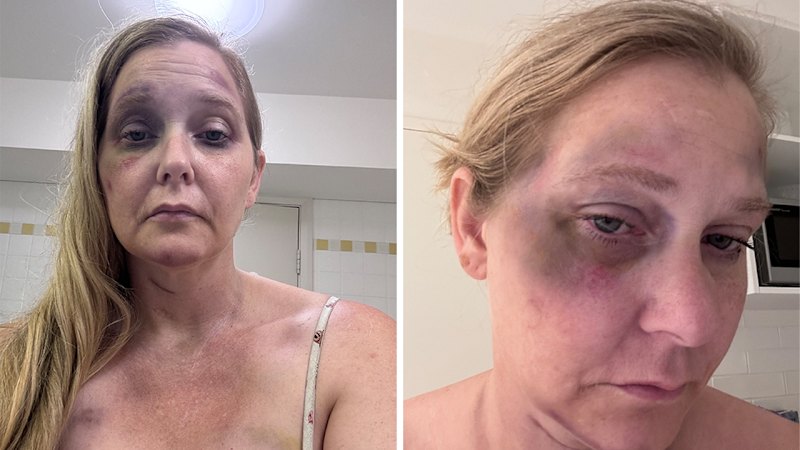
David Wells, an associate professor at Monash University’s department of forensic medicine, analysed photographs of Virginia in the days after she alleged Robbie Giuffre assaulted her on a family holiday south of Perth, on January 9, 2025. In court documents, Robbie later accused Virginia of violence that night.
Police attended the incident, told Virginia to go to hospital and said that she could put a temporary restraining order on Robbie. They also interviewed Virginia in a hotel room several days later. They later dropped the investigation, with no charges laid.
But Wells, who was the head of forensic medicine at the Victorian Institute of Forensic Medicine for 19 years, said that of the three possibilities – self-harm, assault or accident – Virginia’s injuries were most likely due to an assault using blunt force.
Advertisement
He said they were the type of injuries that should have prompted further investigation by police.
“When did it occur? What were the weapons? We don’t know,” said Wells, a globally recognised expert in interpersonal violence who has worked with victims of sexual assault in conflict zones and consulted to the World Health Organisation and United Nations Office on drugs and crime.
“I’ve seen many cases where women have contacted police and the police have just neglected to document the injuries, or said that it looks so trivial, or we’re not trained to document injuries … But I cannot see how a police member who gets called to a home and sees a woman looking something like that walks away again.”
LoadingAdvertisement
Virginia, Epstein’s most prominent accuser, lived in Australia for 20 years after marrying Robbie in 2002. They lived briefly in the United States, where Robbie was charged and pleaded guilty to an incident of domestic violence in Colorado.
After the January 9, 2025 incident, Virginia was poised to get a longer restraining order on Robbie, but he got to the Perth Magistrates’ Court first and was granted a six-month order against Virginia, banning her from seeing her two youngest children. She died from suicide four months later.
Virginia and her carer Cheryl Myers took the photographs on January 12, 13 and 15, 2025. Wells cautions that the images are of variable quality, the colouring of bruises unreliable, and he does not know what medication Virginia was taking, which may affect the tendency to bruise. He also has no access to the observations of hospital workers or police who saw her and cannot exclude that the injuries happened before or after the alleged assault.
Wells assessed each bruise or mark and the injury pattern: where they were, the type and number. His opinion is that Virginia’s injuries were likely to be a result of a “significant amount of force” and unlikely to have been self-inflicted. “I’ve seen a very large number of self-inflicted injuries and the majority are women … but they tend to be sharp force injuries, a knife, or a blade, and they tend to be very controlled, like cuts to a forearm,” he said.
Advertisement
Self-inflicted injuries tend to be clustered, of similar severity and away from sensitive areas, like the eye, the breast or genitalia.
“For a woman to deliver blunt force trauma (to herself) is very unusual. To deliver it to their face – I have not seen that before.”Forensic expert David Wells
Wells believes that a bruise on the upper-left side of her chest was likely to have been from a forceful impact. There was a distinct, circular half-rim bruise under her breast as well as extensive bruising above the right breast and a “tramline bruise”, likely caused by a linear object (such as a pool cue or broom handle).
On Virginia’s face, Wells believes bruising to both eyes could have been either a direct forceful blow to the eyes or blood drainage from impacts to her forehead. Bruises on her chin could be a direct blow or internal blood drainage from injuries higher on her face, he said.
Advertisement
He said he could not rule out a car accident, although it would be an accident of significant force. The injuries were unlikely to be from a fall, he said, as the injuries were to different planes of the face which is unusual in falls.
Robbie Giuffre wrote in an affidavit to the Magistrates Court on January 14 that, while on a family holiday days earlier, he and Virginia had argued. She then physically assaulted him “with headbutts, punching, scratching, hammerfist and spitting”. He had scratches and bruising to the head, he wrote, but did not require medical attention.
Lifeline: 13 11 14; Respect: 1800RESPECT.
Listen to Virginia, a four-part investigative series hosted by Melissa Fyfe and Carla Hildebrandt, in the player below or wherever you get your podcasts.
Advertisement
Read more of our coverage of Virginia Giuffre:
- An ‘informal’ will and the missing jewellery: What will happen to Virginia Giuffre’s $30 million estate?
- Battered, bruised, then banned from seeing her kids. How did Virginia Giuffre get here?
- There are millions of documents in the Epstein files. One revealed Virginia Giuffre’s ‘saviour’ was not all he seemed
- WA Police Commissioner orders review into the police handling of Virginia Giuffre’s case
- Watch: How we pieced together the final months of Virginia Giuffre’s life
Loading
You have reached your maximum number of saved items.
Remove items from your saved list to add more.
More:
Melissa Fyfe is an award-winning senior writer with Good Weekend.Connect via X, Facebook or email.Carla Hildebrandt is a journalist with WAtoday. She previously worked on ABC’s Four Corners and as a court reporter at The Daily Telegraph in Sydney. For secure contact: [email protected] via email.AdvertisementAdvertisement