
Positions are poles apart just over a month before Taoiseach Micheál Martin has to present and defend a compromise proposal
EU countries are split over whether to cut the bloc’s future budget by hundreds of billions of euros or raise new money to fund it.
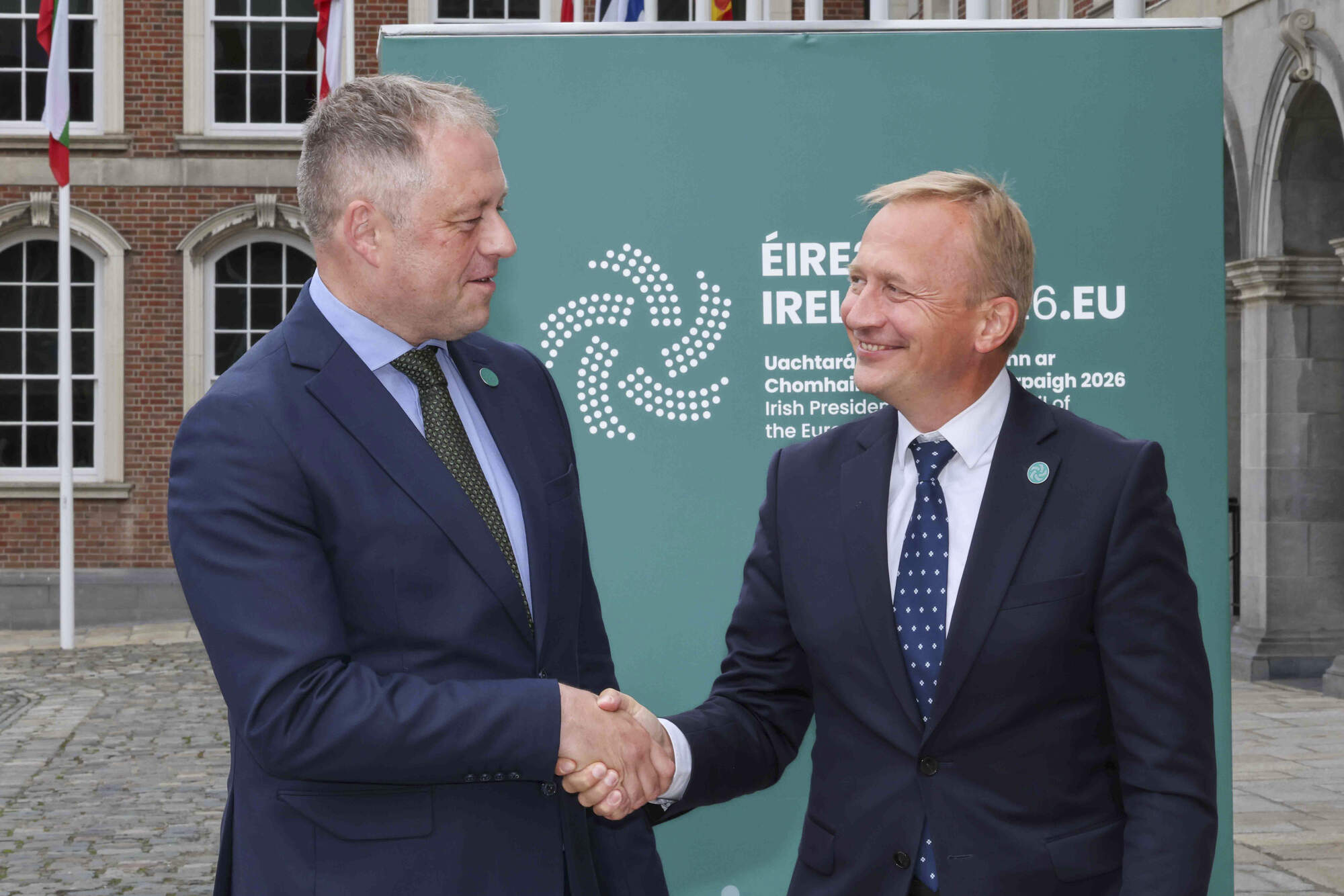
Romanian MEP Siegfried Muresan, one of the European Parliament’s lead budget negotiators, who attended a meeting of EU ministers in Dublin Castle on Thursday, said he was “worried… to see still very significant divisions”.
Positions are poles apart just over a month before Taoiseach Micheál Martin has to present and defend a compromise proposal to his fellow leaders.
Junior European affairs minister, Thomas Byrne, who is leading the budget talks as Ireland holds the EU’s six-month presidency, said he was “confident” of getting a deal by a December deadline.
“I’m not going to say it won’t be difficult,” he told reporters in Dublin Castle. “It will be difficult. There are two completely different positions on this. We have to find where the common ground will be.”
The bloc is divided into two camps: those who want more cuts, led by Germany, and those who want to increase the budget, a coalition that includes Spain, Poland, France and most MEPs.
The current tussle hinges on how much to cut an initial European Commission budget package worth €2tn, which beefs up spending on defence and the economy, compared to the existing budget, but which slashes farm and regional aid.
Cyprus, the country in the EU presidency chair before Ireland, suggested trimming that to €1.7tn, but that is not enough for fiscal hawks Germany, the Netherlands, Sweden, Austria, Finland and Denmark.
They met in Berlin last week to cement their alliance, which includes further cuts to farm and regional aid, priorities they believe belong in the past.
Agriculture and so-called “cohesion”, or regional spending, currently make up around two-thirds of the existing budget.
Germany’s minister of state for Europe, Gunther Krichbaum, said in Dublin that the Commission’s initial proposal was “a fantasy”.
Spanish Europe minister Fernando Sampedro Marcos suggested the EU roll over its pandemic debts and do more joint borrowing to try to raise more cash, ideas that have been firmly ruled out by Germany and the Netherlands.
French minister delegate for Europe, Benjamin Haddad, who spoke at an event in Dublin earlier in the day, said the only way to “solve the equation” is to raise new taxes.
All three ministers flagged their concerns at the hour-long meeting in Dublin Castle on Thursday, with Belgium and Poland also intervening.
The commission has suggested a series of new taxes to raise revenues, including a levy on companies that Ireland opposes and Mr Muresan said “won’t see the light of day”.
“Honestly, I can understand this severe opposition [from Ireland] because if we claim that we want to become more competitive, we cannot tax all of our corporations,” Mr Muresan told the Irish Independent.
EU ministers will continue the budget talks in Dublin Castle on Friday.
Mr Muresan and his fellow MEPs have proposed their own series of new taxes, including a levy on digital advertising, which he hopes will be discussed at a follow-up meeting in Brussels on September 22.