
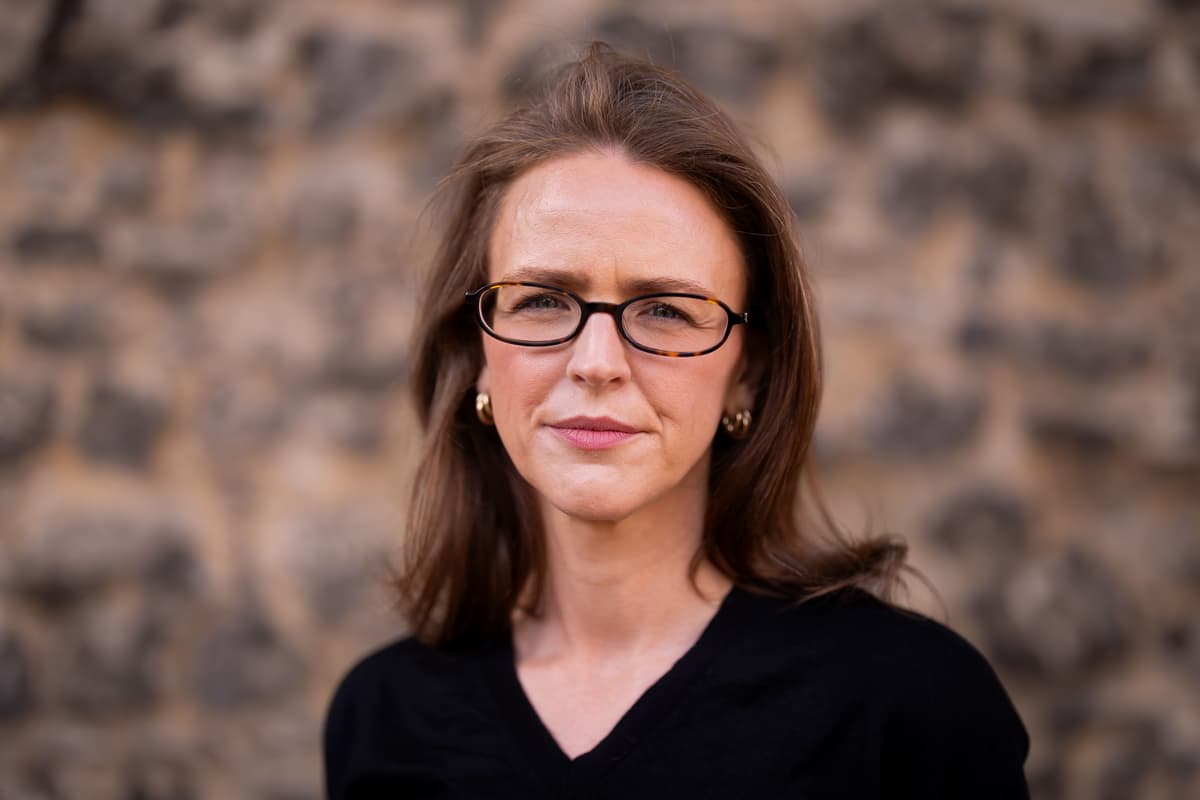
Assisted dying Bill MP ‘confident’ Commons will vote yes despite PM abstainingThe legislation is back in Parliament after running out of time earlier this year.Lauren Edwards is the new face of the assisted dying Bill in Parliament (Aaron Chown/PA)Y. Áine Fox3 minutes ago
The MP now fronting the proposal to legalise assisted dying in England and Wales has insisted she is “confident” it will pass an upcoming vote and said she is not concerned about the Prime Minister’s decision to abstain.
Lauren Edwards is the new face of the assisted dying Bill in Parliament, which returns to the Commons on September 11.
The Terminally Ill Adults (End of Life) Bill ran out of time in Parliament’s last session but is returning to begin the legislative process again and Andy Burnham has confirmed his decision not to vote so as not to “unduly influence the debate”.
The Bill proposes allowing adults in England and Wales, with fewer than six months to live, to apply for an assisted death subject to the approval of two doctors and an expert panel.
While it previously passed the House of Commons, it must now get through that chamber again to return to the House of Lords – where it fell in April, having run out of time to become law before Parliament was prorogued that month, having effectively been talked out.
In an interview with the Press Association, Ms Edwards said: “I’m feeling confident.
“I think it’s a really important issue that we need to resolve as a country and as a Parliament, and I’m looking forward to having the opportunity to put the question to my peers about whether we should send the Bill back to the House of Lords and allow them to finish the very important work they were doing in the last parliamentary session.”
She said she was “not seeing big amounts of switchers” regarding voting intentions, having “spent the summer talking to a lot of MPs”.
Although the Bill did pass two votes in the Commons, the second one, which took place in 2025, saw the majority in favour of the Bill narrow to 23 from 55.
Lauren Edwards argues palliative care funding can be fixed alongside assisted dying being legalised (Aaron Chown/PA)
Then-prime minister Sir Keir Starmer voted in favour on both occasions.
Asked if she was disappointed by Mr Burnham’s decision not to vote either way, she said it is “an entirely appropriate response” from the new PM, adding that she does not have “any concerns” about it potentially weakening support for the Bill.
She told PA: “People have taken a lot of consideration over the last 18 months, and I think are more influenced by the conversations that they’ve had with their constituents, by looking at the legislation themselves.”
Mr Burnham, who was not an MP and therefore did not have a vote when the Bill came before the Commons in recent years, said shortly after becoming PM in July that he believes the funding of palliative care needs to be fixed before consideration can be given to legalising assisted dying.
Read More
Be careful what you post on social media, MP warns, after tweet apology
Who are the candidates to replace Keir Starmer in Holborn and St Pancras by-election?
Gary Lineker calls on ‘super wealthy’ to ‘contribute more to society’
Make 2026 the year of working smarter
Ms Edwards repeated her insistence that “we can and should do both”.
She said: “I think for us to have a holistic health system that looks at end-of-life care, we do need to improve palliative care and make sure there isn’t a postcode lottery.
“But equally, there are a relatively small number of people with conditions for whom palliative care is unfortunately not going to alleviate their suffering, and they are still facing dreadful deaths with lots of pain. So I think it’s really, really important that we have a system that allows us to do both.”
Actress Liz Carr is among those campaigning against the Bill (Andrew Milligan/PA)PA Archive
Pro-change campaigners have previously spoken of using the Parliament Act – a rarely used piece of legislation which allows for Bills that have been backed by the Commons in two successive sessions but rejected by peers to pass into law without Lords approval – to get the Bill through.
But Ms Edwards said she hoped there would be no need to use it, other than to “disincentivise” peers in the Lords from blocking the Bill.
She said: “I really want to see the Bill get sent back to the House of Lords so that it can go through the normal parliamentary process, which is that they refine and improve legislation that is voted on and has been passed by the House of Commons, because we are quite rightly the elected chamber and we are responsible to all of our constituents, and so we have primacy there.
“So really, I’m hoping that we can just send it back and follow the usual process.”
The Labour MP repeated a similar warning to her predecessor Kim Leadbeater, saying she feels “it’s really important that we not allow this conversation to stop for potentially another decade” and referenced terminally ill supporters and their loved ones who she said had “really got their hopes up about assisted dying” being legalised.
But a new disability rights coalition called Assist Us To Live – backed by actress Liz Carr and comedian Rosie Jones – is urging MPs to vote down the Bill.
They are campaigning instead for reform of social care alongside better funding for palliative care to help people at the end of their lives.
In an open letter last month to MPs, the group said they were “writing to call for a halt to the legislative process around assisted dying until disabled and terminally ill people have as much support to live as this Bill would provide for us to die”.
MPs will vote according to their conscience on the Bill, rather than along party lines, and the Government is retaining its neutral stance.
MORE ABOUT